

If you’re reading this, you already know wedding edits can be some of the most rewarding – and profitable freelance gigs out there. Couples want emotional stories, families want memories preserved, and planners want reliability. That combination creates steady demand for editors who can deliver cinematic, emotionally clean, and timely work. This guide walks you step-by-step through how to find, win, and scale freelance wedding video editing jobs – from building a converting portfolio to pricing, pitching, and running a repeatable workflow. By the end you’ll have a clear, practical plan you can start using today.
Understand the wedding market and client needs
Couples hire wedding video editors for three things: storytelling, reliability, and speed. Storytelling is the visible craft – pacing, music, color, and emotional beats. Reliability is the invisible promise: clear communication, meeting deadlines, and clean file delivery. Speed matters because couples want a finished film while their excitement is fresh. When you position yourself to deliver all three, you stop competing on price and start competing on trust and outcome.
Different couples want different final products. Some want a short highlight (2-4 minutes) for social media; others want a ceremony + speeches edit (10-30 minutes) or a full feature (30-60 minutes) that’s archive-grade. Pricing and the editing approach change depending on which product you specialize in. Before you chase listings, decide which package(s) you’ll focus on and how to show that expertise in your portfolio – this clarity makes your marketing and proposals dramatically more effective. Next we’ll build that portfolio so prospects feel confident hiring you.
Portfolio tips: highlight outcomes, not just chops
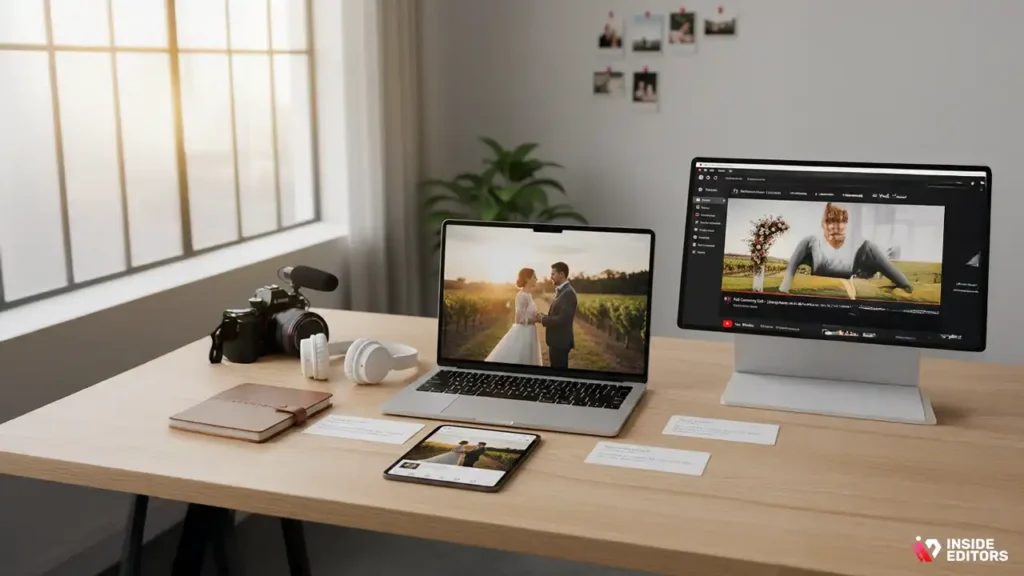
A portfolio for wedding work must do two things: demonstrate cinematic taste and show proof you can finish projects. A single great reel is useful, but hiring couples and planners often want to see a full ceremony or reception edit to confirm pacing and fidelity. If you’re starting out, create a demo reel (60-90 seconds) that highlights emotional peaks – vows, first look, toasts – followed by one or two full edits that illustrate structure and completeness.
If you don’t have paid wedding footage yet, create spec projects from stock clips or collaborate with photographers/videographers on low-cost shoots. Make those projects look professional: add realistic audio sweeps, consistent color grading, and at least one version optimized for Instagram (vertical) and one for YouTube (landscape). Place a short client-friendly caption under each sample describing the brief, your approach, and the final deliverable; this builds credibility and preempts questions. With a portfolio in place, you’ll attract better leads – and the right leads will be easier to close. Up next: where to find those leads.
Where to find freelance wedding video editing jobs

Finding work is partly about volume and partly about focus. Broad marketplaces like Upwork and Fiverr provide steady enquiries but can be price-competitive. Niche wedding platforms and local vendor networks bring higher-value clients who expect a cinematic product and are willing to pay more. Social channels – especially Instagram and TikTok – are powerful if you use them to show short edits and before/after reveals.
| Platform type | Who it’s best for | Typical result |
| General marketplaces (Upwork, Fiverr) | Beginners who need volume and reviews | Quick gigs, mixed pay |
| Niche wedding sites & vendor referrals | Experienced editors with wedding portfolios | Higher-value clients, steady referrals |
| Social media (Reels/TikTok) | Editors who can make snackable, shareable clips | Brand visibility and bookings |
| Local partnerships (photographers, planners) | Editors who want recurring referrals | Fewer but higher-trust leads |
Use at least two channels: one to build volume quickly (marketplaces or ads) and one to build higher-value pipeline (vendor referrals or social presence). When you contact leads, reference the exact product they want – a highlight reel, ceremony edit, or multi-camera cut – and link to the matching sample in your portfolio. That shows you listened and reduces friction toward hiring. After that, you’ll need persuasive pricing and proposals.
Pricing, proposals and contracts that win
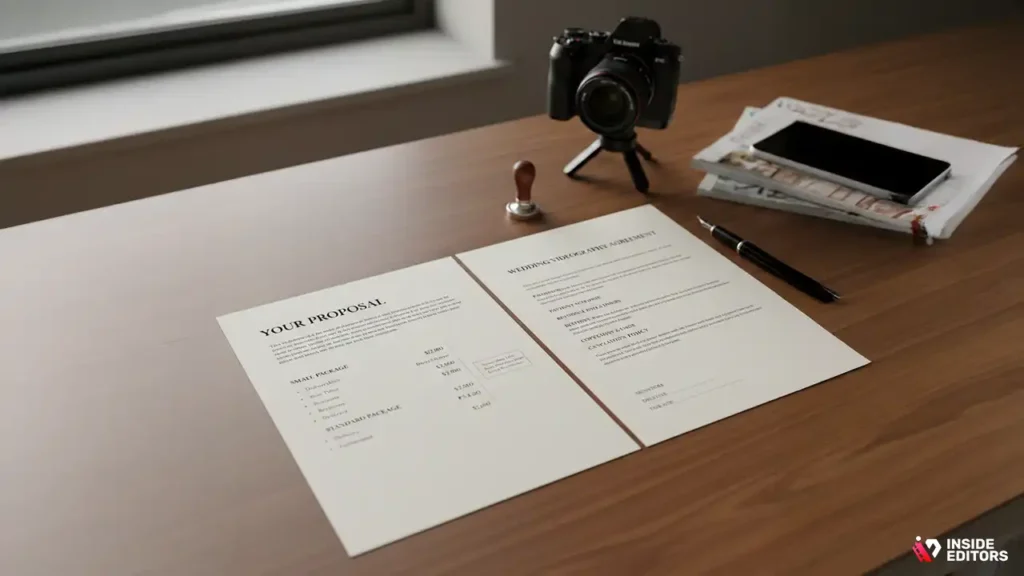
Price with confidence by thinking in packages, not hourly rates. Couples prefer predictable outcomes: a small package (social highlight + raw footage backup), a standard package (highlight + ceremony + speeches), and a premium package (feature edit + raw footage management + express delivery). Each package should clearly state deliverables, run times, number of revision rounds, delivery method, and turnaround time. Offer optional add-ons (same-day edit, raw footage backup, extra revisions) so you can upsell without confusing the base offer.
In proposals, start by restating the client’s needs in one sentence, then list the package contents and exact price. Keep the language conversational and clear. For contracts, include these essentials: payment schedule (deposit + balance), revision limits and extra-hour rates, delivery timelines, copyright/usage terms (what the client can do with the film), and a cancellation/rescheduling policy. Use plain language – couples appreciate clarity over legalese. A fair, transparent contract protects both parties and boosts conversion because it communicates professionalism. Next, let’s make your editing process fast and repeatable so healthy margins stay intact.
Workflow & tools for faster, better edits
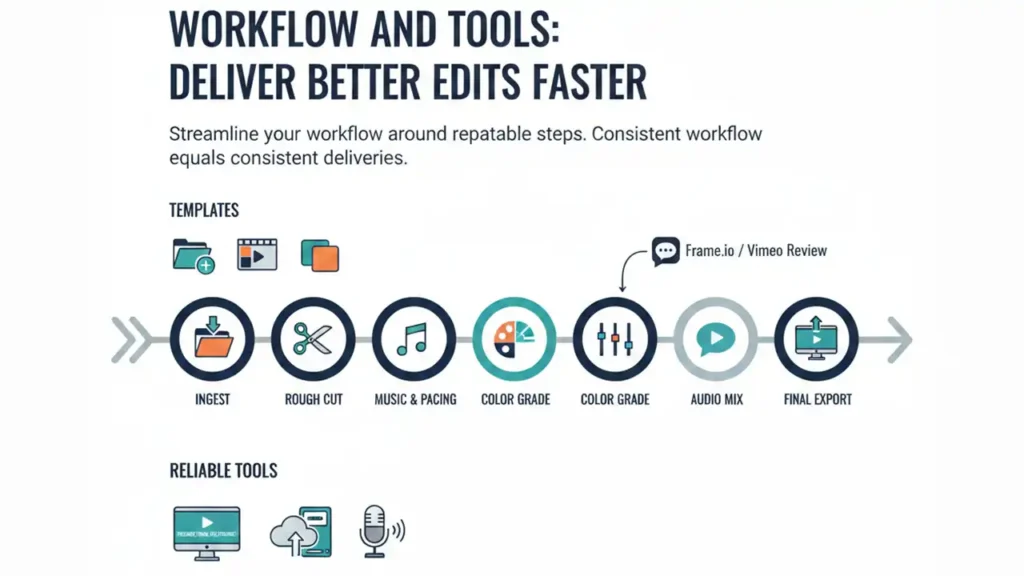
Streamline your workflow around repeatable steps: ingest → rough cut → music & pacing → color grade → audio mix → client review → final export. Create templates for project folders, Premiere/Final Cut timelines, and common transitions. Batch tasks where possible: do all color grading for a batch of clips at once, or create a set of music-driven timeline markers to speed up pacing decisions. Templates reduce decision fatigue and free creative energy for storytelling.
Invest in a small suite of reliable tools: a modern NLE (Premiere Pro, Final Cut Pro, DaVinci Resolve), a backup workflow (cloud or external drives), and a quality audio plugin for noise reduction and mastering. Learn basic color grading and audio mixing – these are the differences clients notice most. For client reviews, use services that allow in-timeline comments (Frame.io, Vimeo Review) to avoid long email threads. Consistent workflow equals consistent deliveries, and that builds referrals. In the next section we’ll cover how to communicate during projects to keep clients delighted and revisions limited.
Client communication & revisions to stay on schedule
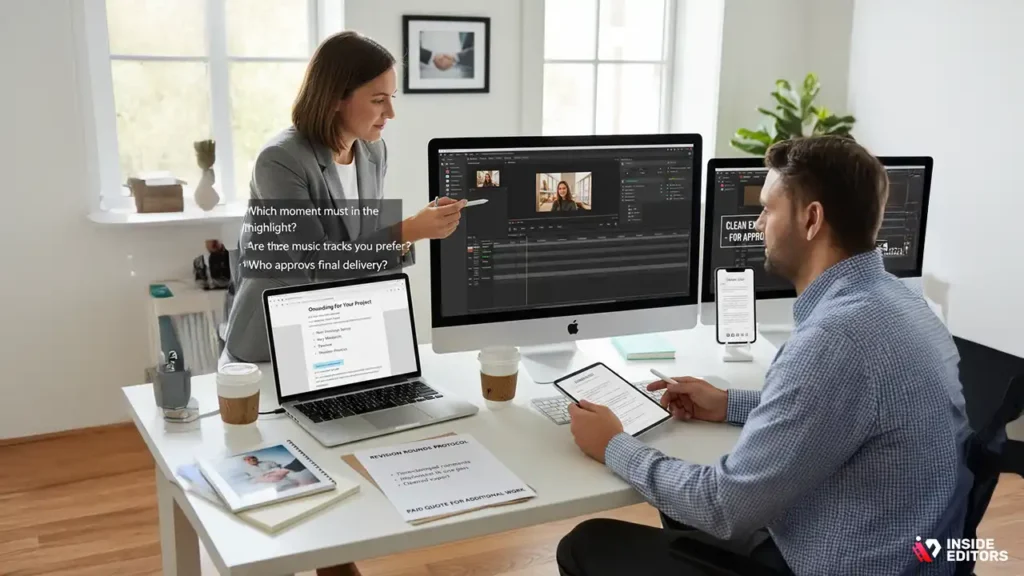
Good editors treat communication as part of the product. Begin with a short onboarding email that lists what you need (raw footage specs, music preferences, key moments), the timeline, and how you handle revisions. Ask three focused questions up front: “Which moment must be in the highlight?”, “Are there music tracks you prefer?”, and “Who approves final delivery?” This reduces back-and-forth later and keeps the project moving.
Structure revision rounds tightly: provide time-stamped comments for requested changes, implement them in one pass, and present a cleaned export for approval. If a client requests changes outside the agreed scope, refer to the contract and offer a paid quote for additional work. Celebrate approval moments: when they sign off, send a short ‘thank you’ email and a guide for sharing the film on socials – small touches encourage referrals and testimonials. Now that you can win and manage jobs, let’s look at common pitfalls and how to grow.
Common mistakes new wedding editors make
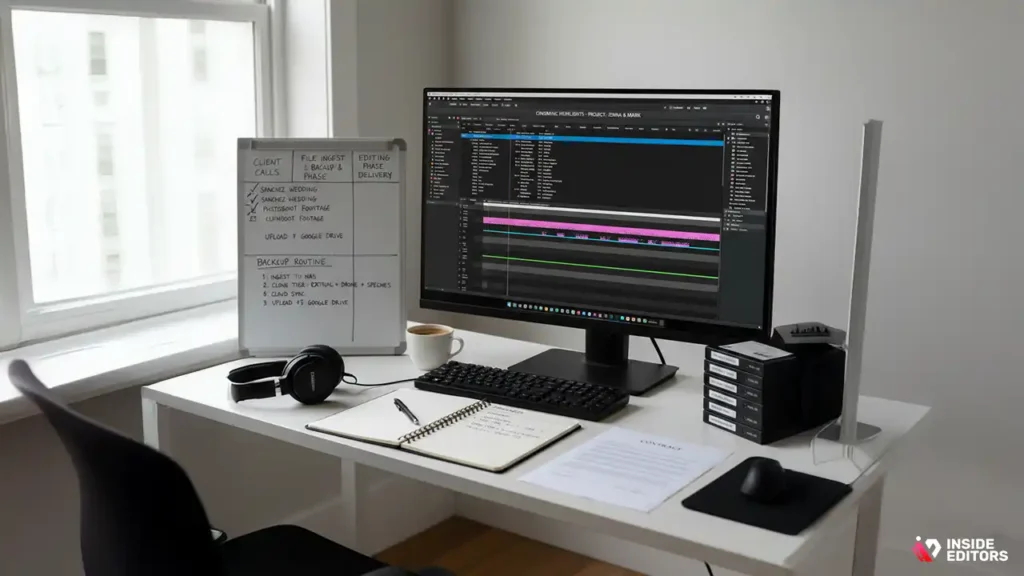
A few recurring mistakes derail promising editing businesses: underpricing, poor file management, and vague packages. Underpricing leads to burnout – when you charge per hour and underestimate complexity, you lose profit. Avoid this by packaging and by factoring in time for client calls, file prep, and multiple rounds of audio cleanup. Poor file management (no consistent ingest process or backups) risks lost footage and angry clients; build a documented ingest + backup routine from day one.
Another mistake is trying to be everything to everyone. Specialize – perhaps you focus on cinematic highlights, documentary ceremony edits, or fast social cuts – and market that specialty clearly. Specialization increases perceived value and helps you charge more. Finally, don’t skip contracts because the client “seems nice” – a written agreement saves time, it clarifies expectations, and it preserves your reputation. With these pitfalls behind you, scaling is about systems and partnerships.
Scaling from one-off jobs to a steady freelance business

To scale, make your processes repeatable and your referral sources predictable. Start by formalizing your packages and automating admin: use invoicing tools, contract templates, and a project management board (Trello, Notion, or a simple spreadsheet) to track timelines. Create a one-page welcome kit for clients that explains the process and sets expectations. That kit reduces questions and frees your time for creative work.
Develop partnerships with photographers, planners, and venues by offering clear referral terms – such as a finder’s fee or reciprocal promotion – and by delivering consistently excellent work. Encourage testimonials and ask happy clients for referrals; a short testimonial on your website converts more effectively than a generic claim about experience. Consider hiring subcontractors for busy seasons: junior editors for rough cuts or colorists for large features. Delegation lets you accept more high-value packages without sacrificing quality. Before we wrap, here’s a short checklist to help you act.
Quick steps to land paid wedding edits
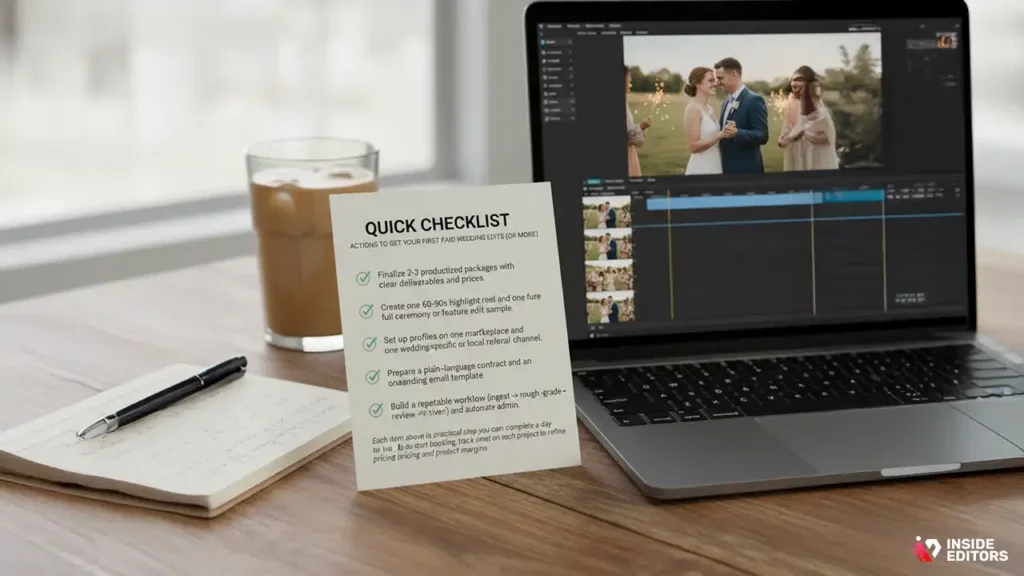
- Finalize 2-3 productized packages with clear deliverables and prices.
- Create one 60-90s highlight reel and one full ceremony or feature edit sample.
- Set up profiles on one marketplace and one wedding-specific or local referral channel.
- Prepare a plain-language contract and an onboarding email template.
- Build a repeatable workflow (ingest → rough → grade → review → deliver) and automate admin.
Each item above is a practical step you can complete in a day or two. As you start booking, track time spent on each project to refine pricing and protect margins.
Turn your edits into a lasting freelance career
Wedding editing is a blend of craft and customer service. When you combine a strong portfolio, clear packages, reliable delivery, and friendly communication, you stop competing on price and start competing on value. Over time, consistent quality and thoughtful follow-up create referrals – and those referrals are the most profitable source of freelance wedding video editing jobs. If you’re ready to shortcut the learning curve or want professional support to scale, Inside Editors can help refine your packages, support project overflow, or provide white-label editing so you capture more clients without burning out.
Explore Inside Editors Wedding Video Editing Services.
FAQs
1. How much do freelance wedding video editors usually charge?
Rates vary widely, but most freelancers charge $150-$600 per project depending on length, style, and revision expectations. Packages with color grading, audio cleanup, and storytelling edits usually cost more because they’re time-intensive. If you’re just starting to look for freelance wedding video editing jobs, expect clients to ask what’s included and whether revisions are free or limited. Clear pricing helps build trust quickly.
2. How long does a professional wedding video edit take?
Most editors deliver wedding videos in 7-21 days, depending on footage length, complexity, and the editor’s workload. Faster turnaround-such as a 72-hour highlight reel-usually requires a paid rush option. Clients often appreciate timeline transparency, which helps them feel confident hiring you for freelance wedding video editing jobs. Sharing your workflow also reduces revision delays.
3. Do clients own the final wedding video after editing?
In most cases, clients own the final exported video, while editors retain rights to project files unless otherwise stated. This protects your workflow and specialized templates. Make ownership terms clear before starting any freelance wedding video editing jobs so clients know whether they’ll receive raw files, project files, or just final exports. Clear documentation prevents misunderstandings later.
4. How many revisions should editors offer for wedding videos?
Most freelancers include 1-2 rounds of revisions to keep projects on schedule while ensuring client satisfaction. Unlimited revisions sound appealing but can easily extend delivery timelines. Setting structured revision limits is standard practice in freelance wedding video editing jobs and helps maintain boundaries. Always clarify what counts as a revision versus a new edit request.
5. Is it better for couples to DIY wedding video editing or hire a freelancer?
DIY editing can work for short highlight reels, but full-length wedding videos require professional tools, color grading expertise, and multi-camera syncing. Freelancers deliver polished storytelling and consistent audio-two areas most beginners struggle with. Hiring a pro often saves hours of trial-and-error. For couples wanting cinematic results, freelance wedding video editing jobs provide a more reliable outcome.
6. What tools do most wedding video editors use?
Editors typically rely on Adobe Premiere Pro, Final Cut Pro, or DaVinci Resolve for professional-grade control. Cloud tools like Frame.io streamline collaboration by making revisions easier. When applying for freelance wedding video editing jobs, showing proficiency in these tools reassures clients that you can handle high-resolution footage, color correction, and audio cleanup. Clear tool knowledge improves your hire rate.


