


Breaking into the world of video editing internship can feel both exciting and overwhelming. You’re passionate about storytelling, visuals, and creative expression – but without hands-on experience, getting your first professional opportunity can be tough. That’s exactly why video editing internships matter so much. They bridge the gap between learning and doing, giving you real-world practice, mentorship, and industry exposure. In this guide, we’ll walk through the top five tips that truly help you stand out, build confidence, and secure a great internship that moves your creative career forward.
Before we explore the strategy behind your internship search, it’s important to understand what makes these opportunities so valuable. A well-chosen internship doesn’t just teach you how to operate software. It shows you how editors collaborate, communicate, and solve problems under real deadlines. This experience builds the foundation for your future roles – whether as a freelance creator, agency editor, or specialist in social media, commercials, or documentaries. And if you’re exploring support from professionals, Inside Editors offers guidance and editing services that complement your creative journey.
1. Understanding Valuable Video Editing Internships

Before applying anywhere, it helps to know what separates good video editing internships from those that waste your potential. Many beginners jump into opportunities simply because they’re available, but the best internships actively help you grow. Understanding these differences ensures your effort leads to long-term results rather than short-lived tasks.
Why Real Industry Exposure Matters More Than Busywork
A quality internship gives you exposure to real production pipelines – not just random editing tasks handed to you once in a while. You should see how editors communicate with directors, collaborate with content teams, or manage workflows inside professional environments. Real exposure teaches timing, story flow, and problem-solving much faster than isolated practice at home. If you’ve ever wondered why some editors advance quickly early in their careers, this hands-on experience is usually a major reason.
Internships that lack real contribution opportunities often leave students with gaps in their portfolio and confidence. If the role only includes repetitive clipping or uploading, you may not grow the creative judgment needed to compete. That’s why evaluating the company’s culture and expectations before applying can save you months of effort – and give you far more valuable experience in return.
Understanding the Difference Between Traditional and Modern Internship Environments
The world of editing has evolved. Today’s internships fall into two broad categories: traditional studio-based roles and modern remote editing positions. Studios still offer structured environments with supervisors physically present. Remote internships, however, provide flexibility and let you work from home using cloud-based tools.
Traditional settings help you learn by observing professionals directly. Modern roles teach self-management, communication, and file-handling in distributed teams – skills many employers prioritize in 2025 and beyond. Neither is inherently better, and many editors rotate between both throughout their careers. What matters is choosing the environment that aligns with your learning style and goals.
Identifying Internships That Support Portfolio Growth
Creative careers thrive on strong portfolios, not certificates. Look for internships that allow you to edit full projects or meaningful segments rather than simple assistive tasks. When speaking with potential employers, ask what types of deliverables past interns created. If they showcase real campaign videos or social content, you’ll likely have similar opportunities.
Internships that help you build a portfolio also improve your chances of landing freelance gigs or starter positions later. The editing world highly values real output. A reel filled with diverse projects – brand videos, short-form content, educational clips – signals capability more effectively than a resume alone.
Transitioning Into the Next Stage: Knowing Where You Stand as a Beginner
Once you understand what makes an internship worthwhile, the next step is assessing your current skill level. This insight helps you position yourself more effectively during applications and conversations. In the next section, we’ll look closely at crafting a strong foundation that makes your application stand out – even when you’re just starting your journey.
2. Portfolio Tips to Land Professional Work
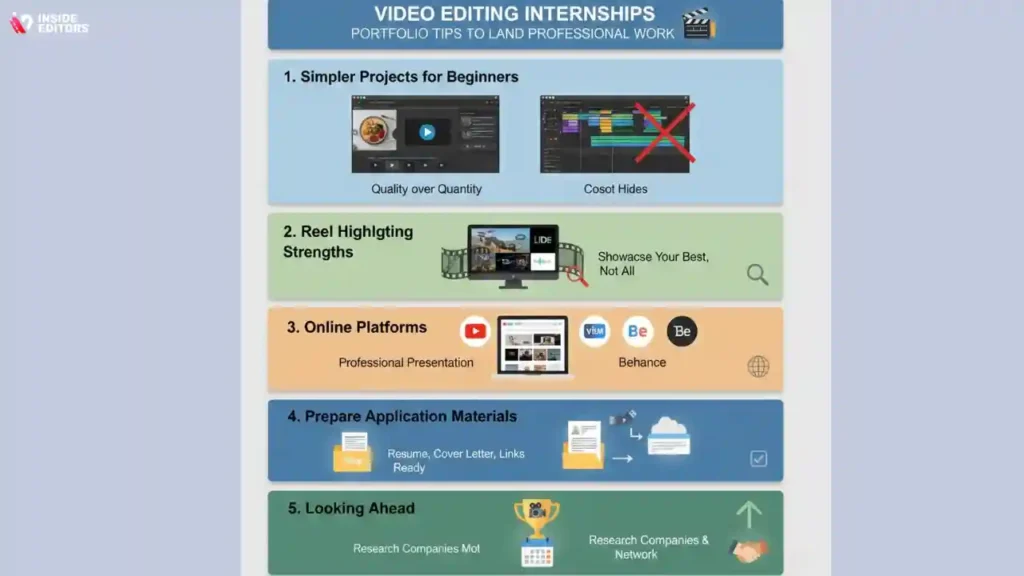
Your portfolio is the most important part of your internship application. Even if the role is entry-level, companies want to see creativity, technical ability, and strong story sense. The good news? You don’t need Hollywood-level footage to make a great first impression. What matters is your ability to communicate visually, structure clips, and polish transitions effectively.
Why Simpler Projects Often Work Better for Beginners
Many new editors worry that they don’t have enough “professional-looking” footage. But most recruiters and creative directors know beginners rarely have access to commercial sets. Instead, they’re looking for clean editing choices and storytelling clarity. Even simple projects – like travel vlogs, practice interviews, product demos, or short “day in the life” clips – can demonstrate your sense of pacing and rhythm.
One of the biggest mistakes is trying to impress with overly complex effects. Instead, let your cuts, audio balance, and timing speak for your skill. When your storytelling is clean, viewers understand your creative direction instantly.
Creating a Reel That Highlights Your Strengths, Not Your Weak Points
A reel doesn’t need to show everything you’ve ever made. If you’re applying specifically for social media editing internships, highlight fast-paced, trend-driven content. If you’re aiming for documentary work, focus on thoughtful pacing and emotional transitions.
Keep your reel concise – usually 30–60 seconds for beginners – and make every clip count. Introduce your name clearly, maintain consistent music flow, and choose scenes that feel cohesive. Good reels feel intentional, not random.
If you’re unsure how to polish your reel, you can explore resources on the Inside Editors blog or seek professional editing support at InsideEditors.com. Even small refinements can significantly boost your confidence and appeal.
Using Online Platforms to Showcase Your Work Professionally
Your portfolio needs a home. Platforms like Behance, Vimeo, and YouTube offer great visibility, but a simple personal website often feels more polished. Many aspiring editors also use Google Drive folders labeled clearly by project type. Whichever method you choose, keep your presentation clean and organized.
A well-structured portfolio also signals professionalism. For example, including short project descriptions helps viewers understand your role: editing, color correction, sound design, or motion graphics. Clarity builds trust, and trust opens more internship doors.
Looking Ahead: Preparing the Materials That Make Applications Stand Out
Once your portfolio is ready, the next big step is preparing compelling application materials – your resume, cover letter, and outreach messages. These supporting documents show your personality, professionalism, and purpose. In the next section, we’ll explore how to craft application materials that make recruiters immediately interested in meeting you.
3. Resume and Application Tips to Stand Out
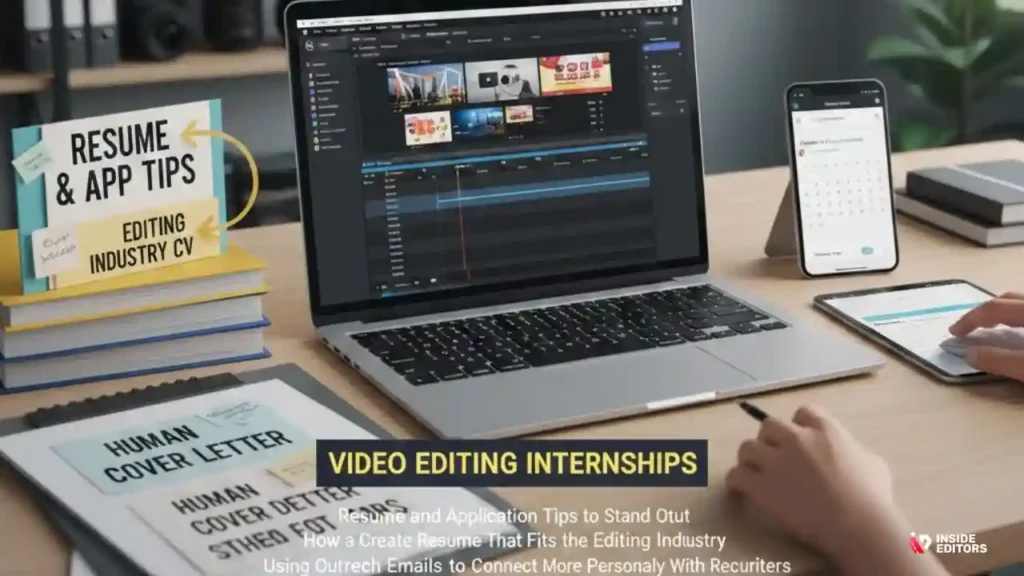
Your resume and cover letter introduce you before your video editing work has the chance to speak for itself. While your portfolio remains the centerpiece, your application materials create the first impression – and often determine whether a recruiter clicks through to see your reel. Many beginners underestimate how influential these documents are in competitive internship searches.
How to Create a Resume That Fits the Editing Industry
Editing resumes should feel clean and visually easy to scan. Recruiters reviewing creative roles expect clarity, structure, and aesthetics. That doesn’t mean overdesigning; it simply means organizing information intelligently, choosing readable fonts, and highlighting the right details.
Instead of listing every tool you’ve ever touched, emphasize the ones you’re comfortable using – Adobe Premiere Pro, DaVinci Resolve, Final Cut Pro, After Effects, CapCut Desktop, or other platforms relevant to the internship. Focus especially on the tools you used in your portfolio projects so your skills feel believable and consistent.
Another common mistake is leaving out soft skills. Creative directors often prioritize communication, adaptability, and deadline management. Mentioning class projects, freelance experiments, or volunteer editing work shows initiative and commitment, even if you’re early in your career.
Writing a Cover Letter That Sounds Human, Not Generic
Most cover letters fail because they sound like templates. Internship recruiters receive dozens of generic statements like “I am passionate about video editing and eager to learn.” While enthusiasm is important, employers want to understand what makes you different and how you think about storytelling.
Tell short, sincere stories. For example, you might talk about how editing your first travel video taught you the value of pacing, or how assisting a friend’s project helped you appreciate the importance of sound design. These insights show self-awareness – a trait that stands out in creative fields.
End by explaining what you hope to contribute and learn. Employers appreciate candidates who show curiosity and clarity rather than vague ambition.
Using Outreach Emails to Connect More Personally With Recruiters
A thoughtful outreach message often increases your chances even before applying. A simple email introducing yourself, referencing something specific about the company’s content style, and expressing genuine interest can help you stand out. Keep your tone friendly and professional. Briefly mention your portfolio link and invite feedback.
If you’re emailing editors directly, remember many are busy juggling deadlines. Keep your message respectful and concise. Often, a well-written outreach email leads to opportunities that never appear on job boards.
Transitioning Into the Next Stage: From Paper to Practice
Now that your application materials are strong, the next step is understanding the strategies that help you actually secure interviews and offers. From networking to platform selection, positioning yourself well can significantly increase your odds. In the next section, we’ll explore exactly how to find and apply for the best internships – and what strategies top beginners use to stand out in competitive markets.
4. Finding & Applying for Top Video Editing Internships

Once your portfolio and application materials are ready, the next stage is identifying where the best opportunities actually live – and how to approach them strategically. Many editors focus solely on big-name companies, but the most rewarding internships often come from smaller studios, digital agencies, or fast-growing content brands. These environments typically give interns more creative involvement and direct mentorship.
Understanding the Platforms and Places That Offer Real Opportunities
Video editing internships appear across multiple platforms, but each one has a different quality level. Traditional job boards like LinkedIn, Indeed, and Glassdoor list structured programs from larger companies. These roles usually have clearer expectations and defined schedules. However, they can also be competitive due to the sheer number of applicants.
Meanwhile, creative-specific sites such as Mandy, Behance Jobs, and ProductionHUB often list roles from independent filmmakers, boutique agencies, and content creators who value hands-on help. These internships may involve more varied tasks – editing, organizing footage, color correction, even collaborating on set – giving you a broader learning experience.
There’s also a growing number of remote positions from brands producing daily short-form content, especially for TikTok, YouTube, and Instagram. These companies seek editors who understand fast-paced storytelling and trend-based styles. If you enjoy editing viral-style videos, this path can accelerate your career quickly.
Why Networking Matters Even More Than Job Boards
Every editor eventually discovers the same truth: the best opportunities often come from people, not postings. Networking doesn’t mean awkward conversations or aggressive outreach. Instead, it’s about genuine connection – commenting on creators’ work, asking thoughtful questions, and showing appreciation for their content.
Start by engaging with editors you admire on LinkedIn or YouTube. When someone posts a new project, leave a meaningful comment that shows you watched it carefully. This builds familiarity naturally. Over time, people begin to recognize your name, and conversations feel more authentic.
You can also join film clubs, online editing communities, or college media groups. Many students land internships simply because they assisted a friend’s project or collaborated with a classmate who had connections. Creative careers thrive on relationships, and even small interactions can open big doors.
Writing Application Messages That Feel Personal, Not Generic
When applying through job boards, avoid copy-pasting the same message everywhere. Recruiters can tell when an application lacks originality. Instead, mention a piece of content the company produced – maybe a YouTube series, product ad, or campaign highlight – and explain what you liked about it. This shows you care about the role, not just the opportunity.
Introduce yourself briefly, share your portfolio link, and express interest based on specifics. A message like “I enjoyed your recent Instagram reel about behind-the-scenes storytelling – the pacing and color style inspired me” goes much further than general compliments.
Using Freelance Platforms as a Backdoor Strategy
Another overlooked approach involves freelance platforms like Upwork or Fiverr. While these aren’t internships in the traditional sense, they expose you to real-world editing demands and give you client experience quickly. Many beginners use freelance clips to boost their reels, which then attract paid internships or part-time positions at agencies.
This method is especially helpful if you can’t find an internship immediately or want to practice managing deadlines and revisions. Freelance work also builds confidence – something reviewers can sense instantly in your applications.
Preparing for the Next Step: Succeeding Once You Land the Internship
Finding and applying for internships sets the stage, but your success truly depends on how you perform once you’re inside. The next section explains how to excel in your internship, build strong relationships, and turn short-term opportunities into long-term creative growth.
5. Getting the Most from Your Internship Experience
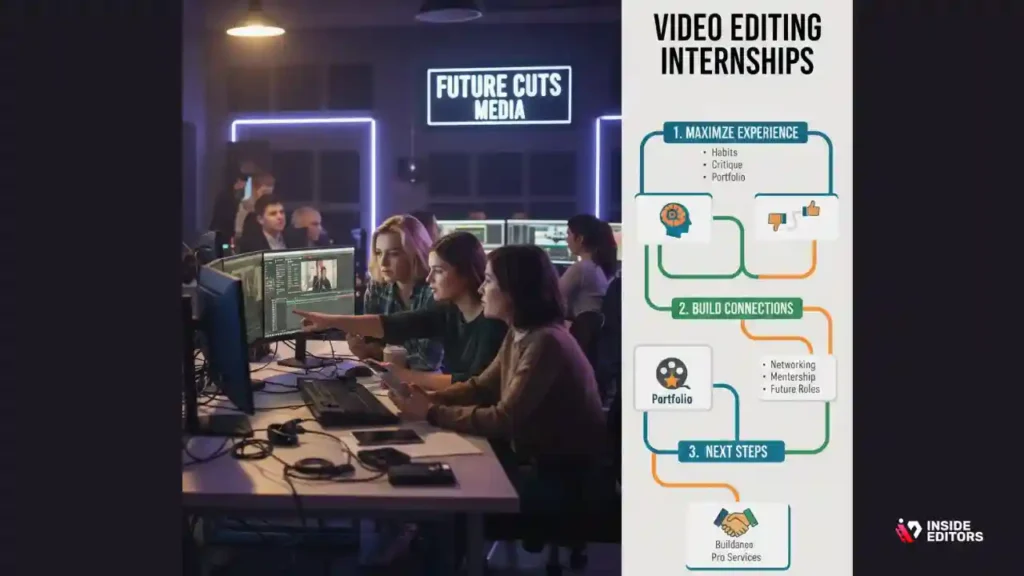
Landing an internship is only the beginning. What you do during those weeks or months determines how much value you gain – and whether your supervisors see you as someone worth hiring later. Great interns don’t just complete tasks; they participate, ask questions, and find small ways to make projects smoother for everyone involved.
Developing Habits That Help You Stand Out as an Intern
Great editors think both creatively and logically. To stand out early, make it a habit to stay organized, name files consistently, and understand the project goals before editing. Small details like these often impress supervisors more than flashy effects because they show maturity and reliability.
Proactive communication also matters. If you’re unsure whether to cut a sequence a certain way, ask. If you see a chance to improve a storyboard or pacing, share your idea respectfully. Creative teams appreciate interns who think critically rather than waiting for instructions every time.
Many interns are surprised by how much responsibility they receive once they show initiative. When supervisors trust your decision-making, you’ll get more complex tasks – giving you greater portfolio material and deeper experience.
Learning From Critique Without Taking It Personally
Feedback is part of every creative job. Instead of viewing critiques as judgment, treat them as insight into how professionals think. If a mentor suggests adjustments to pacing or color grading, listen carefully and ask clarifying questions. Not only does this improve your skills, but it also demonstrates your willingness to grow.
Most supervisors enjoy teaching interns who show curiosity. When you ask “Why does this transition work better for this story?” you open the door to valuable insights that normally take years to learn. These conversations often build strong professional relationships that continue long after the internship ends.
Turning Internship Work Into Portfolio-Ready Projects
Once you’ve completed a few projects, ask permission to include them in your portfolio. Most companies allow interns to showcase clips as long as they credit the studio properly. Highlighting real branded content makes your reel instantly more compelling than student projects alone.
When preparing your updated reel, select clips that demonstrate growth – better pacing, cleaner edits, stronger emotion. A before-and-after comparison of your early work versus your latest internship piece can show how quickly you learn. Employers value editors who progress rapidly.
Building Relationships That Lead to Future Opportunities
One of the biggest advantages of internships is meeting people who can help your career later. Make the effort to stay in touch with supervisors and fellow interns. Send a brief thank-you message after the internship ends, share your updated reel occasionally, or congratulate them when they post new projects online.
These small gestures build goodwill naturally. The editing world is tightly interconnected, and someone you worked with casually might recommend you for a job months later. Many editors secure full-time roles because a mentor remembered their enthusiasm or reliability during an internship.
Exploring the Next Stages: Freelancing, Agency Roles, or Professional Editing Services
After completing an internship, you’ll have far more clarity about what kind of editing excites you. Some editors enjoy freelance flexibility, while others prefer structured agency work. You may be drawn to short-form social videos, long-form documentary projects, product ads, or educational content.
If you choose freelancing, you can build your client base with the help of resources like the Inside Editors website, where professional editing services showcase industry standards. Reviewing expert workflows helps beginners see how to structure edits, manage projects, and use tools more efficiently.
And if you need help polishing your own footage – for reels, client projects, or social content – Inside Editors offers specialized services for everything from TikTok editing to online course videos. Collaborating with professionals can accelerate your growth, especially early in your career.
Final Reflection : From Internship to Creative Career
A great internship doesn’t just add a line to your resume – it expands your creative thinking, sharpens your skills, and introduces you to people who can influence your journey. By understanding what makes an opportunity worthwhile, building a strong portfolio, presenting yourself professionally, and staying committed to growth, you position yourself for long-term success.
Every editor starts somewhere. What matters is your willingness to learn, experiment, and take advantage of the opportunities in front of you. With the right mindset and preparation, your internship will become the first powerful chapter of your editing career.
And when you’re ready to take your skills even further, you can explore Inside Editors’ professional video editing services – a helpful resource for creators who want expert-quality storytelling without the stress.
Explore Inside Editors’ Video Editing Services.
FAQs : Video Editing Internships
1. Are video editing internships worth it for beginners?
Yes – video editing internships give beginners real-world practice, feedback, and exposure to professional workflows you won’t get from self-study alone. You’ll learn how editors handle pacing, revisions, and client communication. The experience also helps you build portfolio-ready work, which matters more than certificates when applying for jobs. For most newcomers, this is the fastest path to paid projects.
2. Do companies provide training during video editing internships?
Most companies offer basic onboarding, such as project guidelines, software expectations, and workflow structure. However, interns are expected to know core editing skills and tools like Premiere Pro or DaVinci Resolve. Training usually focuses on how the studio works, not on teaching from scratch. If you want deeper support, many editors use online tutorials or communities alongside their internship.
3. What skills should I have before applying for video editing internships?
You should know how to cut clips, adjust audio, and handle simple color corrections. A basic understanding of storytelling – like pacing and scene flow – helps you stand out. Companies expect familiarity with at least one editing tool and the ability to follow feedback. Even a small, well-structured portfolio can make you competitive.
4. Do video editing internships require expensive software?
Not necessarily. Many companies accept work done in free tools like DaVinci Resolve or CapCut Desktop, as long as your edits look clean. Paid options like Adobe Premiere Pro offer more flexibility, but they’re not mandatory for starting. Choose the tool that lets you work confidently and consistently.
5. How long do video editing internships usually last?
Most internships run 8–12 weeks, with weekly hours ranging from 10 to 25 depending on whether they’re remote or onsite. Some short-form content studios offer flexible part-time roles that last 3–6 months. Longer internships give you more chances to build your reel and develop consistent quality. Always check the expected workload before applying.
6. Do interns own the rights to the videos they edit?
Typically no – companies maintain ownership of all final files and raw footage. However, many studios allow interns to use excerpts in their portfolios after release, as long as proper credit is given. Always get written permission before uploading work publicly. If ownership matters to you, clarify it early.
7. Can video editing internships be remote?
Yes, remote internships have become common thanks to cloud storage and collaborative tools like Frame.io. Remote roles often focus on short-form content, social media videos, or branded edits. They’re great if you need schedule flexibility or live outside major creative cities. The key is maintaining reliable communication and file-handling skills.
8. How competitive are video editing internships?
They can be competitive, especially at bigger brands or agencies. What sets candidates apart isn’t years of experience – it’s a clean, focused portfolio that shows good pacing and attention to detail. A personal introduction message helps you stand out even more. Small studios and creators often offer equally valuable opportunities with less competition.
9. What does a typical day look like for a video editing intern?
You’ll usually review footage, organize files, create rough cuts, and assist with color or audio tweaks. Depending on the studio, you may also handle subtitles, exports, or versioning changes. Some days involve faster turnaround for social content, while others focus on longer narrative projects. You’ll get steady feedback to refine your work.
10. Can internships lead to paid editing jobs?
Yes – many editors get freelance or part-time offers from the same companies they interned with. Strong communication, consistent quality, and meeting deadlines increase your chances of being hired. Even if the company doesn’t offer a role, you’ll have portfolio pieces that help you secure clients elsewhere. Internships often act as a long-term stepping stone.


