


The landscape of modern content creation is dominated by video. Whether you are a professional filmmaker, a YouTube creator, or a marketing specialist, the quality and speed of your video production workflow directly impact your success. At the heart of a high-performance editing rig lies one crucial component: the Graphics Processing Unit (GPU). Choosing the right GPU is not just about gaming performance; it’s about rendering times, real-time playback, and the ability to handle demanding codecs like 4K and 8K H.265.
This comprehensive guide dives deep into the hardware specifications, real-world performance benchmarks, and value propositions of the current market leaders to help you select the Best Graphics Cards for Video Editing. We will analyze top contenders from NVIDIA and AMD, focusing specifically on how they accelerate popular editing suites like Adobe Premiere Pro, DaVinci Resolve, and Final Cut Pro. If you want to cut down on frustrating wait times and maximize your creative output, understanding these components is essential.
Why the GPU is the Heart of Your Video Editing Rig
Many beginners assume that the Central Processing Unit (CPU) handles all the heavy lifting in video editing. While the CPU is vital for tasks like timeline navigation and basic processing, the GPU has become the dominant force in modern non-linear editing (NLE) software.
The Role of GPU Acceleration in Modern Editing
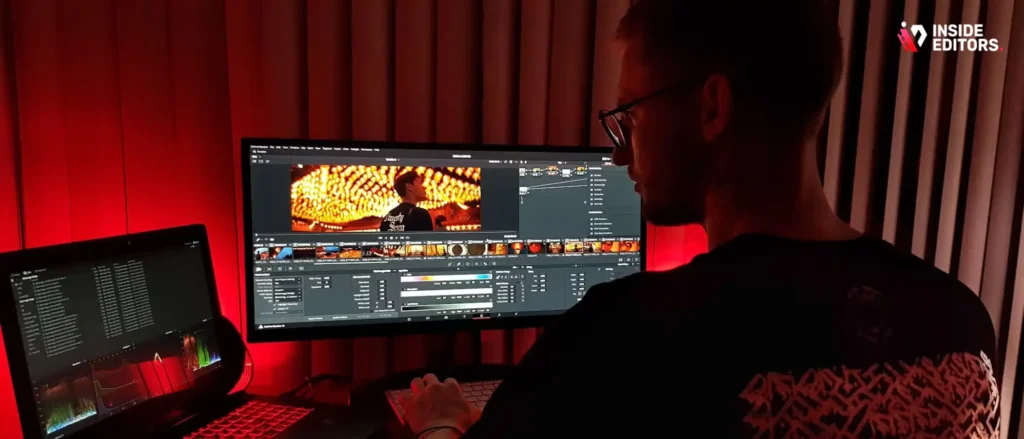
Modern video editing relies heavily on parallel processing, a task GPUs are inherently designed to handle far better than CPUs. GPU acceleration speeds up crucial processes such as rendering, effects application, color grading, and especially decoding and encoding high-resolution media. Features like NVIDIA‘s NVENC encoder and AMD’s VCE/VCN engines dramatically reduce the time it takes to export a finished project. Without a powerful GPU, even the fastest CPU will bottleneck when dealing with complex timelines, multiple layers, or resource-intensive effects like motion graphics or noise reduction.
“A common misconception is that rendering is purely a CPU task. Today, virtually every major NLE leverages the GPU for complex effects and final export encoding. The GPU is the single biggest factor in reducing turnaround time.” – Jensen Huang, CEO of NVIDIA
For editors who frequently work with 4K, 6K, or 8K footage, or those using demanding formats like ProRes RAW or Blackmagic RAW, investing in one of the Best Graphics Cards for Video Editing is non-negotiable. It ensures smooth, real-time previewing without constant stuttering or the need to generate proxies, saving countless hours during the editing process.
Key Factors in Video Editing Graphics Cards

When evaluating GPUs for video work, raw gaming frame rates are secondary. Several specific technical specifications dictate an editor’s success.
VRAM: The Crucial Metric for High Resolution
Video Random Access Memory (VRAM) is arguably the most critical specification for a video editor. VRAM acts as the scratchpad for your GPU, storing textures, effects, and the frames of video you are currently processing. Editing 4K footage requires significantly more VRAM than 1080p, and 8K requires even more.
We recommend a minimum of 8GB of VRAM for comfortable 4K editing, and 12GB to 16GB or more for professional multi-layered 6K/8K workflows. Running out of VRAM forces the GPU to swap data with slower system RAM, causing massive performance drops and crashes.
Codec Support and Hardware Encoders
The efficiency of hardware encoders (like NVIDIA NVENC or AMD VCN) is paramount for export speed. These dedicated chips handle the compression and decompression of video codecs (H.264, H.265/HEVC) much faster and more efficiently than software encoding. NVIDIA, in particular, often holds an advantage here, especially with its latest generation of NVENC, which offers superior quality and speed, making their cards strong contenders for the title of Best Graphics Cards for Video Editing.
Software Optimization and Driver Stability
The best hardware is useless without excellent software support. NVIDIA’s CUDA cores are deeply integrated and highly optimized within Adobe Premiere Pro and DaVinci Resolve Studio. While AMD’s OpenCL and ROCm are improving rapidly, NVIDIA generally retains the edge in professional application stability and optimization, a key factor for editors who need reliability above all else.
Comparison Table: Top Contenders for Video Editing
| GPU Model | VRAM (GB) | Interface | Recommended Resolution | Primary Strength | Est. Price Range |
| NVIDIA GeForce RTX 4090 | 24 | PCIe 4.0 | 8K+ | Unmatched Speed & VRAM | $1600 – $2000+ |
| NVIDIA GeForce RTX 4080 Super | 16 | PCIe 4.0 | 6K/8K | Excellent Efficiency/Value | $999 – $1200 |
| NVIDIA GeForce RTX 4070 Ti Super | 16 | PCIe 4.0 | 4K/6K | High VRAM for Mid-Range | $799 – $900 |
| AMD Radeon RX 7900 XTX | 24 | PCIe 4.0 | 8K | High VRAM, Strong Value | $900 – $1100 |
| NVIDIA GeForce RTX 4060 Ti | 16 | PCIe 4.0 | 4K | Budget 4K Power | $450 – $550 |
| AMD Radeon RX 7800 XT | 16 | PCIe 4.0 | 4K | Best Mid-Range VRAM | $499 – $600 |
| NVIDIA RTX A4000 (Pro) | 16 | PCIe 4.0 | 4K/6K | ECC Memory/Stability | $800 – $1000 |
Top Graphics Cards for Video Editing Reviewed
We have selected seven GPUs that represent the best options across different budgets and professional needs, from high-end studio work to efficient freelance editing.
1. NVIDIA GeForce RTX 4090: The Uncontested King
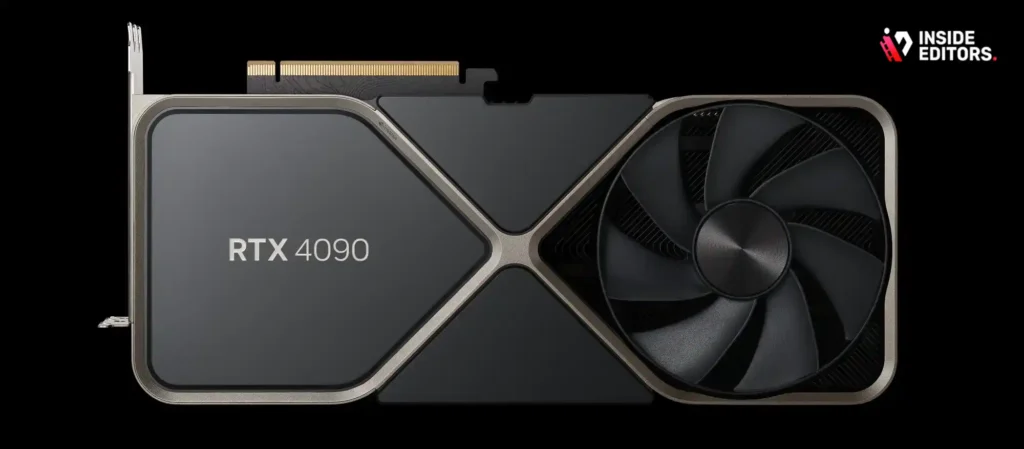
The RTX 4090 is the pinnacle of consumer graphics technology and easily ranks among the Best Graphics Cards for Video Editing available today. Equipped with a massive 24GB of GDDR6X VRAM and the latest generation of CUDA cores and NVENC encoders, this card delivers unparalleled performance.
For editors working on feature films, high-end commercial projects, or complex 8K timelines in DaVinci Resolve, the 4090 drastically cuts down rendering times. Its sheer processing power handles complex GPU-intensive effects, such as advanced noise reduction, stabilization, and heavy color grading, in real-time. While expensive, the time saved often justifies the investment for high-volume professionals.
Pros:
- Unmatched 24GB VRAM capacity.
- Fastest rendering and export speeds available.
- Superior dual-slot NVENC encoders.
Cons:
- Extremely high power consumption and physical size.
- Premium price point.
2. NVIDIA GeForce RTX 4080 Super
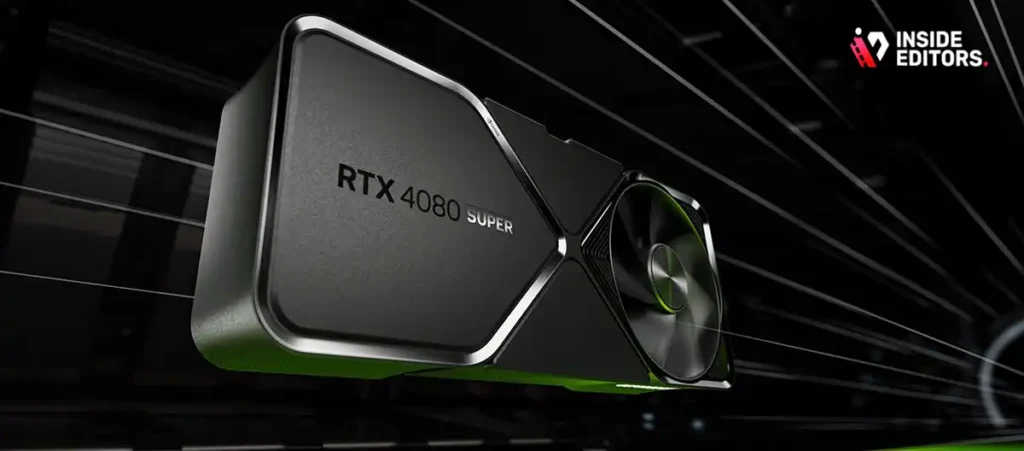
The RTX 4080 Super offers a compelling blend of high performance and relative efficiency compared to the 4090. With 16GB of VRAM, it is more than capable of handling demanding 6K and even light 8K workflows. It utilizes the same advanced architecture and NVENC generation as the 4090, ensuring excellent codec support and rapid export times.
This card is often considered the optimal choice for high-end freelance editors and smaller production houses. It delivers 90% of the 4090’s editing performance at a significantly lower cost, making it one of the most balanced options among the Best Graphics Cards for Video Editing.
“The 4080 Super hits the sweet spot for professional video editors. It provides the necessary VRAM and the high-speed NVENC encoder without the extreme budgetary and power demands of the flagship model.” – Tech Reviewer, Linus Sebastian
3. AMD Radeon RX 7900 XTX: VRAM Powerhouse
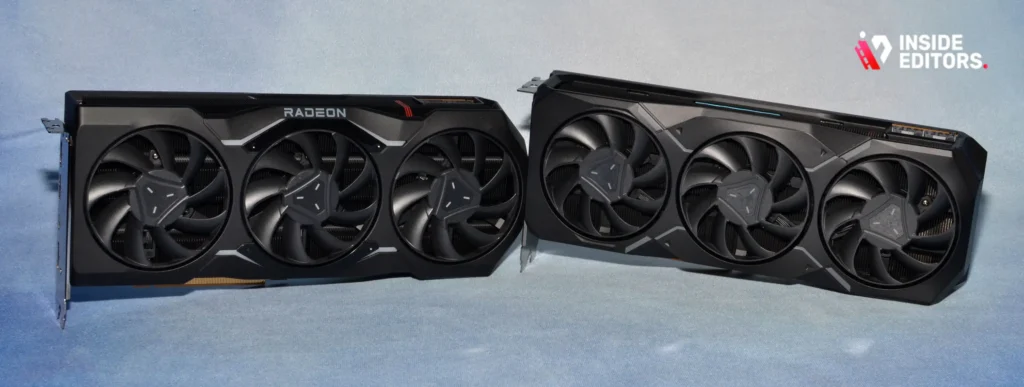
AMD’s flagship, the RX 7900 XTX, is a formidable competitor, especially concerning VRAM. Matching the 4090 with 24GB of GDDR6 memory, it excels in tasks that are heavily VRAM-dependent, such as massive texture handling or complex 3D rendering integrated into the video pipeline.
However, its performance in NLEs like Premiere Pro, which relies heavily on CUDA, can sometimes lag behind the equivalent NVIDIA cards. The 7900 XTX shines brightest in DaVinci Resolve, which is highly optimized for OpenCL and AMD hardware. If you are primarily a Resolve user and prioritize VRAM capacity over proprietary hardware encoding speed, the 7900 XTX offers exceptional value.
4. NVIDIA GeForce RTX 4070 Ti Super
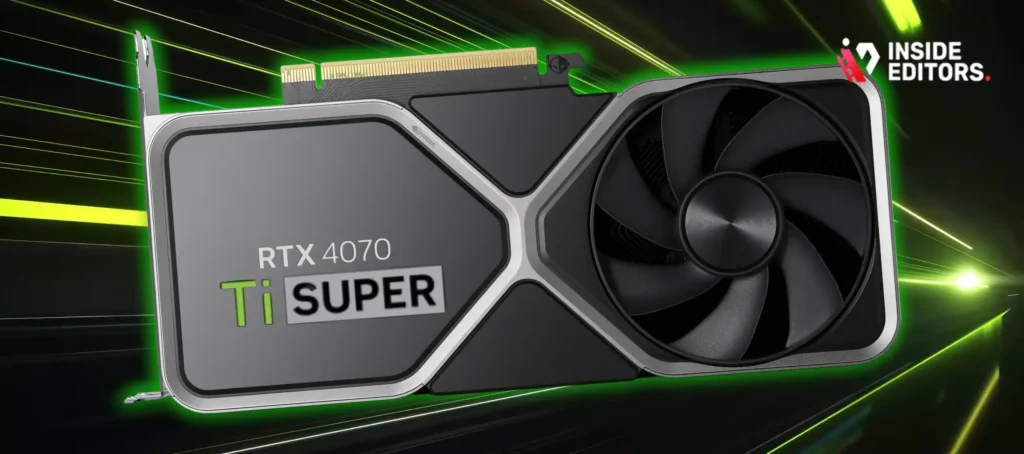
The introduction of the 4070 Ti Super with 16GB of VRAM was a game-changer for the mid-range market. Previous generations often skimped on VRAM at this price point, limiting 4K multi-layer work. This card provides the VRAM headroom necessary for complex 4K projects and even entry-level 6K editing.
It maintains the efficiency and strong driver support characteristic of NVIDIA, making it a reliable workhorse. For most YouTube creators, corporate video editors, and freelancers focused on 4K delivery, the 4070 Ti Super is arguably the most sensible choice among the Best Graphics Cards for Video Editing under $1,000.
5. NVIDIA GeForce RTX 4060 Ti (16GB)
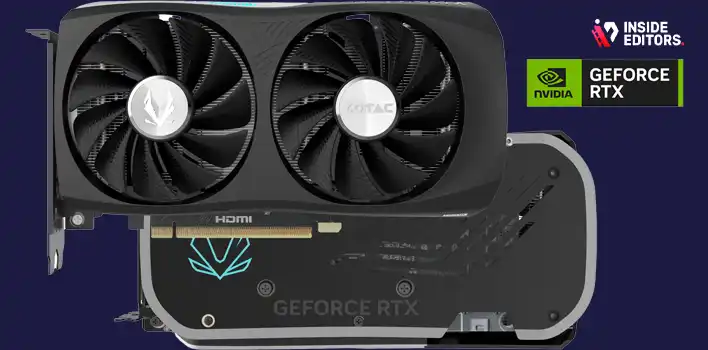
For editors on a tighter budget who still require solid 4K performance, the 16GB version of the RTX 4060 Ti is highly recommended. While its raw processing power is lower than the 4070 series, the 16GB of VRAM ensures that the card won’t choke when loading large 4K timelines or applying multiple effects.
This card is ideal for editors transitioning from 1080p to 4K who need the stability and speed of NVENC without breaking the bank. It represents a significant step up from integrated graphics or older, lower-VRAM cards.
6. AMD Radeon RX 7800 XT
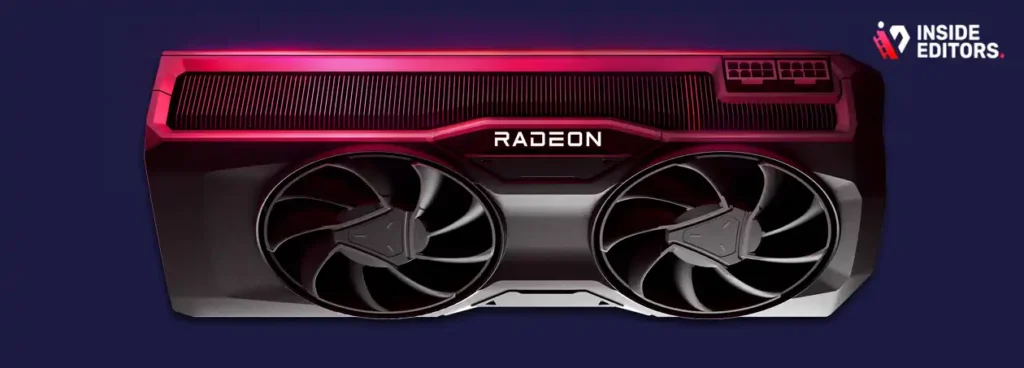
The AMD Radeon RX 7800 XT is a powerful contender in the sub-$600 category, offering 16GB of VRAM. This generous VRAM capacity makes it a strong alternative to the 4060 Ti, especially for editors using Resolve or other OpenCL-optimized software.
While its hardware encoder (VCN) is fast, some professional editors report that the quality and consistency of the NVIDIA NVENC encoder are superior, particularly for high-bitrate streaming or archival exports. However, for sheer timeline performance and VRAM-heavy tasks at an affordable price, the 7800 XT is a compelling option.
7. NVIDIA RTX A4000: Professional Stability and ECC
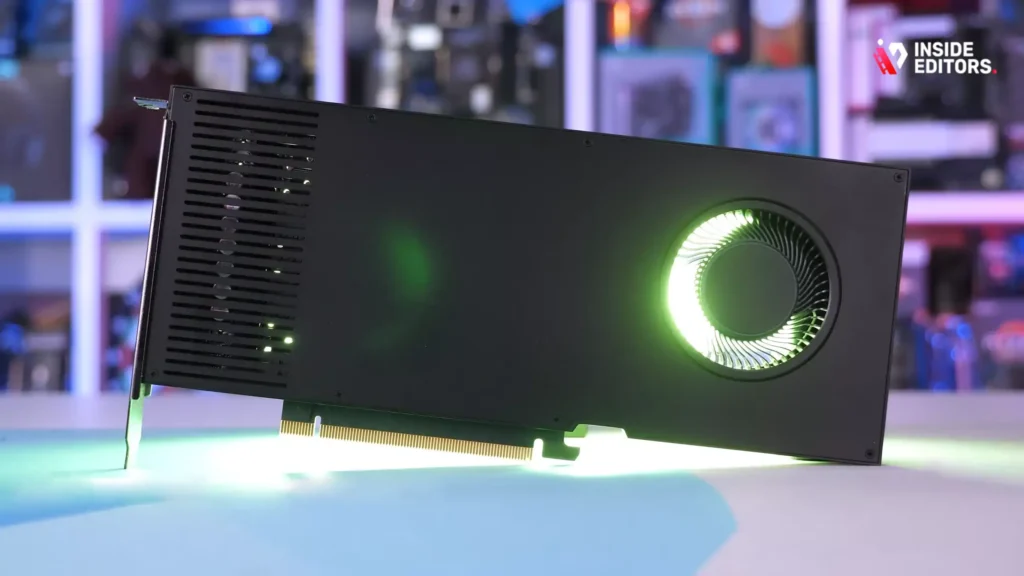
For editors working in mission-critical environments, such as broadcast or high-end post-production facilities, professional workstation cards like the NVIDIA RTX A4000 (formerly Quadro) are often preferred. While its raw speed may be comparable to a high-end consumer card, its stability, certified drivers, and Error-Correcting Code (ECC) memory are invaluable.
ECC memory prevents data corruption, a rare but catastrophic event in long, complex renders. The A4000 is designed for 24/7 reliability and professional certification with major software vendors, making it the choice for studios where downtime is unacceptable.
Beyond the Hardware: Optimizing Your Workflow
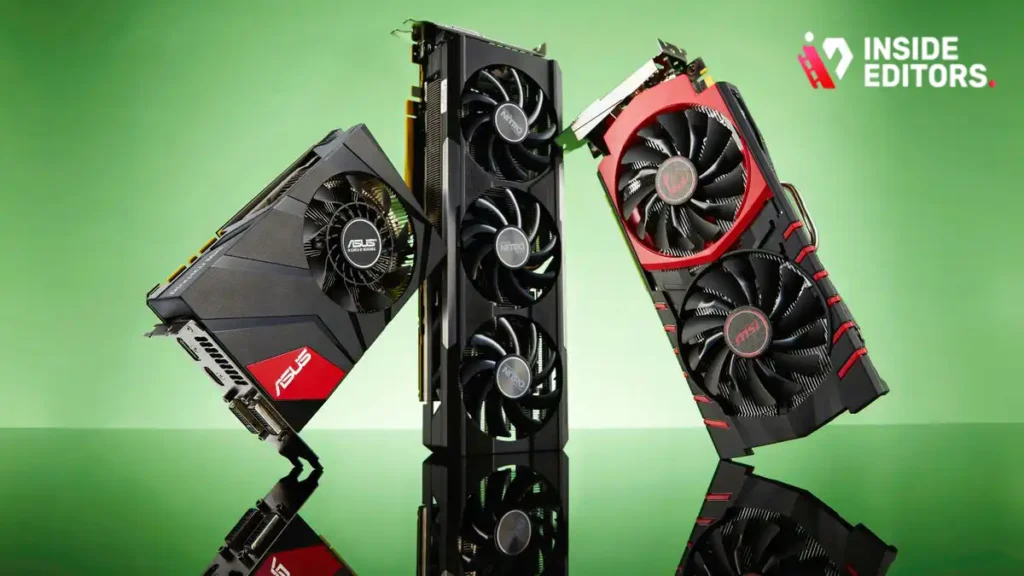
Selecting one of the Best Graphics Cards for Video Editing is only half the battle. Optimizing your entire workflow ensures you maximize the potential of your new hardware.
The Importance of Fast Storage
Even the fastest GPU will wait if your storage system is slow. Always use fast NVMe SSDs (PCIe 4.0 or better) for your project files, cache, and scratch disks. Separating your operating system drive from your media drives can also significantly improve performance, as the GPU can pull data rapidly without competing for bandwidth with the OS.
Understanding Software Preferences
Different NLEs utilize the GPU differently:
- Adobe Premiere Pro: Heavily favors NVIDIA CUDA acceleration for effects and rendering.
- DaVinci Resolve: Highly optimized for both CUDA and OpenCL/Metal, often showing excellent performance on high-VRAM AMD cards as well.
- Final Cut Pro (Mac): Optimized exclusively for Apple Silicon (M-series chips), but external GPUs (eGPUs) can still be utilized for specific tasks on Intel Macs.
Before purchasing, check which GPU architecture your primary editing software prioritizes. This decision can heavily influence which of the Best Graphics Cards for Video Editing provides the best return on investment for your specific needs.
The Case for Professional Video Editing Services
While upgrading your hardware is essential for long-term productivity, sometimes the immediate need for high-quality, fast turnaround video outweighs the time and expense of a hardware overhaul. If you find yourself consistently battling slow rendering, complex color grading, or simply lack the time to handle post-production, professional editing services offer a powerful alternative.
Inside Editors provides comprehensive Professional video editing services for businesses, content creators, and marketers. Our team of professional editors, with 10+ years of experience, utilizes high-end, optimized workstations-meaning you get the benefit of top-tier hardware without the capital expenditure.
The Inside Editors Advantage
Choosing Inside Editors means you can save time and focus on content creation while ensuring professional quality that builds trust. We offer a fast turnaround (24-72 hours) and unlimited revisions until you are completely satisfied. Our affordable pricing, starting at just $29/video, includes essential enhancements like color grading and audio optimization.
If you are a YouTube creator, a marketing team, or a course creator looking for a scalable solution, outsourcing your post-production to our professional team guarantees consistent brand style and high-quality output every time. This is especially beneficial when you need to scale rapidly without investing thousands in new GPUs and workstations.
Final Verdict and Recommendation
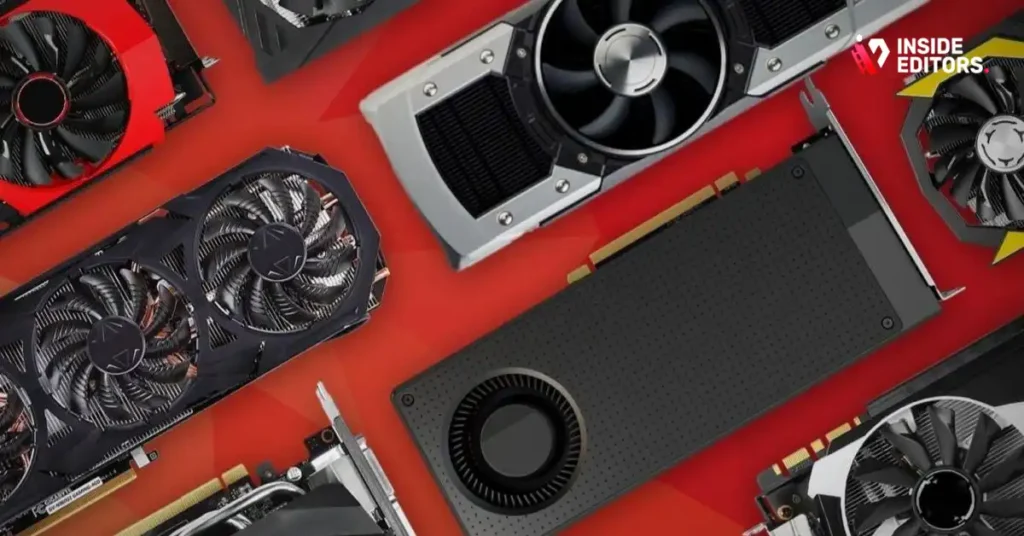
Choosing the Best Graphics Cards for Video Editing depends entirely on your budget, your primary editing software, and the resolution of your output.
The High-End Professional: RTX 4090
If budget is no object and speed is paramount for 8K or complex VFX work, the NVIDIA GeForce RTX 4090 remains the definitive choice. Its 24GB of VRAM and superior NVENC encoder justify the price for high-volume studios.
The Best Overall Value: RTX 4080 Super
For the vast majority of professional editors who need high performance for 4K and 6K without the flagship price tag, the NVIDIA GeForce RTX 4080 Super offers the best balance of speed, VRAM (16GB), and efficiency.
The Best Budget 4K Card: RTX 4070 Ti Super (16GB)
The NVIDIA GeForce RTX 4070 Ti Super is the smart choice for budget-conscious editors. Its 16GB VRAM capacity makes complex 4K work smooth and reliable, securing its place as one of the most practical options among the Best Graphics Cards for Video Editing.
Ultimately, the right GPU accelerates your creativity. By prioritizing VRAM and hardware encoder quality, you ensure that your editing rig keeps pace with your vision. If you find that hardware limitations are still hindering your output, remember that leveraging the expertise and optimized workstations of a service like Inside Editors can provide an immediate, high-quality solution.
Frequently Asked Questions
What VRAM is needed for 4K?
For comfortable and efficient 4K video editing, you should aim for a graphics card with a minimum of 8GB of VRAM. If you work with multi-layered 4K timelines or complex effects, 12GB to 16GB is highly recommended to ensure smooth performance with the best graphics cards for video editing.
Does AMD or NVIDIA perform better?
NVIDIA generally holds an advantage in professional video editing due to its highly optimized CUDA platform and superior NVENC hardware encoder, which speeds up rendering. However, high-VRAM AMD cards perform excellently in DaVinci Resolve, making them strong contenders for the best graphics cards for video editing in that specific software.
Is a gaming GPU good for editing?
Yes, modern high-end gaming GPUs are excellent for video editing. They offer massive VRAM and powerful processing cores. For most users, consumer cards like the RTX 4080 Super are among the best graphics cards for video editing, offering great performance and value.
How much does a good GPU cost?
A good GPU for serious 4K video editing typically costs between $700 and $1,200. Budget options start around $450 (like the 4060 Ti 16GB), while the absolute best graphics cards for video editing, such as the RTX 4090, can exceed $1,600.
Should I prioritize VRAM or clock speed?
For video editing, you should prioritize VRAM capacity over raw clock speed. High VRAM (12GB+) is crucial for handling high-resolution media and complex effects without bottlenecking, making it the defining factor for the best graphics cards for video editing.


