


In today’s digital landscape, video is no longer optional-it’s essential. Businesses rely heavily on visual storytelling to connect with audiences, train employees, and drive sales. Navigating the world of high-quality content requires understanding the intricacies of corporate video production services. These specialized services encompass everything from initial concept development and scripting to filming, post-production, and final delivery, ensuring your message is clear, professional, and impactful.
This comprehensive guide is designed for marketing managers, communication directors, and business owners looking to maximize their investment in video. We will explore the best practices, strategic planning, and execution workflows necessary to select and utilize corporate video production services effectively, transforming your vision into compelling visual assets that meet modern E.E.A.T. standards.
I. Planning Your Video Goals & Scope

The foundation of any successful corporate video lies in rigorous pre-production planning. Before engaging any corporate video production services, you must clearly define why you are making the video and what you hope to achieve.
Understanding the “Why”: Aligning Video with Business Objectives
Video content should always serve a measurable business goal. Is the video intended to increase brand awareness, generate leads, improve customer support, or facilitate internal training? Different objectives demand different approaches to scripting, visual style, and distribution.
| Objective | Typical Video Type | Key Metric |
|---|---|---|
| Brand Awareness | Explainer, Brand Anthem | Impressions, Social Shares |
| Lead Generation | Testimonial, Product Demo | Click-Through Rate (CTR), Form Submissions |
| Customer Support | Tutorial, FAQ Video | Reduction in Support Tickets, Watch Time |
| Internal Training | Onboarding Module, Safety Briefing | Completion Rate, Knowledge Retention Scores |
“A video without a clear objective is just moving pictures. Strategy dictates style, not the other way around.” – Andrew Davis, Author and Keynote Speaker
Crafting the Creative Brief: The Blueprint for Success
A detailed creative brief acts as the contract and guiding document for your chosen corporate video production services provider. It ensures everyone-from the director to the editor-is aligned on the vision.
Key Components of a Robust Creative Brief:
- Project Overview: Target audience, core message, and primary objective.
- Style and Tone: Desired visual aesthetic (e.g., cinematic, documentary, animated) and emotional tone (e.g., serious, humorous, inspiring).
- Technical Requirements: Desired length, aspect ratio (16:9, 1:1, 9:16), and required delivery formats (e.g., 4K, HD).
- Budget and Timeline: Clearly defined financial constraints and critical milestones.
A well-articulated brief significantly reduces revisions and speeds up the production process, making the collaboration with corporate video production services much smoother.
II. Choosing the Right Production Partner

Choosing the right partner is perhaps the most critical decision. The market is saturated, ranging from large, full-service agencies to boutique production houses and freelance collectives. Evaluating expertise, portfolio relevance, and workflow compatibility are essential steps.
Evaluating Expertise and Portfolio Relevance
When reviewing potential providers of corporate video production services, look beyond flashy demo reels. Focus on case studies and examples that align closely with your specific industry and video type.
- Industry Experience: Have they produced successful videos for similar B2B or B2C organizations?
- Technical Capability: Do they possess the necessary equipment (cameras, lighting, sound gear) and specialized skills (animation, drone footage) required for your project?
- Storytelling Prowess: Ultimately, production quality is secondary to narrative quality. Review their ability to craft compelling scripts and interviews.
The Importance of Post-Production Expertise
While filming captures the raw material, post-production transforms it into the final product. This stage involves editing, color grading, sound mixing, and graphic design. Many excellent production companies focus heavily on the shoot, sometimes overlooking the meticulous detail required in post-production.
If you are working with a smaller production team or need to scale your video output rapidly, you might consider professional post-production specialists. Inside Editors specializes in providing high-quality, professional video editing services designed to handle the heavy lifting after the shoot. Our professional editing team, with over 10 years of combined experience, ensures your footage is polished, branded, and delivered quickly. This allows your internal team to focus on content strategy and distribution, knowing the final product will meet broadcast-quality standards.
Comparison: Full-Service Agency vs. Specialized Service Provider
| Feature | Full-Service Agency | Specialized Service Provider (e.g., Post-Production) |
|---|---|---|
| Scope | Concept to Delivery (End-to-End) | Focused on specific stages (e.g., Editing, Animation) |
| Cost | Typically Higher (Overhead included) | Generally Lower, billed per project or hour |
| Control | Less direct control over individual stages | High control; you manage the handoff between stages |
| Turnaround | Slower (due to internal workflow queues) | Often Faster and more flexible |
| Ideal For | Large, complex projects requiring single vendor management | High-volume content creators, businesses needing fast delivery |
III. Production Workflow: Script to Screen

A standardized, transparent workflow is the hallmark of professional corporate video production services. Understanding these steps helps you manage expectations and provide timely feedback.
Step 1: Scripting and Storyboarding
The script is the backbone of the video. It dictates pacing, visual cues, and the core message. Best practices involve collaborative scripting, where the client’s subject matter expertise meets the production company’s narrative skill.
- Focus on the Audience Hook: The first 10-15 seconds are crucial for engagement.
- Clarity Over Jargon: Ensure the language is accessible to the target audience.
- Legal Review: If the video discusses claims, compliance, or financial data, ensure legal review occurs before filming.
Storyboards visually map out each scene, helping to identify potential logistical issues and ensuring the visual flow complements the script. This is where the initial vision truly takes shape.
Step 2: Pre-Production Logistics and Casting
This phase involves all the logistical preparations necessary for a smooth shoot: securing locations, hiring talent, scheduling crew, and obtaining necessary permits or release forms.
For videos requiring on-screen talent, whether professional actors or internal employees, adequate preparation is key. Coaching employees on delivery and presence can significantly enhance the final product’s authenticity. If you are looking to find professional video editors who can handle diverse footage from various sources, securing a reliable post-production partner early in this phase is highly recommended.
Step 3: Filming (The Shoot)
Efficiency and flexibility define a successful shoot. While the script and storyboard provide the roadmap, professional corporate video production services anticipate challenges-like lighting changes or unexpected noise-and adapt quickly.
Key On-Set Best Practices:
- Prioritize Audio: Poor audio quality is the single biggest detractor from professional video. Ensure high-quality microphones and sound monitoring are used.
- Shoot for the Edit: Capture varied shots (wide, medium, close-up) and sufficient B-roll (supplementary footage) to give the editor maximum flexibility.
- Clear Communication: The director must maintain clear, respectful communication with the talent and crew to keep the energy high and the schedule on track.
IV. Post-Production: Editing & Refinement
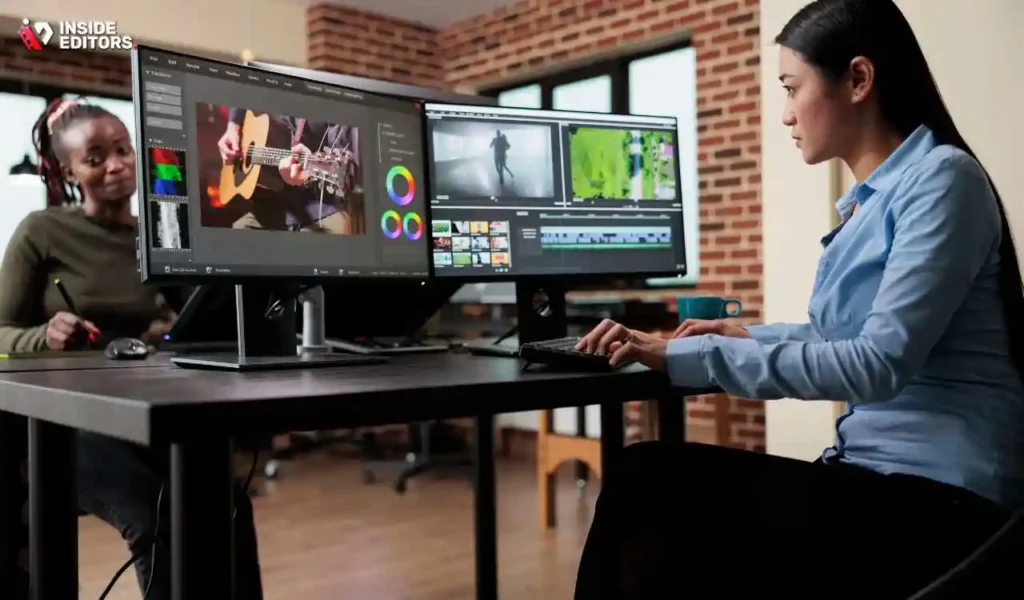
The post-production phase is where raw footage is molded into a cohesive, polished narrative. This stage demands technical precision, creative vision, and meticulous attention to detail.
The Critical Role of Professional Editing
Editing is more than just cutting clips; it’s about pacing, rhythm, and emotional resonance. A skilled editor ensures the visual flow supports the script and maintains audience engagement. This is particularly vital for content distributed across various platforms, such as video editing for social media, where pacing must be rapid and attention-grabbing.
Elements of Professional Post-Production:
- Color Grading: Applying a consistent visual style (look) across all scenes, ensuring brand consistency.
- Sound Design: Mixing dialogue, music, and sound effects to create an immersive and clear audio experience.
- Motion Graphics: Integrating lower-thirds, titles, and animated elements to clarify complex information.
Pros and Cons of Outsourcing Post-Production
For many businesses, keeping the editing process internal is inefficient. Outsourcing to dedicated corporate video production services specializing in post-production offers significant advantages.
Pros of Outsourcing:
- Speed and Scalability: Professional services, like Inside Editors, offer fast turnaround times (24-72 hours) and can scale up quickly to handle large volumes of content without overburdening internal staff.
- Expertise and Quality: Access to professional editors, colorists, and sound engineers who use industry-standard software and techniques.
- Cost-Effectiveness: Often more affordable than maintaining in-house editing staff, software licenses, and hardware.
- Objective Review: Editors bring a fresh, objective perspective to the footage, ensuring the narrative makes sense to an external audience.
Cons of Outsourcing:
- Initial Communication Overhead: Requires clear communication of brand guidelines and style guides upfront.
- Loss of Direct Control: You rely on the vendor’s workflow and scheduling. (Mitigated by services offering unlimited revisions.)
Inside Editors: Your Partner in Post-Production
If your business generates a high volume of raw footage-from webinars and interviews to product demos-Inside Editors is designed to be your scalable solution. We provide professional video editing services with a focus on speed, quality, and affordability (starting at $29/video). Our workflow includes color grading, audio enhancement, and unlimited revisions until you are completely satisfied, ensuring consistent brand style across all your video assets. We help businesses save time on video editing so they can focus on content creation and distribution.
V. Distribution & ROI Measurement
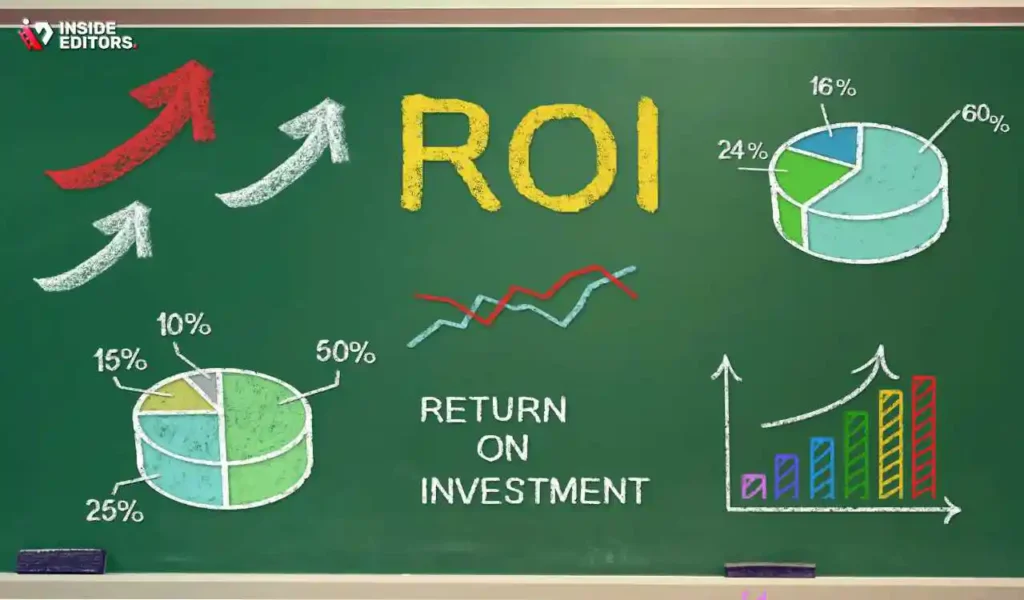
The final best practice involves ensuring the video reaches the right audience and measuring its performance against the initial objectives. Even the best corporate video production services cannot guarantee success without a robust distribution strategy.
Optimizing Video for Platform Performance
Different platforms require different video specifications and strategies. A video optimized for LinkedIn (shorter, text overlays) will differ significantly from one optimized for YouTube (longer, SEO-focused titles and descriptions).
- SEO Optimization: Use target keywords in the video title, description, and tags (for YouTube and Vimeo).
- Accessibility: Include closed captions (CC) or subtitles. This is crucial for accessibility and for viewers watching without sound.
- Thumbnails: Invest time in creating compelling, high-resolution custom thumbnails, which significantly impact click-through rates.
“The distribution channel is just as important as the content itself. If you don’t tailor the video to the platform, you’re missing half the audience.” – Mark Schaefer, Marketing Consultant and Author
Measuring Success: Beyond Vanity Metrics
To prove the value of your investment in corporate video production services, you must track metrics tied directly to your business goals.
Key Performance Indicators (KPIs):
- Completion Rate/Watch Time: Indicates how engaging the content is. Low completion rates signal the need for tighter editing or a revised narrative structure.
- Conversion Rate: For videos with a Call-to-Action (CTA), measure how many viewers complete the desired action (e.g., download, sign-up, purchase).
- Engagement Rate: Likes, comments, and shares, which indicate audience connection and virality potential.
- Cost Per Acquisition (CPA): If used in paid advertising, track the cost of acquiring a customer through the video campaign.
If you are struggling with low engagement, consider asking for a free video editing consultation to review your existing content and identify areas where professional pacing and visual enhancement could improve performance.
VI. Corporate Video Pitfalls to Avoid

While working with experienced corporate video production services minimizes risk, clients must also be aware of common mistakes that derail projects and inflate costs.
Mistake 1: Scope Creep and Lack of Final Sign-Off
Scope creep-the uncontrolled expansion of project requirements-is the number one budget killer. Define the project scope clearly in the creative brief and secure final sign-off on the script and storyboard before filming begins. Any significant changes after filming should be treated as a new project phase with associated costs.
Mistake 2: Prioritizing Gear Over Story
While 4K resolution and cinematic cameras are impressive, they cannot save a weak story. Focus your budget on strong scripting, professional directing, and expert editing rather than solely on the latest camera technology. The best corporate video production services prioritize narrative structure and emotional connection above all else.
Mistake 3: Neglecting Legal and Compliance Checks
Always ensure you have the proper rights for all elements used:
- Music Licensing: Use royalty-free or properly licensed music. Never use popular songs without explicit, expensive clearance.
- Talent Releases: Obtain signed model/talent release forms from every person appearing on camera.
- Brand Usage: Ensure all logos, trademarks, and intellectual property are used correctly and legally.
If you are a business owner or marketer needing to simplify the process of creating consistent, high-quality content, remember that professional video editing services for businesses can handle these technical and compliance details efficiently in post-production.
VII.Corporate Video & AI: The Future

The landscape of corporate video production services is rapidly evolving, particularly with the integration of artificial intelligence (AI). While AI tools can assist in transcription, first drafts of edits, and basic color correction, the need for human creativity and emotional intelligence remains paramount.
Leveraging AI for Efficiency, Not Replacement
AI is excellent for handling repetitive, time-consuming tasks, freeing up human editors and producers to focus on high-value creative decisions. For instance, AI can quickly sort through hours of B-roll footage, but only a human editor can decide which specific shot best enhances the emotional impact of an interview segment.
When seeking corporate video production services, ask how they integrate technology to improve efficiency. A modern provider should leverage tools that speed up transcription and initial assembly, ensuring that the human creative team focuses on the narrative polish. This blend of technology and expertise is key to delivering high-quality, fast-turnaround content. Furthermore, understanding the nuances of video editing for YouTube often requires human insight into audience retention metrics that AI tools are still learning to interpret effectively.
Conclusion: Elevate Your Video Strategy
Investing in professional corporate video production services is an investment in your brand’s future. By adhering to best practices in strategic planning, partner selection, workflow execution, and rigorous measurement, you ensure that every video asset contributes meaningfully to your business goals.
The modern viewer demands authenticity, quality, and relevance. Whether you are producing a high-stakes brand anthem or a series of rapid-fire social media clips, the quality of your post-production is non-negotiable.
If your goal is to scale your video content without compromising quality or draining internal resources, consider partnering with a specialized post-production provider. Inside Editors offers the expertise, fast turnaround, and affordability necessary to handle your editing needs, allowing you to focus on the strategic elements of content creation. We are committed to providing professional, reliable corporate video production services support, ensuring your final product is polished, professional, and ready to engage your audience.
Ready to transform your raw footage into high-impact content? Visit our service page to learn more about our professional video editing services.
Frequently Asked Questions
What is the typical timeline for corporate video production?
A standard corporate video production project, from concept to final delivery, usually takes 4 to 8 weeks. Complex projects involving animation or multiple shooting locations may extend this timeline. Setting clear expectations during pre-production is vital to ensure timely completion and maintain quality standards for your corporate video.
How do I choose the right video production partner?
Look for partners with a strong portfolio demonstrating relevant industry experience and high production value. Check client testimonials and ensure they offer comprehensive Corporate Video Production Services, including scripting, shooting, and post-production. A good partner prioritizes understanding your specific business objectives.
Why is pre-production planning essential?
Pre-production, which includes scripting, storyboarding, and logistics, is the foundation of a successful corporate video. Thorough planning prevents costly reshoots and delays during the main production phase. Investing time here ensures the final video aligns perfectly with the intended message and budget.
Should we use internal staff or outsource video services?
While internal staff can handle basic videos, outsourcing Corporate Video Production Services ensures professional quality and technical expertise. External teams bring specialized equipment, creative perspective, and efficient workflows, resulting in a polished product that reflects positively on your brand image.
What are the key elements of a successful corporate video?
A successful corporate video must have a clear objective, a compelling narrative, and high technical quality. It should engage the target audience within the first 10 seconds and include a strong call-to-action. Consistency in branding and messaging is also crucial for maximum impact.


