

Editing a wedding video is a bit like composing a love story from scratch. You take the vision, the emotions, and the tiny unscripted exchanges from the day and shape them into something the couple will watch for decades. But as every experienced editor knows, visuals alone can’t carry that emotional weight. Music for wedding video editing is the heartbeat of the story, guiding the viewer through highs, pauses, nostalgia, and celebration.
A beautifully shot frame can fall flat if the music doesn’t fit the moment. And the opposite is just as true: the right piece of music can elevate even simple footage into something cinematic and deeply personal. That’s why editors treat music selection almost as its own craft – one that blends emotional intelligence, technical skill, and legal awareness.
When people remember a wedding film, they rarely recall the exact shot sequence or the camera used, but they often remember how it felt. That feeling is almost always tied to the music. So in this guide, we’ll walk through not only how to pick music that works but also how to shape the storytelling, timing, pacing, and atmosphere of a wedding video using expertly chosen soundtrack elements.
As we go, you’ll see how to avoid common mistakes and how to use music strategically to cut revision cycles and save hours. Whether you’re a beginner editor or a pro refining your workflow, this guide will help you create films that feel timeless – and consistently impress clients.
The role of music in wedding films
How Music Shapes Emotion and Storytelling
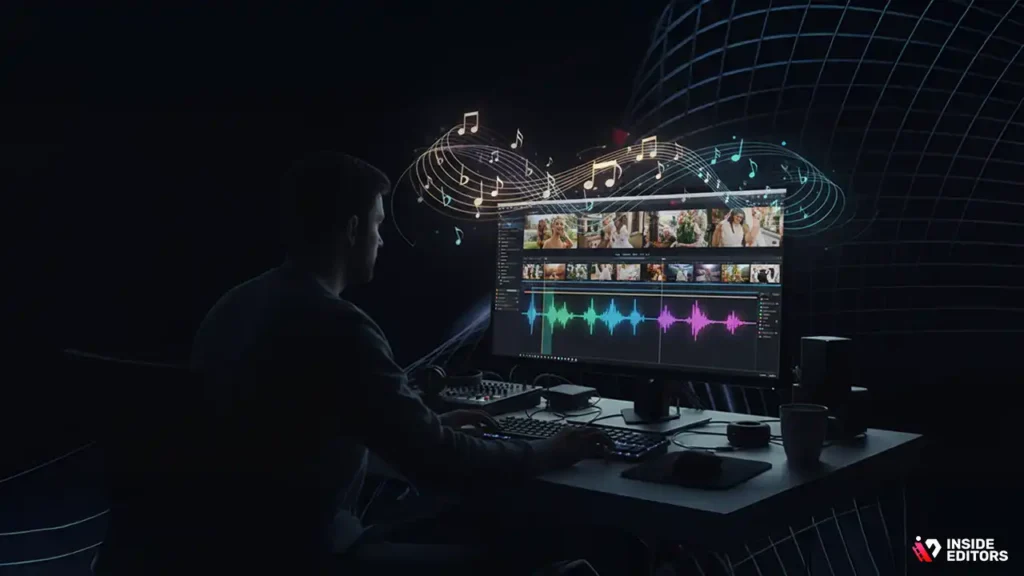
Imagine watching a wedding highlight reel with no sound. Even with perfect visuals – stunning composition, elegant lighting, joyful faces – the experience feels incomplete. Music brings emotional context. It tells the viewer what each moment means: whether it’s intimate, joyful, reflective, or celebratory.
A soft piano track during the bride’s letter reading invites viewers into her vulnerability. A gentle acoustic song during the first look adds a romantic, tender quality. A bright, upbeat indie track during the reception communicates joy and movement. Without saying a word, music sets tone, mood, and emotional pacing.
Editors often say, “Cut to the music, not to the footage.” That’s because rhythm and progression guide where to place cuts, how long to hold on faces, and when to slow down. Music dictates the emotional arc – a wedding film is essentially built around it. When you choose the right soundtrack, you create a blueprint for the entire edit.
How Music Influences Pacing and Shot Choices
Music for wedding video editing also determines the tempo of the film. Slow songs invite longer shots, gentle movements, and wide, cinematic frames. Faster tracks naturally call for quicker cuts, close-up energy, and action-heavy sequences.
For example:
- A 60 BPM piano track works beautifully for vows, slow-motion shots, and emotional highlights.
- A 120-140 BPM indie-pop song fits dancing, laughter, and reception energy.
The trick is to choose songs whose pacing aligns with the footage you have. If your transitions feel tense or your shots don’t match the beat, the viewer senses something is “off,” even if they can’t articulate why. The more instinctive your music-flow choices, the smoother and more immersive the final film feels.
Picking the perfect music for your wedding video
Start With the Couple’s Personality and Story
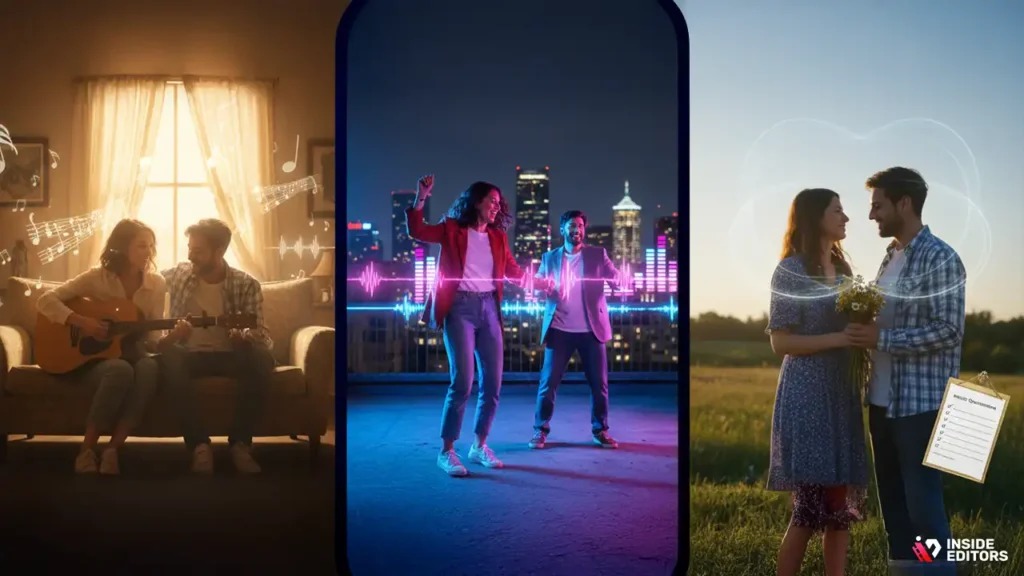
Before picking a single track, think about who the couple is. Are they soft-spoken and romantic? Bold and expressive? Do they love folk, classical, pop, electronic, or gospel? Many editors send a short music-style questionnaire before starting the edit. This simple step dramatically reduces revisions later on.
Wedding films shouldn’t feel generic. You’re crafting an emotional record of one couple’s unique day – the music should reflect them.
If a couple mentions they love Coldplay, The Lumineers, Lizzy McAlpine, or similar artists, you can choose licensed tracks that evoke the same feeling even if you can’t legally use the exact song. If they’re shy about music preferences, create a selection based on the tone of their wedding: soft, airy tracks for beach weddings; vibrant, modern selections for city weddings; classical or orchestral cues for formal ceremonies.
Consider the Venue, Styling, and Ceremony Culture
Music that suits a rustic barn wedding may feel out of place for a modern rooftop event. Likewise, a traditional church ceremony may call for instrumental pieces or cinematic orchestral tracks.
Ask yourself:
- What does the venue feel like?
- What kind of light, colors, and atmosphere dominate the footage?
- Are there cultural elements that require respect or representation?
For multicultural weddings – Indian, Jewish, Chinese, Nigerian, Filipino, Persian, and more – editors often incorporate authentic musical elements carefully and respectfully. This helps preserve identity while still creating a cohesive emotional arc.
Choose Music That Matches the Edit Length
Wedding highlight reels are commonly 3-5 minutes. Longer cinematic edits can be 8-12 minutes. Your song choice affects length and structure. If a song has a natural rise at the 2-minute mark, that’s a perfect place for a reveal, exchange of rings, or epic first look. If a song ends abruptly, you must plan transitions carefully or blend it with another track.
Avoid tracks that take too long to build unless you have enough footage to support them. If the buildup lasts 45 seconds but the bride prep footage only lasts 20 seconds, you’re forced to stretch clips unnaturally.
Always Use Licensed Music – No Exceptions
This is not optional. Copyright strikes are serious, and wedding clients deserve a product they can safely share. Using commercial songs (Bruno Mars, Taylor Swift, Ed Sheeran, etc.) without licenses is illegal – even if the video is “just for the client.”
Instead, use approved, rights-cleared libraries like:
- Musicbed
- Artlist
- Epidemic Sound
- Soundstripe
- Audiio
Licensing ensures your film is shareable on YouTube, Instagram, and even vendor portfolios without takedowns or muting.
Matching music to wedding video stages
Building the Emotional Arc: The Three-Act Structure
Most wedding videos follow a familiar storytelling rhythm – not because it’s formulaic, but because it mirrors human emotional experience. Music guides this rhythm.
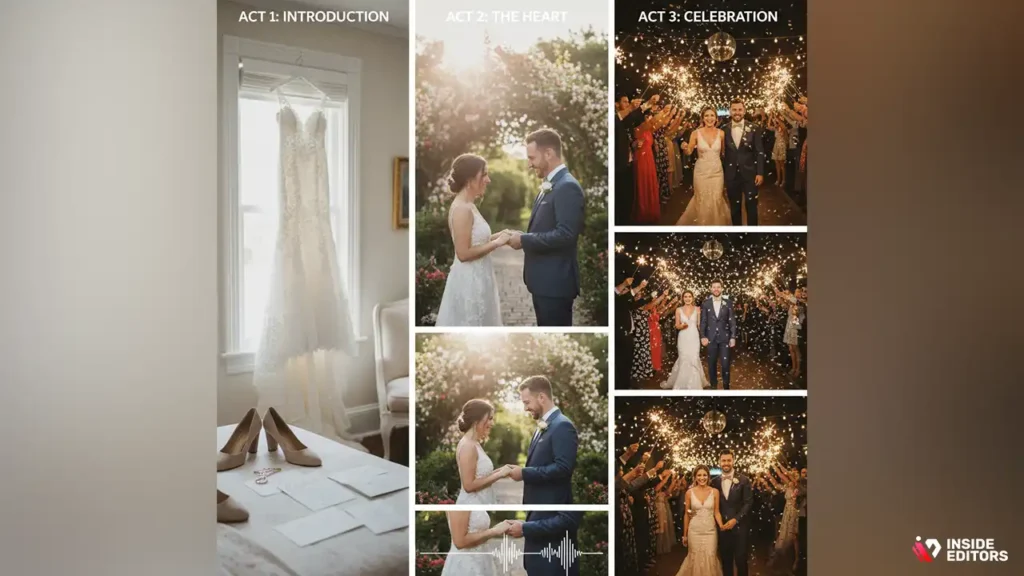
Act 1 – Introduction (0:00-1:00)
This part sets the tone. Choose soft, hopeful music. Acoustic intros, piano, or gentle vocals work beautifully. This is where you show the venue, the dress, invitation details, and early preparations.
Act 2 – The Heart (1:00-3:00)
This is where vows, first look, portraits, and ceremony highlights live. Pick a track with rising emotion – something that starts calm and builds. Instrumentals or light vocals give space for voiceovers.
Act 3 – Celebration (3:00-5:00)
End with a higher-energy track. This suits reception entrances, dancing, toasts, and sparkler send-offs. Choose something joyful, rhythmic, and memorable.
These three acts create a natural flow. Couples love it because it feels complete, emotionally full, and easy to watch repeatedly.
Using Multiple Tracks Without Breaking Flow
Editors often combine two or three licensed tracks into a single highlight film to support pacing changes. If you’re transitioning from vows to dancing footage, a single song rarely carries both moods effectively.
When blending multiple tracks:
- Fade tempo gently between songs.
- Use a natural transition like a whoosh, crowd cheer, or vow line to mask the switch.
- Keep keys compatible – clashing keys create jarring shifts.
Used wisely, multi-track edits feel cinematic and intentional rather than stitched together.
Wedding video music licensing done right
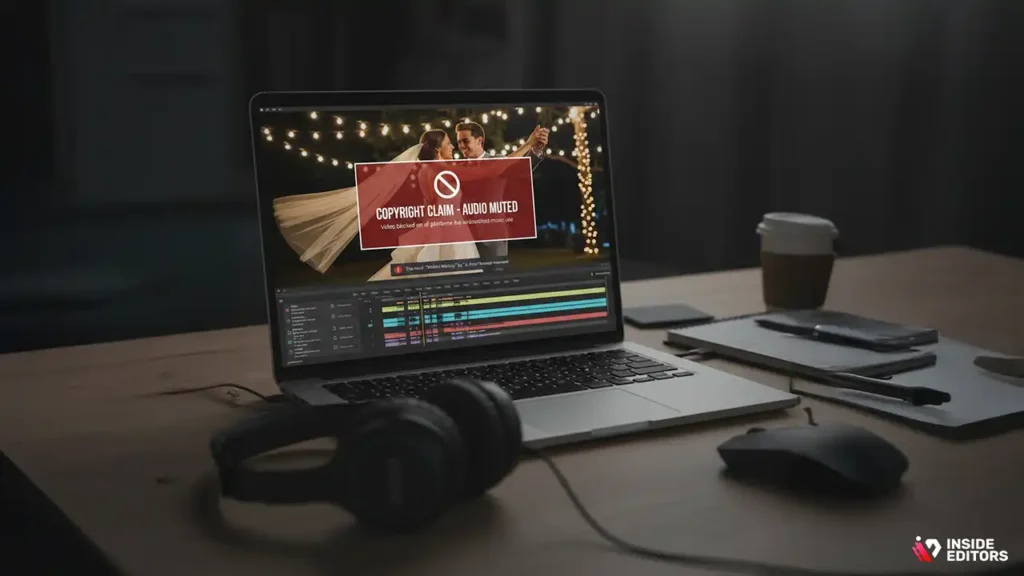
Music licensing is one of the least glamorous parts of wedding filmmaking, but it’s also one of the most important. Nothing ruins a beautiful film faster than a copyright claim, muted audio, or a frustrated client who can’t share their video online. When you choose music for wedding video editing, proper licensing protects your work, your reputation, and the couple’s experience.
Understanding the Basics of Music Licensing
Music licensing simply means you have legal permission to use a song in a specific way. When a couple hires you to edit their wedding, they’re not buying the rights to commercial music – even if they danced to it at the reception. You must use tracks that are already cleared for wedding filmmakers, typically found in royalty-free or subscription-based music libraries.
There are two components to every song:
- Composition (what’s written)
- Recordings (what’s performed and recorded)
A license must cover both. A song on Spotify is protected by multiple rights holders, which is why you can’t use it freely. Licensed libraries give you simplified, pre-approved access, usually with one click.
A good rule of thumb is simple:
If the song wasn’t created for licensing platforms, it’s not legal to use.
Many new editors underestimate this, but as platforms like YouTube and Instagram increasingly scan audio using AI, unlicensed tracks are detected instantly. One copyright notice can remove your video, mute the track, or even penalize your channel.
Types of Licenses for Wedding Films
Different libraries offer different licensing tiers. As an editor, you need to understand these distinctions so you choose music that covers all intended uses.
Common license types include:
Personal Use License
Allows a private video for the couple only – often used for digital downloads or physical USB deliveries. But it usually doesn’t cover social media sharing.
Social Media License
Allows posting to YouTube, Instagram, TikTok, Facebook, and other platforms where many wedding films end up. If your couple wants to share their highlight reel publicly, this license is essential.
Commercial/Priority License
Covers use in promotional materials for your editing business or wedding vendors. If you plan to upload the wedding to your portfolio or share it with venues, photographers, or planners, ensure your license includes this.
Perpetual License
Allows usage forever. Many editors prefer this because it avoids future complications.
When in doubt, always choose the broader license. Wedding films tend to evolve – couples share them around anniversaries, venues use them in marketing years later, and editors repurpose clips for reels.
The Best Places to Find Licensed Music
There are now dozens of libraries offering high-quality music for wedding video editing, but not all are equal. Here’s an insider breakdown of the leading platforms editors rely on:
Musicbed – Cinematic, Emotional and Wedding-Focused
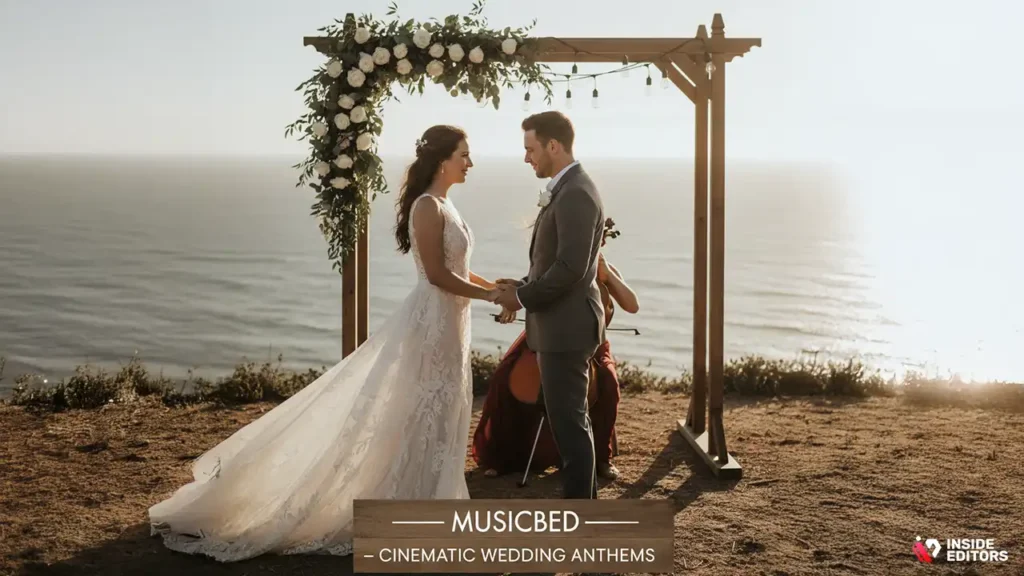
Musicbed is widely considered the gold standard for wedding filmmaking. Its catalog includes indie artists, cinematic scores, acoustic tracks, and emotional vocals perfectly suited to wedding films.
Why editors love it:
- Stunningly cinematic music
- Perfect for emotional storytelling and slow-motion
- Multiple mood, genre, and instrument filters
- Easy licensing options for wedding-only creators
Best for: Romantic highlight films, cinematic trailers, emotional vow sequences.
Artlist – Unlimited Music with a Flat Annual Price
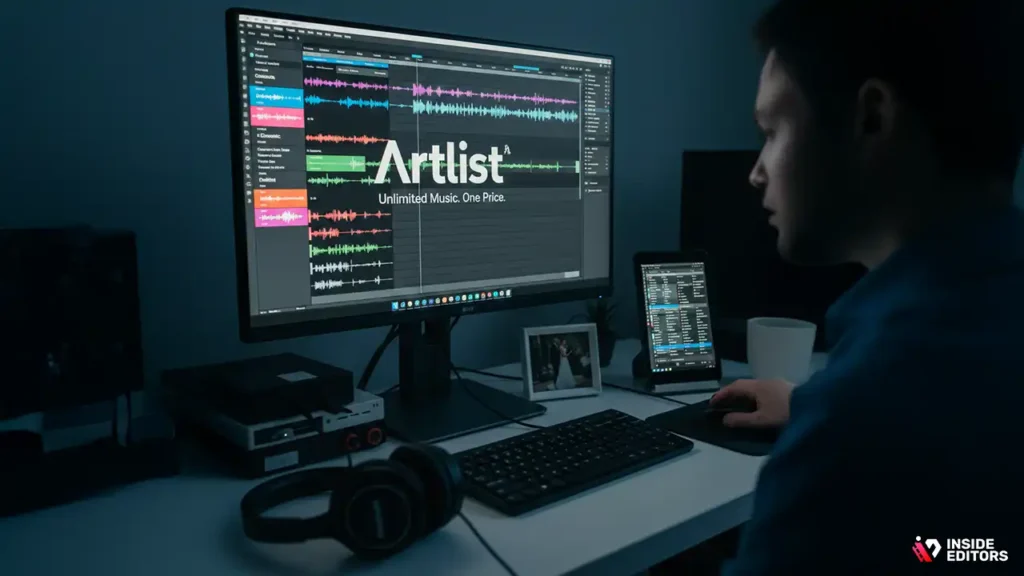
Artlist is one of the most cost-effective libraries because it offers unlimited downloads for one annual subscription. Editors who produce a lot of weddings use it to save time and budget.
Why editors love it:
- One price for unlimited use
- A huge library with multi-genre coverage
- Includes SFX libraries for transitions
- Provides perpetual licenses
Best for: Social edits, fast turnarounds, and editors who need variety.
Epidemic Sound – Great for Reception Highlights & Fun Edits
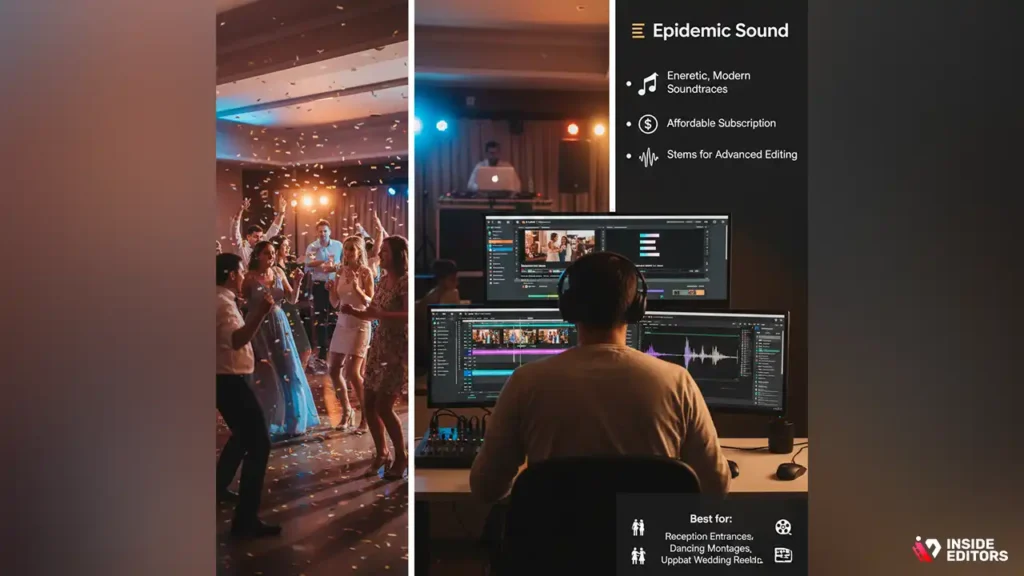
Epidemic is popular for upbeat tracks with strong rhythm and contemporary vibe – ideal for energetic reception cuts.
Why editors love it:
- Energetic, modern soundtracks perfect for dancing scenes
- Affordable subscription
- Offers stems for advanced editing
- Strong vocal selection
Best for: Reception entrances, dancing montages, upbeat wedding reels.
Soundstripe – Budget-Friendly with High-Quality Options
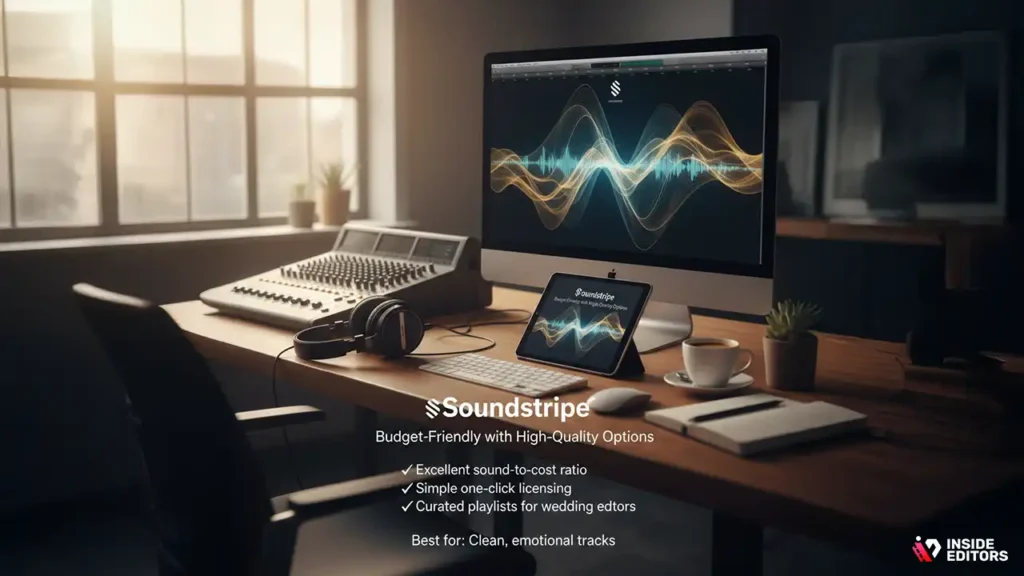
Soundstripe has grown significantly over the past few years, offering surprisingly strong cinematic and acoustic tracks.
Why editors love it:
- Excellent sound-to-cost ratio
- Simple one-click licensing
- Curated playlists for wedding editors
Best for: Editors who want clean, emotional tracks without overspending.
Audiio – Indie, Fresh and Perfect for Modern Weddings
Audiio features unique artists and tracks with a boutique feel. Editors love it for modern weddings that need a stylish, “Pinterest aesthetic” sound.
Why editors love it:
- Indie-style tracks rarely found elsewhere
- Beautiful vocal-driven music
- Lifetime membership option
Best for: Boho, outdoor, and modern editorial-style weddings.
A Quick Comparison Table
| Library | Best For | Pricing | Key Strength | Editors’ Notes |
| Musicbed | Cinematic weddings | Mid-High | Emotional storytelling | Ideal for highlight reels |
| Artlist | Bulk editing | Mid | Unlimited downloads | Fast workflow |
| Epidemic Sound | Reception/dancing | Low-Mid | Modern, energetic mix | Excellent for social content |
| Soundstripe | Budget-conscious | Low | Clean vocals + instrumentals | Great for background scoring |
| Audiio | Trendy modern weddings | Mid | Indie aesthetic | Fresh sound palette |
If you’re handling multiple weddings a month, having at least two subscriptions is wise. Most editors pair Musicbed with Artlist or Audiio to cover all moods and pacing needs.
Technical Tips for Editing Music in Wedding Videos
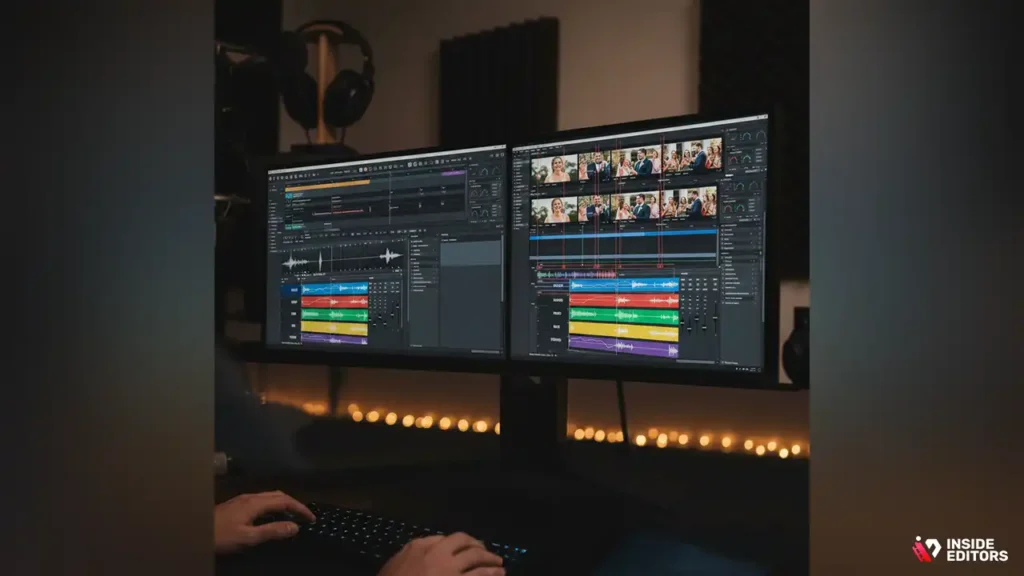
Selecting the right music is only half the battle. How you edit the music determines whether the final film feels professional or amateur. Even the perfect track can fall flat without proper mixing, timing, or pacing.
Using Stems for Cleaner Audio Editing
Stems are separate components of a song – vocals, drums, piano, bass, etc. When platforms offer them, use them. They give editors complete control over the sound design.
You can:
- Lower vocals during vows
- Remove drums during transitions
- Emphasize strings during emotional shots
- Build a custom crescendo using only music layers you choose
This elevates your film’s sound far beyond simple crossfades.
Beat Marking and Timing Your Cuts
A common beginner mistake is cutting purely based on visuals. Instead, mark beats or use automatic beat detection. Aligning your cuts with rhythm creates a natural flow – even if the viewer never consciously notices it.
If a song has a strong downbeat every two seconds, place significant cut transitions on those downbeats. If the track builds up after a verse, time the “reveal”-the first look, a kiss, the ceremony doors opening-right at the peak.
Mixing Dialogue With Music
A wedding video is part film, part documentary. Vows, toasts, and speeches matter. Music should support, not overpower.
Use these mixing guidelines:
- Lower music to -22 to -28 dB under dialogue
- Add a soft compressor to the dialogue track
- Use automation to gently duck music only when people are speaking
- Fade transitions so changes feel natural
When done right, viewers feel like the words float on top of the soundtrack.
Adjusting EQ for Clearer Sound
If a track competes with vocals, use EQ carving:
- Reduce mids of the music around 1k-3k Hz
- Slightly boost 2k-5k Hz on dialogue
This creates space for voices without lowering volume excessively.
Common music mistakes editors should avoid
Even skilled editors sometimes fall into avoidable traps. Here are the most frequent mistakes you can sidestep:
Using tracks that don’t match the couple’s personality
The film should reflect them, not your personal taste.
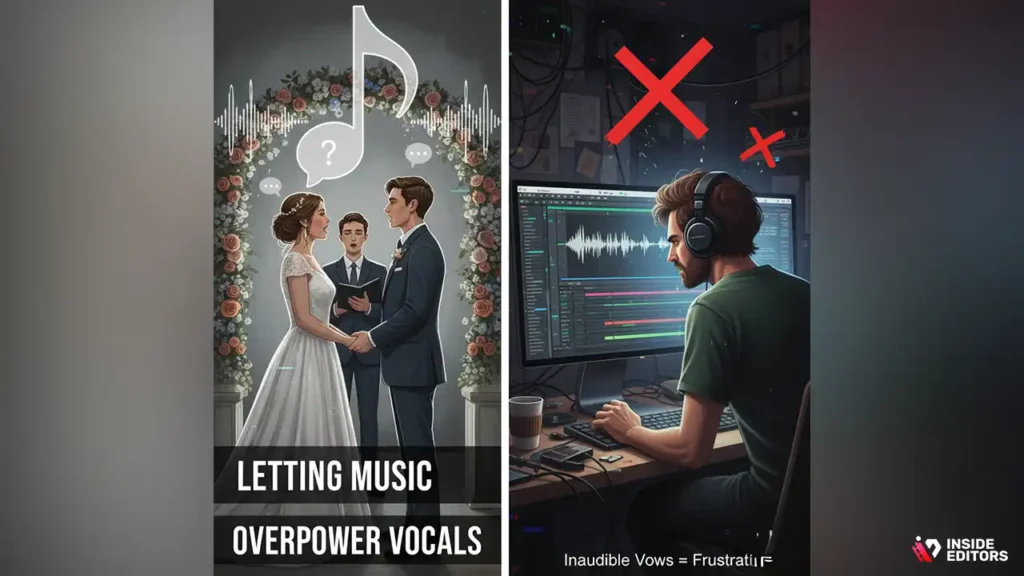
Letting music overpower vocals
Nothing frustrates couples more than inaudible vows.
Cutting every clip to the beat
This creates a robotic, predictable rhythm. Use rhythmic variation.
Using only one song for a 5-8 minute edit
It becomes repetitive and emotionally flat.
Ignoring lyrics
Accidentally choosing a sad or unrelated lyric during a joyful moment kills emotional momentum.
Choosing tracks with overly long intros
Slow-building songs can drag unless supported with purposeful footage.
Avoiding these mistakes alone can elevate your edits dramatically.
Perfect music for each part of a wedding film
When it comes to music for wedding video editing, one of the most powerful techniques is pairing the right kind of song with the right part of the wedding day. Each scene has its own emotional tone, pacing, and story weight. Below is a breakdown of the best music choices for each moment – a structure that professional editors use to create emotional flow and visual rhythm.
1. The Opening
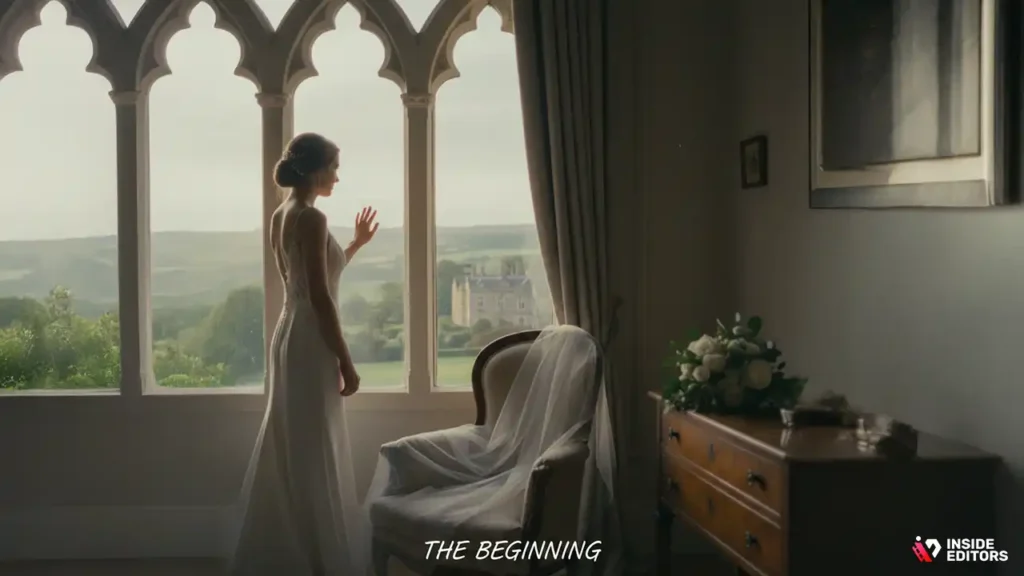
The opening sets the emotional expectation for the entire film. Think of it as the hook – your job is to create curiosity and emotional anticipation.
Best Music Choices
- Soft piano
- Ambient textures
- Gentle acoustic guitar
- Slow-building orchestral beds
- Ethereal vocals (female or male)
When to Use It
- Slow cinematic opening shots
- Establishing venue scenes
- Drone shots
- Bride/groom thinking or looking out a window
- Spoken vows teased over visuals
Why It Works
These tracks create emotional space. They give your viewers time to “enter the world” of the couple, the venue, and the moment. Many editors start with a soft song intro and save the energy for later.
2. Prep Scenes
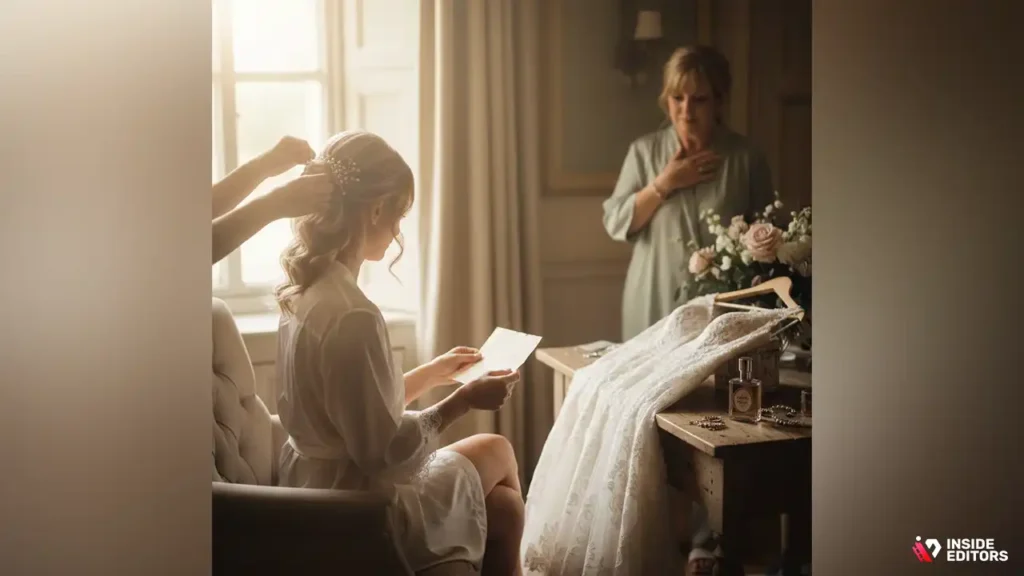
Prep scenes are detailed, tender, and intimate. They are full of micro-moments – hair finishing touches, dress shots, suit adjustments, perfume sprays, emotional parents, and handwritten letters.
Best Music Choices
- Acoustic folk
- Soft pop
- Warm acoustic songs with light vocals
- Indie tracks with emotional lyrics
- Instrumental underscores with soft beats
Why It Works
Getting-ready moments feel personal and heartfelt. The music should support the facial expressions, slow motions, and details without overpowering them.
Pro Tip
Use instrumental stems behind letters or gift exchanges to avoid interfering with the spoken words.
3. The First Look
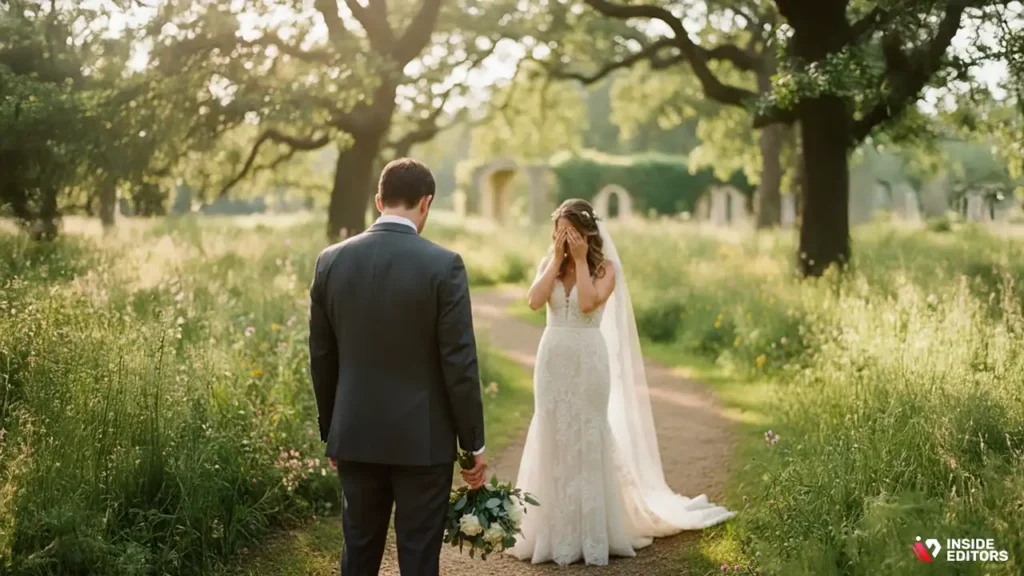
This is one of the most vulnerable emotional peaks. Music must enhance the tension and release.
Best Music Choices
- Emotional piano builds
- Intimate acoustic vocals
- Slow indie love songs
- Light orchestral crescendos
Recommended Mood
- Dreamy
- Romantic
- Softly cinematic
- Warm and emotional
Editing Strategy
Use music with a gentle rise – start soft, increase slowly, and let the peak land when the couple sees each other. This creates perfect emotional timing.
4. Ceremony Entrance & Vows
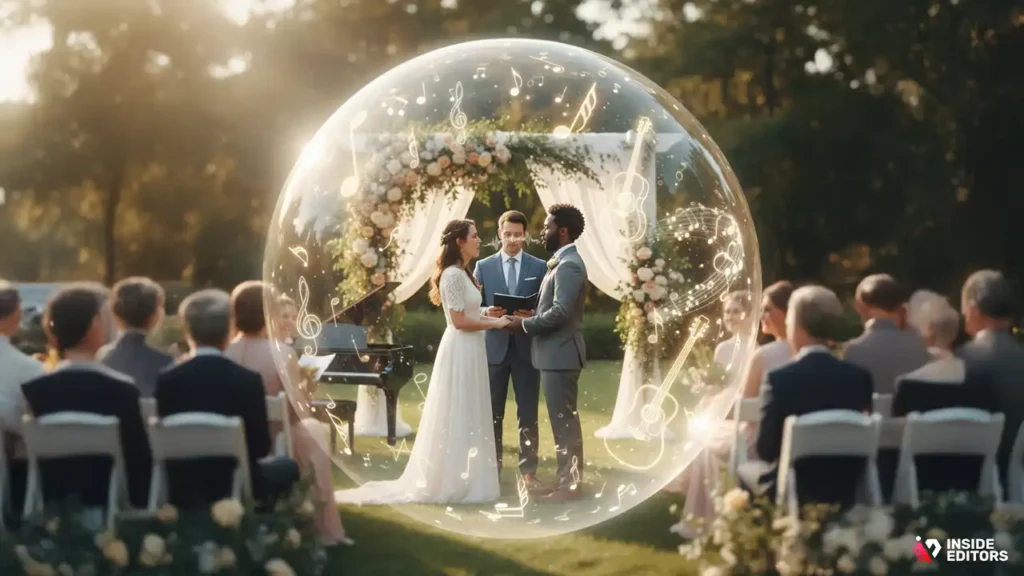
Vows are the emotional heart of the wedding film. The music here must be intentional.
Best Music Choices
- Minimalistic piano
- Soft emotional strings
- Ambient pads
- Gentle acoustic plucks
- Instrumental versions of vocal songs
Key Rule for Vows
Lyrics must NOT compete with the spoken words.
Instrumental or stem-based tracks are best.
Pro Tips
- Duck the music to -24 to -30 dB under vows
- Carve out mid-range frequencies so the dialogue remains clear
- Avoid songs with dramatic drums or heavy beats during vows
When done right, vows feel like they’re floating inside a cinematic bubble of music.
5. Post-Ceremony Joy
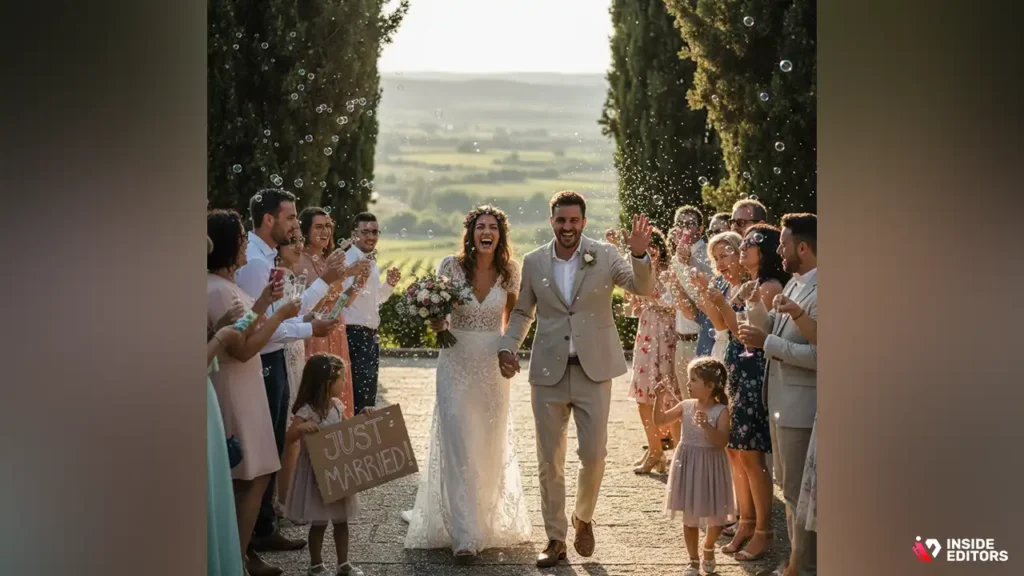
This is where energy returns. The mood is relieved, joyful, and celebratory.
Best Music Choices
- Upbeat indie pop
- Bright acoustic folk
- Happy, rhythmic instrumentals
- Feel-good pop with light percussion
Editing Strategy
Switch to a song with a noticeable beat – but avoid anything overpowering. Use fun details:
- rice throwing
- bubbles
- hugs
- congratulations
- candid laughter
The music should mirror the joy and energy of the day.
6. Portrait Session
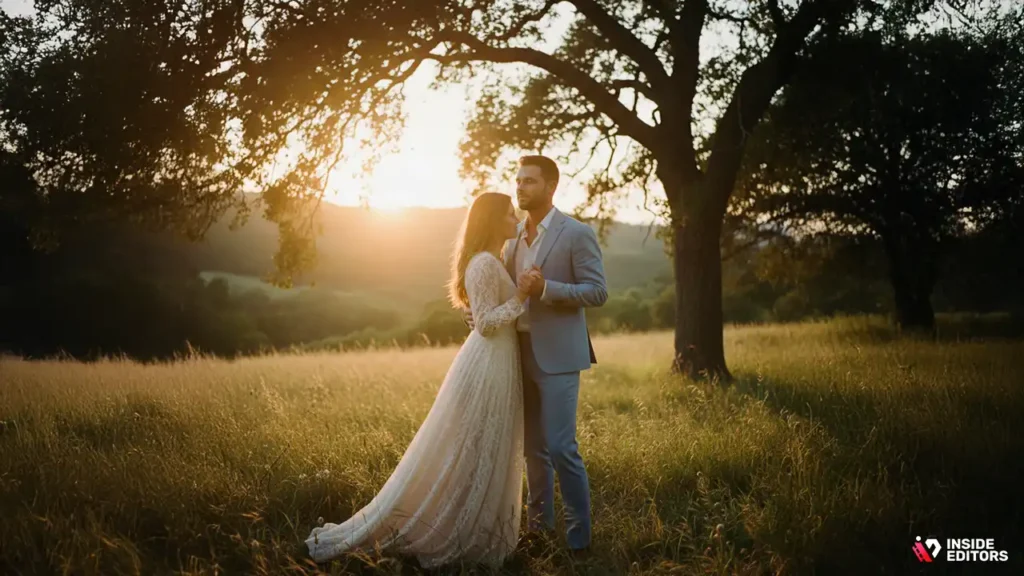
This is your “movie moment.” It’s often filmed during golden hour, with smooth movements, light flares, and romantic shots.
Best Music Choices
- Warm love songs
- Indie romantic pop
- Emotional cinematic tracks
- Lush vocal harmonies
Why It Works
Portrait sessions are slow but meaningful. The music should feel dreamy and controlled, helping elevate the cinematic beauty.
7. Reception Entrance & Dancing
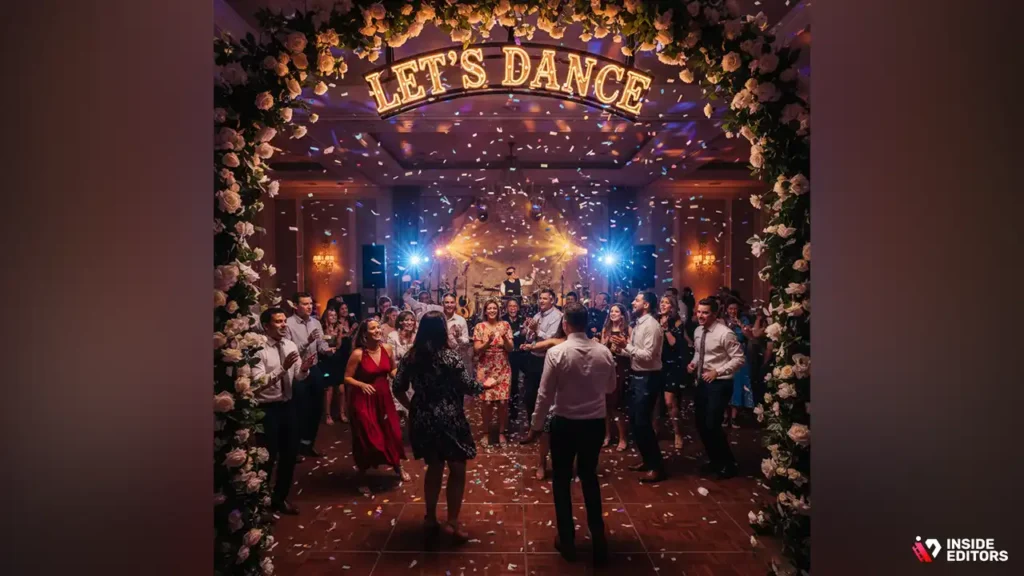
Reception music should match the party energy.
Best Music Choices
- Modern pop
- Feel-good indie
- Energetic beats
- Fun vocal tracks
- Folk-pop with rhythm
For Dance Floor Scenes
Use brighter tracks with steady tempo:
- claps
- light percussion
- rhythmic acoustic
- uplifting beats
These give your edit a vibrant pace that matches the energy of the room.
Pro Trick
Cut clips to every second or third beat – not every beat – so the pacing feels dynamic instead of chaotic.
8. The Final Sequence
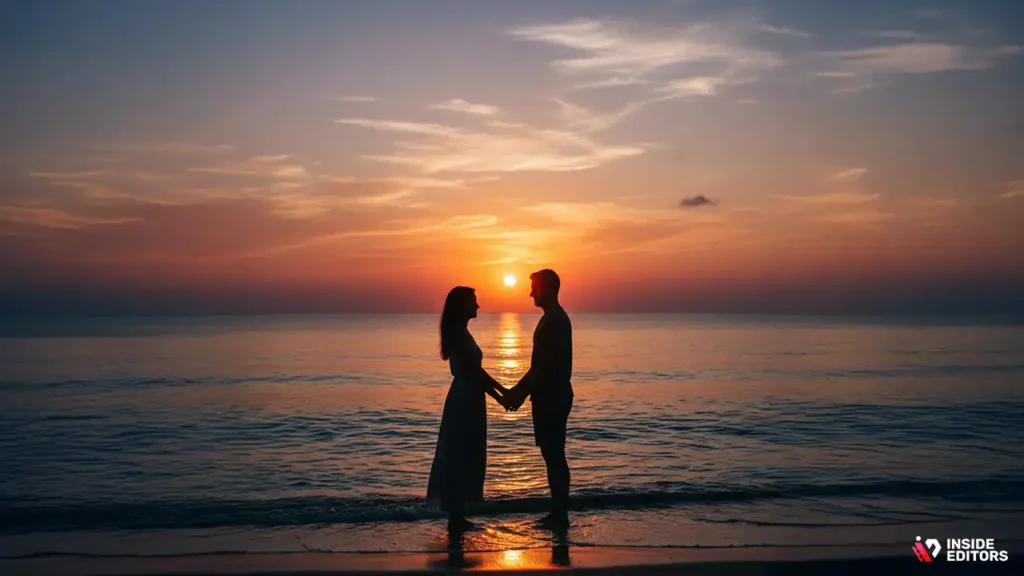
The ending is where you leave a lasting emotional impression. You want your viewers to feel inspired, sentimental, or emotionally fulfilled.
Best Music Choices
- Soft indie vocals
- Hopeful cinematic scores
- Warm acoustic finales
- Emotional piano/lush strings
Visuals that Work Best Here
- sunset shots
- sparkler exits
- slow dancing
- final kisses
- holding hands
- crowd cheering
- closing smiles
End with a beat drop, soft fade, or lingering note to give emotional closure.
3-minute wedding video: music timeline example
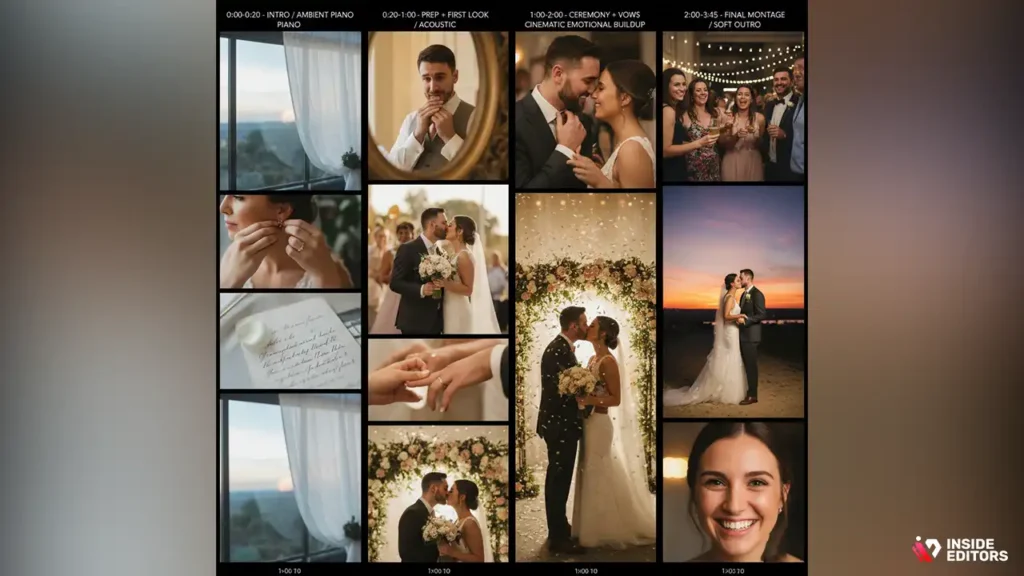
This is the structure many professional editors use:
0:00-0:20 – Intro
Soft ambient/piano
(Establishing shots + teaser vow)
0:20-1:00 – Prep + First Look
Soft acoustic/instrumental
(Groom getting ready, bride details, emotional shots)
1:00-2:00 – Ceremony Highlights & Vows
Cinematic emotional buildup
(Entrance, vows, rings, the kiss)
2:00-2:45 – Celebration + Reception
Upbeat indie/folk or light pop
(Congratulations, laughter, entrances, dancing)
2:45-3:00 – Final Montage
Soft outro
(Sunset shots, couple walking away, dip kiss, closing smiles)
5-6 minute wedding video: music timeline example
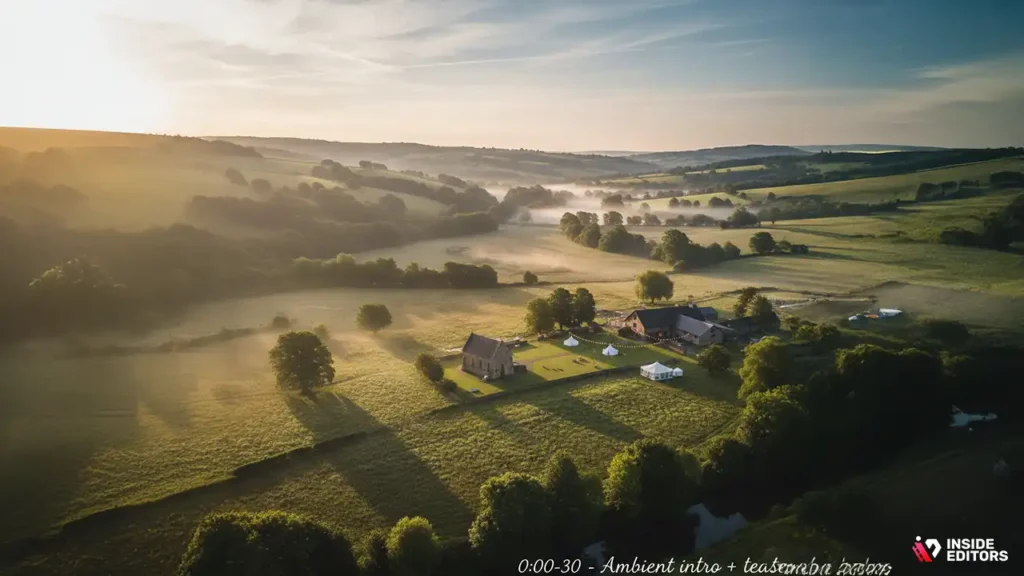
0:00-0:30 – Ambient intro + teaser
Drone shots, landscape, subtle dialogue
0:30-1:30 – Prep moments
Soft indie acoustic
1:30-2:30 – First look + emotional buildup
Smooth cinematic rise
2:30-4:00 – Ceremony + vows
Instrumental stems, warm strings, emotional build
4:00-5:00 – Celebration + reception
Upbeat indie pop
5:00-6:00 – Romantic closing
Sentimental outro, strong emotional end
Pro techniques for music in wedding videos
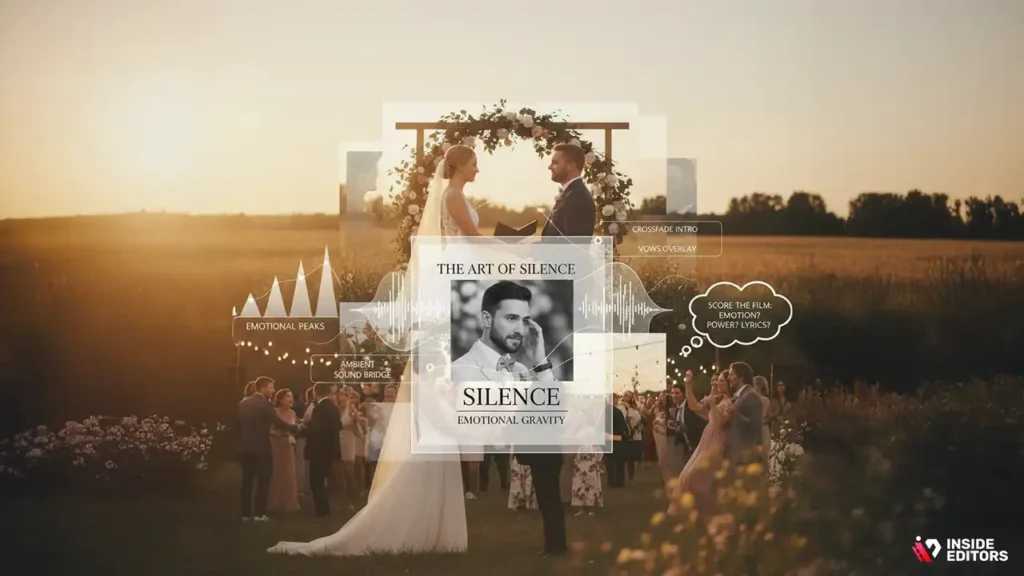
1. Using Multiple Songs Seamlessly
Professional wedding films rarely use just one track. The key is smooth transitions.
Use these methods:
- crossfade the drumless intros
- match the key signatures if possible
- use ambient sound bridges
- overlay vows between tracks to blur transitions
When done correctly, the audience never notices the shift – they only feel the story progressing.
2. Scoring the Film Like a Movie
Think of music as a soundtrack, not a playlist.
Ask yourself:
- What emotion does this moment deserve?
- Is this a soft or powerful scene?
- Should the music rise or fall here?
- Do lyrics help or distract?
Every choice should support the emotional arc.
3. Building Emotional Peaks
Wedding films benefit from three emotional peaks:
- First look or emotional prep moment
- Vows and kiss
- Reception energy
Choose songs with natural rises to support these peaks.
4. The Art of Silence
Sometimes the most powerful musical choice is a pause.
Silence heightens:
- vows
- tears
- reactions
- speeches
- emotional micro-moments
Let silence breathe. It gives the film authenticity and emotional gravity.
Final Thoughts: Becoming a master wedding video editor
The right music transforms a good wedding film into an unforgettable one. It affects:
- Pacing
- Emotion
- storytelling
- viewer engagement
- and the couple’s lifelong memory
When you learn how to select and edit music intentionally, your films begin to feel richer, smoother, and more cinematic.
This is exactly why Inside Editors teaches more than just software – we teach how to think like a filmmaker and storyteller. Music is one of the hardest parts of wedding video editing, but mastering it opens new doors to creativity, emotion, and professional quality.
FAQs
1. How do I know I can trust your wedding video editing service?
We use a transparent workflow that includes clear drafts, documented revision policies, and file-safe storage practices. Editors follow standardized quality controls, and every project goes through a final review to ensure accuracy. Clients retain full ownership of their footage, and nothing is shared publicly without permission.
2. What quality standards should I expect in professional wedding video editing?
A pro editor typically delivers color-graded footage (creative visual look), balanced audio, licensed music, and clean storytelling. Most services include 4-6K mastering and calibrated color profiles. If a lower-priced option skips grading or sound cleanup, expect more visible noise, uneven tones, and less emotional impact.
3. How many revisions are included, and what counts as a revision?
Most editors include 1-3 rounds of revisions covering timing tweaks, clip swaps, and music adjustments. Structural changes like adding new scenes or replacing large portions of footage may count as extra rounds. Always check the scope so expectations are clear before the edit begins.
4. Who owns the final edited wedding video?
You own the final deliverables, while the editor retains rights only to the editing workflow and templates. All licensed music is covered for personal use unless you request social-media rights. Editors should provide files in standard formats (MP4 or MOV) so you can archive or share them freely.
5. How is my footage kept private and secure?
Editors typically store files on encrypted drives or password-protected cloud folders. Access is limited to your assigned editing team, and all material is deleted after a set retention window (usually 30-90 days). No clips are used for marketing unless you provide written consent.
6. How does professional editing compare to using templates or AI tools?
DIY tools offer speed and low cost but rely on automated pacing and generic transitions. A professional editor shapes narrative flow, performs manual color grading, cleans audio, and aligns music to emotional beats. If you want a polished story rather than a quick montage, human editing offers far more control.
7. What editing packages or tiers do most services offer?
Typical tiers include highlight films (1-3 minutes), cinematic edits (4-7 minutes), and documentary cuts (20-60 minutes). Higher tiers often include color grading, audio engineering, and multiple deliverables. Budget options may skip storytelling elements or advanced grading.
8. How much does wedding video editing cost?
Basic highlight edits start around $150-$300, mid-tier cinematic edits range $400-$900, and full documentary edits can exceed $1,200 depending on footage volume. Prices vary based on length, revisions, and music licensing. Add-ons like speech clean-up or rush delivery may raise costs.
9. What’s included in the price, and what’s not?
Most packages include editing, color grading, licensed music, and export in one resolution. Extra fees may apply for multi-day footage, complex audio cleanup, motion graphics, or additional deliverables. Always confirm what counts as an add-on before submitting your files.
10. How long does wedding video editing usually take?
Standard turnaround ranges from 7-21 days, depending on the video’s length and the editor’s queue. Highlight edits are fastest, while long-form documentaries take longer due to syncing, audio cleanup, and narrative assembly. Many services offer rush options (48-72 hours) for an additional fee.
11. What can delay the editing timeline?
Common delays include missing files, corrupted footage, unclear instructions, or waiting for client revision notes. Large multi-camera weddings or long speeches also slow the process. Clear briefs and organized uploads help keep the timeline on track.
12. What’s the process to get my wedding video edited professionally?
Upload your footage to a shared folder, provide notes about style and music, and choose your preferred edit type. The editor assembles a draft, you request revisions, and then the final video is delivered in your chosen format. The entire workflow is designed to be simple and skimmable.


