

The creation of a wedding video is an art form-a cinematic tapestry woven from cherished moments, heartfelt vows, and, crucially, the perfect soundtrack. Music elevates the emotion, transforms raw footage into a story, and ensures the memories resonate for years to come. But as you search for those perfect wedding video songs, a critical question arises: Are they free to use?
The short answer is almost universally no. The legal landscape surrounding music licensing for commercial use, including professional wedding videography, is complex and often misunderstood. Using copyrighted music without permission-even for a personal keepsake-can lead to serious legal repercussions for the videographer and, in some cases, the couple.
This comprehensive guide, written by senior editors specializing in content rights and video production, reveals the legal truth behind using music in your wedding film, explores the necessary licensing steps, and offers practical, affordable alternatives that ensure your treasured video is 100% compliant and worry-free.
Understanding music rights in wedding videos

Before selecting a single track, it is essential to understand the fundamental legal framework governing music usage. Every piece of recorded music has two primary copyrights, and both must be cleared for legal use in a video.
The Dual Nature of Music Copyright
When you purchase a song on iTunes or stream it on Spotify, you are buying a license for private, personal listening. You are not purchasing the right to synchronize that music with visual media (a process called “synchronization” or “sync” licensing).
| Copyright Type | What It Protects | Who Owns It (Typically) | License Required for Video |
| 1. Composition/Musical Work | The underlying music and lyrics (the notes on the page). | The Songwriter and Publisher (e.g., Sony/ATV, Universal Music Publishing). | Synchronization License (Sync License) |
| 2. Sound Recording/Master | The specific recorded performance of the song (the track you hear). | The Recording Artist and Record Label (e.g., Warner Music Group, independent labels). | Master Use License |
To legally use a popular, commercial song in your wedding video, your videographer must secure both the Sync License (from the publisher) and the Master Use License (from the record label). This process is notoriously expensive, time-consuming, and often results in outright denial, especially for smaller projects like individual wedding video songs.
“Copyright law is designed to protect the creators. When you use music in a video, you are creating a derivative work, and the original creators deserve to be compensated for that new usage.” – Music Licensing Attorney, specializing in media rights
Why Personal Use Doesn’t Apply to Videographers
Many couples assume that because the video is for them, it falls under “personal use.” However, if a professional videographer is paid to film and edit the video, the final product is considered a commercial transaction, and the videographer is liable for any copyright infringement. Even if the video is only shared privately with family, the act of synchronizing the music for profit (the videographer’s fee) triggers the need for commercial licensing.
If you are a videographer looking to streamline your post-production workflow and ensure all your projects are legally sound, you might want to explore how professional video editing services can handle the complex integration of licensed music and footage efficiently.
Navigating the Licensing Maze: Alternatives to Pop Hits
Since securing licenses for mainstream pop hits is generally impractical for wedding films-often costing thousands of dollars per song-the industry has developed robust, legal, and affordable alternatives for sourcing high-quality wedding video songs.
The Rise of Royalty-Free and Stock Music Libraries
The most common and effective solution for professional videographers is utilizing royalty-free music libraries. The term “royalty-free” is often misunderstood; it doesn’t mean “free of charge.” It means that once a one-time licensing fee is paid, the user is generally free from paying ongoing royalties to the copyright holders for that specific use.
Comparison of Music Licensing Options
| Feature | Commercial Pop Music (e.g., Taylor Swift) | Royalty-Free/Stock Music (e.g., Artlist, Epidemic Sound) | Public Domain Music |
| Cost | Extremely high (often $5,000+ per song) | Low to moderate (often $30-$100 per track or subscription) | Free |
| Licensing Process | Complex negotiation with labels/publishers | Simple one-click download with license included | Verification required (song must be 70+ years post-creator’s death) |
| Availability | Low chance of approval for small projects | High availability, vast selection of genres | Limited selection, often classical or very old music |
| Risk of Infringement | High if not licensed correctly | Very low if used within license terms | Low, but research is mandatory |
The Importance of the Sync License in Stock Libraries
When you subscribe to a reputable stock music library, you are essentially purchasing a pre-cleared synchronization license and a master use license bundled together. These libraries have already negotiated the rights with the composers and performers, allowing you to use the music legally in your commercial video projects, including wedding video songs.
“The shift to subscription-based music licensing has democratized the soundtrack industry. It allows independent creators and videographers to access high-quality scores without the prohibitive costs of major label licensing.” – CEO of a leading stock music platform
Understanding the Terms of Use
While stock music is affordable, it is crucial to read the specific terms of the license. Most standard licenses cover perpetual use on platforms like YouTube, Vimeo, and private distribution to the client. However, if the video is intended for broadcast television or theatrical release, a more expensive license (an “extended” or “broadcast” license) will be required.
If you are a content creator managing multiple projects, ensuring your team adheres to these licensing requirements can be challenging. Leveraging video editing outsourcing services can help maintain compliance across all your client deliverables.
Common Pitfalls and How to Ensure Full Compliance
Even with the best intentions, videographers and couples often make mistakes that can lead to copyright strikes, takedowns, or legal action. Avoiding these common pitfalls is key to a smooth post-production process.
Pitfall 1: The YouTube/Social Media Takedown Risk

Many videographers upload videos containing unlicensed pop music, only to have them quickly flagged and muted by YouTube’s Content ID system. While sometimes the video remains up but monetized by the copyright holder, often the audio is stripped entirely, ruining the final product.
How to Avoid It: Use only music sourced from licensed libraries (like Musicbed, Soundstripe, or Artlist) that provide a clear certificate of license. These platforms often integrate directly with YouTube and social media platforms to prevent automatic takedowns.
Pitfall 2: Confusing Public Performance with Synchronization
A common misconception arises from the live music played at the wedding reception. The venue or DJ pays for a blanket license (usually through ASCAP or BMI) that covers the public performance of the music during the event. This license does not cover the right to record that music and synchronize it with the video footage later.
Pitfall 3: The “Fair Use” Misunderstanding
Fair Use is a legal doctrine that permits limited use of copyrighted material without permission for purposes such as criticism, commentary, news reporting, teaching, or parody. A professional wedding video, being a commercial product created for profit, almost never qualifies as Fair Use.
“If you are receiving money for the creation of the video, you are operating in a commercial capacity. The argument for Fair Use in the context of a paid wedding video is extremely weak and should not be relied upon.” – Legal Review published by the Copyright Alliance
Pros and Cons of Using Licensed Stock Music
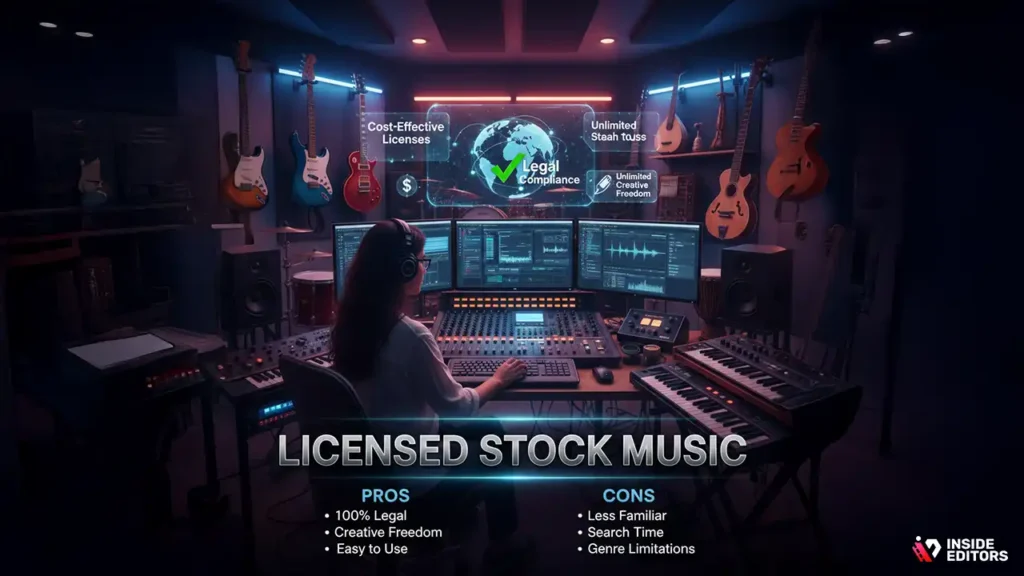
Choosing stock music requires a different creative approach than relying on familiar pop hits, but the legal and financial benefits far outweigh the drawbacks.
Pros:
- 100% Legal Compliance: Eliminates the risk of lawsuits or video takedowns.
- Cost-Effective: Affordable single-track licenses or monthly subscriptions.
- Creative Freedom: Access to high-quality, cinematic scores specifically designed for synchronization.
- Ease of Use: Simple, immediate licensing process through online platforms.
Cons:
- Lack of Familiarity: The music may not have the instant recognition of a popular song.
- Search Time: Requires time to search through libraries to find the perfect track that matches the couple’s desired mood.
- Genre Limitations: While libraries are vast, some niche genres might be less represented.
If the search time is a concern, remember that finding professional video editors often includes accessing editors who specialize in music selection and sound design, streamlining the creative process.
Integrating Licensed Music into Your Workflow
For videographers, integrating music licensing into the standard workflow is a sign of professionalism and protects both your business and your clients.
Step-by-Step Guide to Legal Music Selection
- Establish the Budget: Determine how much the client is willing to spend on music licensing (usually factored into the package price).
- Select a Library: Choose a reputable stock music provider (e.g., Artlist, Musicbed, PremiumBeat).
- Search and Curate: Search the library using keywords that match the wedding’s mood (e.g., “romantic acoustic,” “upbeat cinematic,” “emotional piano”).
- Download and License: Purchase the necessary license (standard sync license for web distribution).
- Secure Documentation: Download and save the license certificate. This is your proof of compliance.
- Edit and Deliver: Proceed with the final edit, confident in the legal status of your wedding video songs.
The Role of Professional Editing in Sound Design
The selection of wedding video songs is only half the battle; the way the music is mixed, timed, and mastered is critical to the final product’s quality. Professional video editors are experts in sound design, ensuring that licensed music seamlessly enhances the narrative without overpowering dialogue or natural audio.
At Inside Editors, we understand that high-quality sound is non-negotiable. Our video editing services include comprehensive audio enhancement and mixing, ensuring that your legally licensed tracks sound perfect. We offer a professional editing team with 10+ years of experience, a fast turnaround (24-72 hours), and unlimited revisions until you are satisfied. This professional approach saves you time and guarantees a polished, compliant final film.
Case Study: The Cost of Compliance vs. Risk
A videographer charged a client $3,500 for a wedding package. They chose to use an unlicensed pop song, saving $50 on a stock music track. The video went viral on Instagram, attracting the attention of the record label. The label issued a cease and desist, followed by a lawsuit claiming $15,000 in damages for unauthorized commercial use.
The Lesson: The small upfront cost of legal licensing is an essential business expense. Cutting corners on music licensing is a direct threat to the longevity and reputation of your business. If you need help managing these details, consider our video editing services for businesses to maintain consistent quality and compliance across all projects.
Finalizing Your Cinematic Masterpiece
The perfect wedding video is a blend of technical skill, emotional storytelling, and legal integrity. While the desire to use a couple’s “first dance song” is understandable, the practical and legal realities of music licensing often necessitate creative alternatives.
By choosing reputable stock music libraries, you are not settling; you are accessing a vast resource of professional, high-quality scores designed specifically for cinematic synchronization. This ensures that the beautiful memories captured on film are protected and can be shared freely without the shadow of copyright infringement.
If you are a videographer or content creator looking to elevate your final product while ensuring legal compliance, partnering with experts is the smartest move. Inside Editors provides the expertise needed to handle the complex post-production process, from color grading to sound design and music integration. Our affordable pricing and quality assurance make us the best choice for ensuring your wedding video songs are perfectly placed and perfectly legal.
Ready to deliver professional, compliant, and beautifully edited videos? Learn more about our process and how we can become an extension of your creative team by visiting our Inside Editors video editing services page.
Frequently Asked Questions
Are wedding video songs free to use?
No, popular music is protected by copyright. Using copyrighted songs in a wedding video without permission, even if it’s not publicly monetized, is illegal. You must obtain synchronization licenses and performance licenses if the video is shared online, which are rarely granted for commercial music.
What is a synchronization license?
A synchronization (sync) license grants the right to use a song in visual media, like a wedding video. This license must be secured from the music publisher (who owns the composition). This is the primary license needed to legally pair music with your footage, but it can be expensive and difficult to obtain.
Can I use royalty-free music instead?
Yes, using royalty-free music is the safest and most common legal solution for wedding videos. These tracks are pre-licensed for commercial use, often requiring a one-time fee, typically ranging from $20 to $100 per song. This avoids complex copyright issues associated with popular hits.
What happens if I post an unlicensed song online?
If you post a video with unlicensed music on platforms like YouTube or Instagram, it will likely be flagged by automated content ID systems. The video may be muted, taken down, or the copyright holder may claim all advertising revenue generated, leading to copyright infringement.
Do I need a license if the video is private?
Legally, any reproduction of copyrighted work requires a license, even if the video is only shared privately with family. However, enforcement is rare unless the video becomes public. Most videographers rely on music licensing platforms to ensure legal compliance for all distribution.
How much do music licensing platforms cost?
Music licensing platforms, such as Musicbed or Soundstripe, offer subscription models or single-track purchases. Subscriptions for videographers usually range from $200 to $400 annually, providing unlimited access to thousands of legally cleared wedding video songs.
Can I use a cover song legally?
Using a cover song still requires two licenses: a mechanical license for the sound recording (if you are distributing the audio) and a synchronization license for the underlying composition. While easier than licensing the original recording, copyright rules still apply to the original musical work.


