


The demand for high-quality video content has never been greater. From internal communications and training modules to sophisticated marketing campaigns, corporate video is the engine driving modern business engagement. As a result, the landscape of Corporate Video Production Jobs is evolving rapidly. Companies are constantly seeking the best talent, but the traditional full-time hiring model is no longer the only-or even the most effective-path.
Choosing the right staffing model for your video needs determines efficiency, cost, and ultimately, the quality of your output. This comprehensive guide explores the four key hiring models for filling Corporate Video Production Jobs, offering a detailed comparison of their strengths, weaknesses, and ideal use cases. We will equip you with the knowledge to make strategic decisions, ensuring your video team structure aligns perfectly with your business goals.
Corporate Video Jobs Landscape

Before diving into the models, it is crucial to recognize that video production is a multi-faceted discipline. It requires skills ranging from creative direction and scripting to technical roles like cinematography, sound design, and post-production editing. The way a company structures its talent acquisition for these Corporate Video Production Jobs directly impacts its ability to scale and maintain consistency.
The shift toward remote work and project-based assignments has introduced flexibility that traditional in-house teams often lack. Modern businesses must decide whether they need dedicated, permanent staff or agile, on-demand resources. This decision hinges on factors like volume, budget stability, and the required specialization level.
“Video is no longer a luxury; it’s the primary language of business communication. Companies that treat their video team structure as a strategic asset, rather than just an expense, are the ones winning the attention economy.” – Sarah Jenkins, Digital Media Strategist
Model 1: The Traditional In-House Team

The traditional in-house model involves hiring full-time employees (FTEs) for all critical Corporate Video Production Jobs. This team typically includes a Video Director, a dedicated editor, a camera operator, and potentially a motion graphics specialist, depending on the company’s size and needs.
Deep Dive into In-House Staffing
This model provides maximum control and fosters deep institutional knowledge. The team understands the brand voice, internal stakeholders, and compliance requirements intimately. They are always available, making quick turnarounds for internal or sensitive projects straightforward.
However, this model demands significant overhead. Beyond salaries, the company must invest in high-end equipment, software licenses, dedicated studio space, and ongoing professional development. Furthermore, maintaining a diverse skill set in-house can be challenging, as finding one person who excels at both cinematic shooting and complex 3D animation is rare.
Pros and Cons of the In-House Model
| Feature | Description |
| Control & Consistency | High. Full control over quality, process, and brand messaging. |
| Institutional Knowledge | Excellent. Deep understanding of company culture and history. |
| Scalability | Low. Scaling up for large projects requires temporary hires or overworking existing staff. |
| Cost Structure | High fixed costs (salaries, benefits, equipment). |
| Specialization | Limited by the size of the permanent team. |
Pros:
- Guaranteed availability and fast response times for urgent needs.
- Strong alignment with company culture and brand guidelines.
- Fosters internal collaboration and long-term project continuity.
Cons:
- Very high fixed overhead and operational costs.
- Risk of talent stagnation or burnout if workload fluctuates.
- Difficulty in accessing niche, specialized skills (e.g., specific animation styles).
Model 2: The Project-Based Agency Model

When a company needs a high-level, complex video-such as a major brand launch commercial or a multi-part documentary series-they often turn to a full-service production agency. This model involves outsourcing the entire project lifecycle, from concept development and scripting to final delivery.
When to Engage a Full-Service Agency
Agencies are best suited for projects requiring significant creative horsepower, large crews, or specialized equipment that a typical corporate environment does not possess. They handle all aspects of the production, providing a single point of contact and managing all the complex logistics involved in high-end Corporate Video Production Jobs.
The agency model offers unparalleled access to top-tier talent and resources, but it comes at a premium price. Communication can sometimes be slower than with an in-house team, and the agency may require a substantial onboarding period to fully grasp the client’s specific brand nuances.
Cost and Commitment Comparison
While the agency model has a high upfront cost per project, it eliminates the long-term fixed costs associated with FTEs. It is a variable expense model, ideal for companies that produce only a few high-impact videos per year rather than constant daily content.
“Outsourcing to an agency is like renting a specialized army for a single battle. You get maximum firepower and expertise, but you pay for the entire deployment.” – David Chen, COO of a Global Marketing Firm
Model 3: The Freelancer Network Model

The rise of the gig economy has dramatically changed how businesses fill Corporate Video Production Jobs. The freelancer network model involves hiring individual contractors for specific roles-a freelance director, a sound mixer, or a specialized editor-on a per-project or hourly basis.
Leveraging Specialized Freelance Talent
This model is the epitome of flexibility. If a project requires expertise in drone cinematography, you hire a drone operator for two days. If you need an editor proficient in DaVinci Resolve, you contract one specifically. This allows companies to dynamically assemble the perfect team for any given project without the commitment of full-time employment.
The challenge lies in management and consistency. The company must act as the project manager, coordinating multiple contractors, ensuring their technical specifications align, and maintaining a cohesive brand voice across different freelancers. Quality control can be inconsistent if the company does not have a strong internal project lead.
The Role of Post-Production Support
For companies relying heavily on freelancers for shooting and directing, the post-production phase often becomes a bottleneck. Managing multiple video files, ensuring consistent color grading, and handling revisions from various stakeholders is complex.
This is where specialized services like Inside Editors become invaluable. They offer professional video editing services for businesses, content creators, and marketers. By utilizing a professional editing team with 10+ years experience, businesses can offload the management burden. Inside Editors ensures fast turnaround (24-72 hours), offers unlimited revisions until satisfied, and provides affordable pricing starting at $29/video, including color grading and audio enhancement. This scalable solution helps maintain a consistent brand style across all videos, saving marketing teams significant time.
Comparison: Freelancer vs. Agency
| Criteria | Freelancer Network | Project-Based Agency |
| Creative Control | High (Client dictates vision) | Moderate (Agency leads creative direction) |
| Cost Efficiency | High (Pay only for specific hours/tasks) | Low (High bundled project cost) |
| Management Burden | High (Client manages all contractors) | Low (Agency manages production) |
| Speed of Mobilization | Fast (Individual hires are quick) | Moderate (Contract negotiation, kickoff) |
| Best For | High-volume, low-to-mid complexity content (e.g., social media clips, interviews). | Low-volume, high-complexity, flagship content (e.g., TV commercials, brand films). |
Model 4: The Hybrid Model
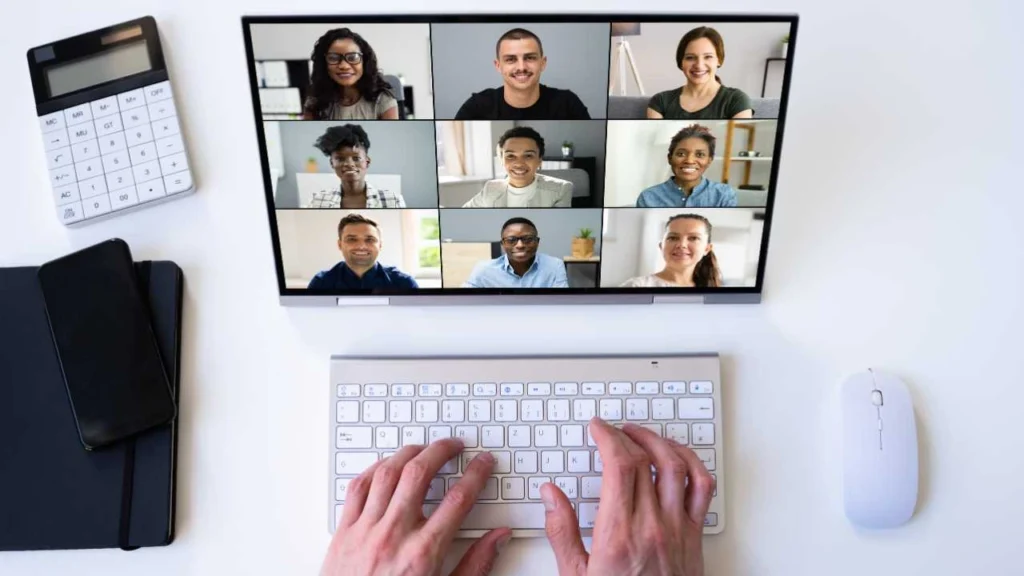
The most effective strategy for many growing businesses is the hybrid approach. This model combines the stability of a small, core in-house team with the flexibility and specialized support of external managed services.
Structuring the Core Team
In the hybrid model, the company typically retains 1-2 key FTEs: a Creative Director or Video Strategist. These individuals are responsible for setting the vision, maintaining brand consistency, and managing internal stakeholder relationships. They define the needs for Corporate Video Production Jobs and act as the primary liaison for external partners.
The actual execution-the shooting, editing, motion graphics, and sound-is then outsourced strategically. This allows the in-house team to focus on high-level strategy and quality assurance, avoiding the trap of becoming overwhelmed by operational tasks.
The Strategic Use of Managed Editing Services
A prime example of strategic outsourcing in the hybrid model is utilizing a dedicated video editing service. Businesses need consistent, high-quality post-production, but hiring a full-time editor can be costly and inefficient if the workload fluctuates.
Inside Editors offers a solution here. Their service provides professional video editing services, ideal for YouTube creators, businesses, and marketing teams. The benefits include professional quality that builds trust, a consistent brand style, and a scalable solution for growing channels. By leveraging their expertise, businesses save time and focus on content creation, knowing that the technical aspects of color grading and audio enhancement are handled by experts.
Hybrid Model: Strengths and Limitations
The hybrid model offers the best balance of control and scalability. The internal team ensures brand fidelity, while external partners provide the necessary burst capacity and specialized skills.
Strengths:
- Cost Optimization: Reduces fixed costs by limiting FTEs to essential strategic roles.
- Scalability: Easily handles peak demand by leveraging external partners.
- Access to Expertise: Taps into specialized skills without permanent commitment.
- Consistency: Internal leadership maintains the creative vision and brand voice.
Limitations:
- Vendor Management: Requires strong project management skills to coordinate internal and external teams.
- Communication Overhead: Potential for friction if external workflows are not tightly integrated with internal processes.
Cost Comparison of Hiring Models

When assessing the various models for filling Corporate Video Production Jobs, cost is a primary factor. However, it is essential to look beyond the immediate expense and consider the total cost of ownership (TCO), including equipment, benefits, and management time.
Total Cost of Ownership (TCO) Comparison
| Model | Cost Structure | Ideal Annual Budget Range (Estimate) | Key Hidden Costs |
| In-House FTE | High Fixed Costs (Salary, Benefits) | $150,000+ per FTE | Equipment depreciation, software licenses, training. |
| Project Agency | High Variable Costs (Per Project Fee) | $10,000 – $250,000+ per project | Extensive onboarding, scope creep management. |
| Freelancer Network | Low Variable Costs (Hourly/Day Rate) | $50,000 – $150,000 (depending on volume) | Internal management time, quality control failures. |
| Hybrid Model | Balanced Fixed/Variable | $100,000 – $200,000+ | Vendor selection and integration time. |
For businesses with predictable, high-volume needs-such as daily social media content or weekly internal updates-the variable cost models (Freelancer or Hybrid) often prove more cost-effective than supporting a large, permanent in-house team.
Post-Production Efficiency Focus

One area where businesses frequently misallocate resources is in post-production. Editing is time-consuming, highly technical, and critical for final quality, yet it is often treated as an afterthought in discussions about Corporate Video Production Jobs.
“The bottleneck in corporate video isn’t usually the shoot; it’s the edit. Companies spend thousands on gear and talent, only to have footage sit for weeks because their single in-house editor is swamped. Strategic outsourcing of editing is the fastest way to increase content velocity.” – Alex Rodriguez, Content Operations Consultant
By using a managed service like Inside Editors, companies can ensure their content moves quickly from concept to completion. The service’s commitment to a 24-72 hour turnaround time and unlimited revisions removes the typical post-production logjam, allowing the in-house team to focus on content strategy and distribution. This approach is particularly beneficial for marketing teams and course creators who rely on rapid content deployment.
Choosing the Right Model
Selecting the optimal hiring model requires an honest assessment of your company’s needs, budget, and content volume.
Use Case Recommendations
| Company Profile | Content Volume & Complexity | Recommended Model | Rationale |
| Large Enterprise | High volume, high complexity, sensitive internal comms. | In-House (for core strategy) + Agency (for flagship projects). | Requires maximum control and occasional high-end execution. |
| Mid-Sized Tech/E-commerce | High volume, moderate complexity (tutorials, social clips, webinars). | Hybrid Model (In-House Strategist + Managed Editing). | Balances brand consistency with cost-effective, scalable production. |
| Small Business/Startup | Low volume, variable complexity (investor pitches, website video). | Freelancer Network or Project Agency (as needed). | Minimizes fixed costs until content needs stabilize. |
Avoiding Common Pitfalls
When hiring for Corporate Video Production Jobs, regardless of the model, avoid these common mistakes:
- The “Unicorn” Trap: Do not seek one person to handle scripting, shooting, editing, and animation perfectly. Video production requires diverse skills.
- Undervalued Post-Production: Failing to budget adequately for editing and motion graphics often results in poor final quality, despite excellent footage.
- Inconsistent Brand Voice: When using multiple freelancers, establish strict style guides and quality control checks to maintain a unified brand message.
Final Verdict and Strategic Recommendation

The modern landscape of Corporate Video Production Jobs strongly favors agility. While the traditional in-house team offers maximum control, the cost and lack of scalability make it unsustainable for most businesses facing fluctuating content demands.
The Hybrid Model emerges as the superior choice for the majority of mid-to-large organizations today. It allows a company to retain critical strategic oversight while leveraging external specialization and scalability. By maintaining a small, strategic in-house team and outsourcing high-volume, technical tasks-especially post-production-businesses achieve professional quality without the prohibitive fixed costs.
If your business is struggling to keep up with the demand for polished, consistent video content, consider optimizing your post-production workflow. Services like Inside Editors provide professional video editing services, offering expert teams, fast turnaround, unlimited revisions, and affordable pricing. This allows your internal team to focus on creative strategy, ensuring your video efforts are both high-quality and highly efficient. By adopting this strategic approach, you transform your video production from a cost center into a powerful, scalable engine for growth.
Frequently Asked Questions
What are the 4 main hiring models?
The four key models for filling Corporate Video Production Jobs are: In-House Team (FTEs), Project-Based Agency, Freelancer Network, and the Hybrid Model. Each offers different trade-offs in terms of cost, control, and scalability for video production jobs.
How can I ensure brand consistency?
Brand consistency is best ensured by maintaining a small, strategic in-house lead (Hybrid Model) who sets the creative vision and manages external vendors. This lead enforces style guides across all Corporate Video Production Jobs.
Why is post-production often a bottleneck?
Post-production, specifically editing, is highly technical and time-consuming. When in-house teams are overwhelmed, footage piles up. Outsourcing editing can drastically improve content velocity for corporate video production jobs.
What is the most scalable hiring model?
The Hybrid Model is generally the most scalable. It uses low fixed costs for core strategy and leverages variable external partners, like managed editing services, to handle sudden increases in Corporate Video Production Jobs volume.
Do I need a full-time video editor?
Not necessarily. If your content volume fluctuates, a full-time editor can be inefficient. Managed services offer professional video editing services with fast turnarounds and unlimited revisions, providing a cost-effective alternative to hiring for Corporate Video Production Jobs.


