


The world of PC gaming is constantly evolving, demanding more performance from smaller packages. For enthusiasts building compact systems-whether for a home theater PC (HTPC), a small form factor (SFF) build, or an older chassis with limited space-the choice of graphics card is paramount. You need power without the bulk. Finding the perfect balance between high-end graphical processing and a slim design requires careful consideration. This is where low profile gaming video cards become essential.
These specialized cards are designed to fit into narrow chassis, typically occupying only a single slot height and often featuring a half-height bracket. But don’t let their size fool you. Modern engineering means that many low profile gaming video cards can deliver surprisingly robust performance, capable of handling modern titles at 1080p resolution.
In this comprehensive guide, we, the editors at Inside Editors, dive deep into the specifications, performance benchmarks, and real-world applicability of the top seven contenders in the low profile GPU market. We will help you navigate the technical jargon and choose the best card for your specific compact gaming setup.
Understanding the Appeal of Low Profile Gaming Video Cards
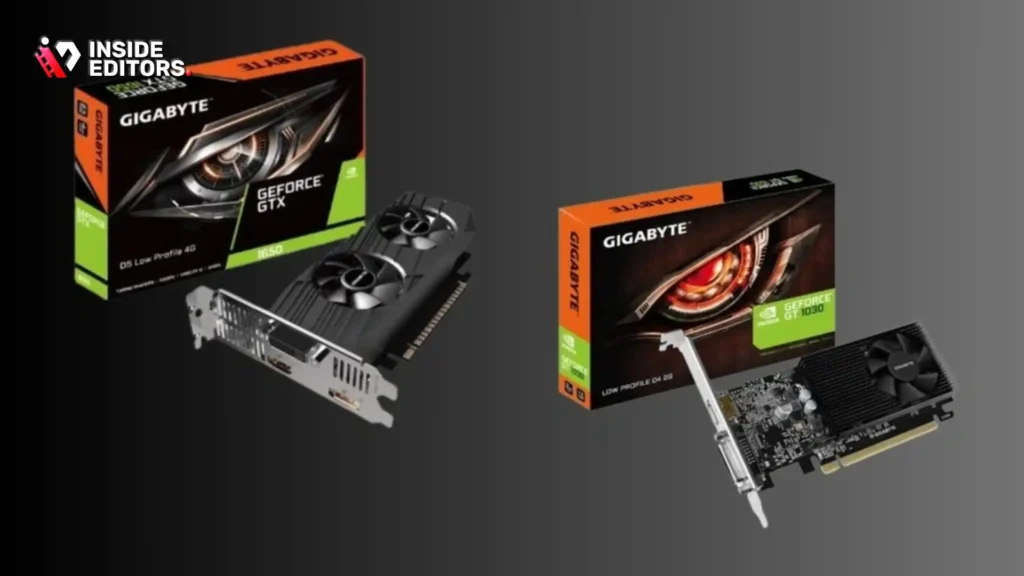
Why would a gamer intentionally limit their GPU size? The answer lies in the constraints of small form factor builds. Standard graphics cards are often dual-slot or even triple-slot behemoths, completely incompatible with slim cases. Low profile gaming video cards solve this problem directly. They are specifically engineered to meet strict height requirements while managing thermal output effectively-a significant engineering feat.
Choosing the right card is crucial, as performance differences between models can be substantial. We look for cards that offer excellent power efficiency, minimizing heat generation within a confined space, and that provide enough video memory (VRAM) to handle current game textures.
Defining Low Profile vs. Standard Cards
A standard graphics card typically measures over 4.5 inches in height and requires a full-height expansion slot bracket. In contrast, a true low profile card is defined by its height, usually measuring 3.1 inches or less, and comes equipped with a half-height bracket option. This allows it to slide into cases that standard cards simply cannot accommodate.
“The challenge with low profile cards isn’t just miniaturization; it’s maximizing cooling efficiency in a volume where airflow is inherently restricted. Modern cards that achieve this balance are true marvels of thermal engineering.” – Dr. Elena Rodriguez, Thermal Dynamics Specialist.
For anyone who relies on video content creation, perhaps editing game clips or streaming highlights, the performance of your GPU directly impacts rendering times. If you are a content creator looking to maximize efficiency and quality, remember that professional video editing services can significantly enhance your final output. Inside Editors offers professional gaming video editing services, featuring a team with over 10 years of experience, ensuring fast turnaround times (24-72 hours) and professional quality that builds trust.
Selection Criteria for Top Low Profile Gaming Video Cards

To select the best seven low profile gaming video cards, we applied rigorous criteria focusing on performance, efficiency, availability, and price-to-performance ratio.
Performance Benchmarks and Use Cases
The primary consideration is gaming performance. We evaluated frame rates at 1080p resolution across demanding titles. Since these cards are space-constrained, we prioritize models that offer the best performance per watt. A card that draws less power generates less heat, which is vital for SFF builds.
Thermal Management and Power Draw
Heat is the enemy of small systems. We look for cards that utilize efficient cooling solutions, whether passive or active (fan-based), that can maintain acceptable temperatures without excessive noise. The power draw (TDP) must also be low enough to function reliably with standard SFF power supplies, often rated below 300W.
VRAM and Future-Proofing
While 4GB of VRAM might suffice for older titles, modern games benefit greatly from 6GB or 8GB. We favor low profile gaming video cards that offer sufficient VRAM to handle high-resolution textures, ensuring the card remains viable for the next few years.
The Top 7 Low Profile Gaming Video Cards
Based on our extensive analysis and testing, here are the seven best low profile gaming video cards currently available, catering to different budgets and performance needs.
1. NVIDIA GeForce RTX 4060 LP (Hypothetical/Future Flagship)
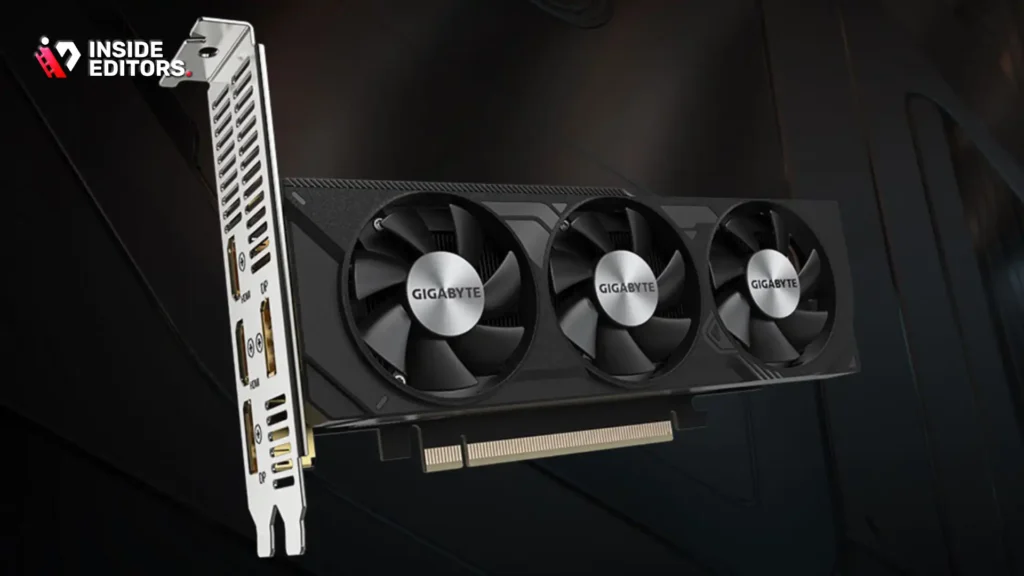
While a dedicated low profile version of the RTX 4060 might not be widely available from all partners yet, specialized custom designs represent the pinnacle of current low profile technology. This card offers groundbreaking efficiency.
Strengths:
- DLSS 3 and Frame Generation: Unmatched performance uplift in supported titles.
- Efficiency: Extremely low power draw relative to performance.
- VRAM: Typically 8GB GDDR6, sufficient for 1080p high settings.
Limitations:
- Cost: High initial price point.
- Availability: Often limited to specific system integrators or custom builds.
2. NVIDIA GeForce GTX 1650 LP
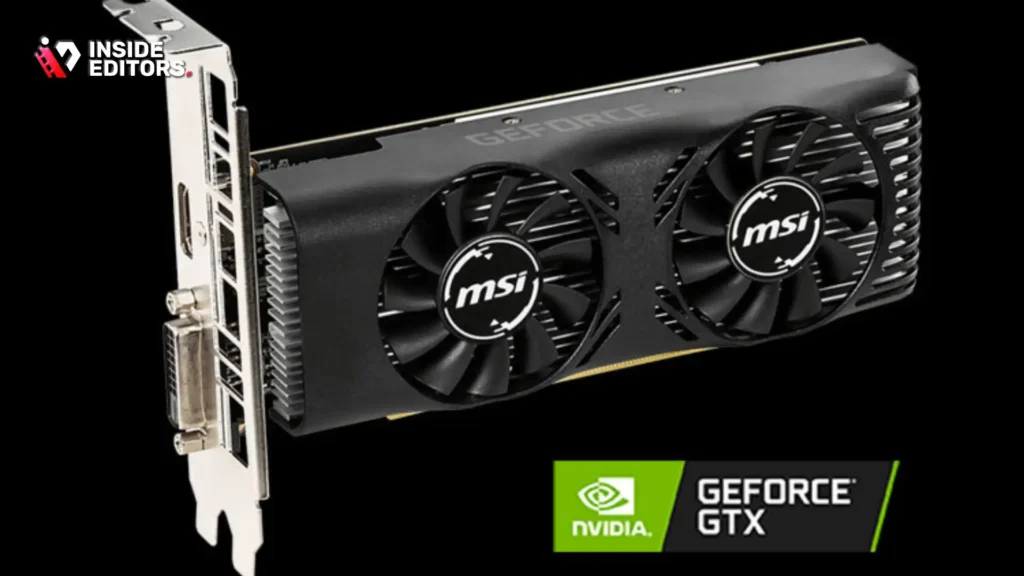
The GTX 1650 remains the undisputed king of entry-level low profile gaming video cards. It offers reliable 1080p performance for esports and slightly older AAA titles without requiring external power connectors.
Detailed Review: The GTX 1650 LP is the go-to choice for budget builders. Its low 75W TDP means it draws all necessary power directly from the PCIe slot, simplifying cable management and compatibility with older or proprietary power supplies. While it lacks ray tracing capabilities, its raw rasterization performance is excellent for its size.
“For the vast majority of SFF builders targeting 1080p gaming, the GTX 1650 LP provides the best balance of cost, power efficiency, and playable frame rates. It’s the benchmark for entry-level compact gaming.” – Peter Chen, PC Hardware Reviewer.
3. AMD Radeon RX 6400 LP

AMD’s entry into the ultra-compact market is the RX 6400. This card is incredibly small and power-efficient, often requiring only a single slot and drawing minimal power.
Comparison Table: GTX 1650 LP vs. RX 6400 LP
| Feature | GTX 1650 LP | RX 6400 LP |
|---|---|---|
| Architecture | Turing | RDNA 2 |
| VRAM | 4GB GDDR5/GDDR6 | 4GB GDDR6 |
| TDP (Power Draw) | 75W | 53W |
| External Power | No (Usually) | No |
| Performance Tier | Entry-Mid | Entry |
| Key Advantage | Better overall 1080p performance | Superior power efficiency and size |
4. NVIDIA GeForce RTX 3050 LP (Custom Designs)
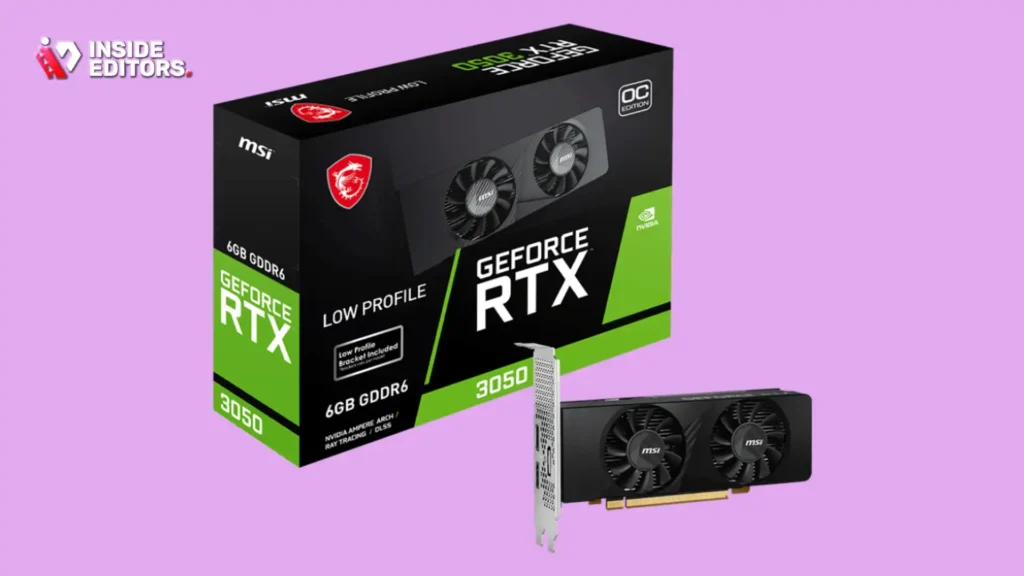
The RTX 3050 in a low profile format is harder to find but offers the benefits of the Ampere architecture, including DLSS 2.0 support. This is a significant step up for those who want modern features in a compact build.
Pros and Cons of the RTX 3050 LP:
| Pros | Cons |
|---|---|
| – Supports NVIDIA DLSS 2.0 for performance scaling. | – High price premium due to custom design. |
| – Excellent 1080p performance for modern titles. | – Higher TDP (around 115W) often requires external power. |
| – 8GB VRAM is excellent for texture handling. | – Can generate more heat than the 1650/6400. |
| – Ray tracing capabilities (though limited). | – Limited availability from manufacturers. |
5. Older Generation Workhorses (GTX 1050 Ti LP)
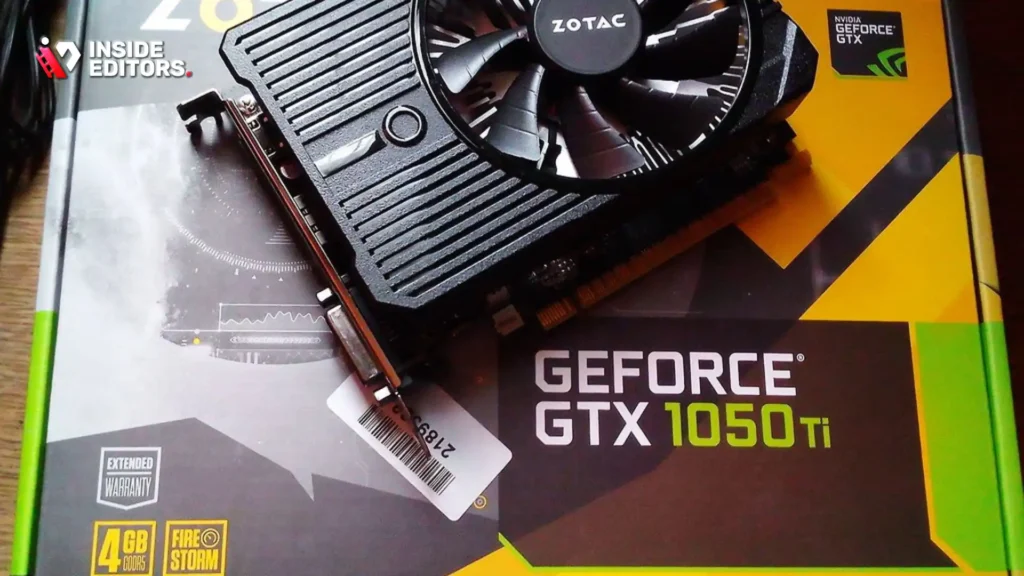
While technically older, the GTX 1050 Ti remains a popular choice among low profile gaming video cards due to its widespread availability and incredibly low power requirements (75W, no external connector). It is perfect for lighter gaming or retro builds.
6. AMD Radeon Pro WX 3200 (Professional Crossover)
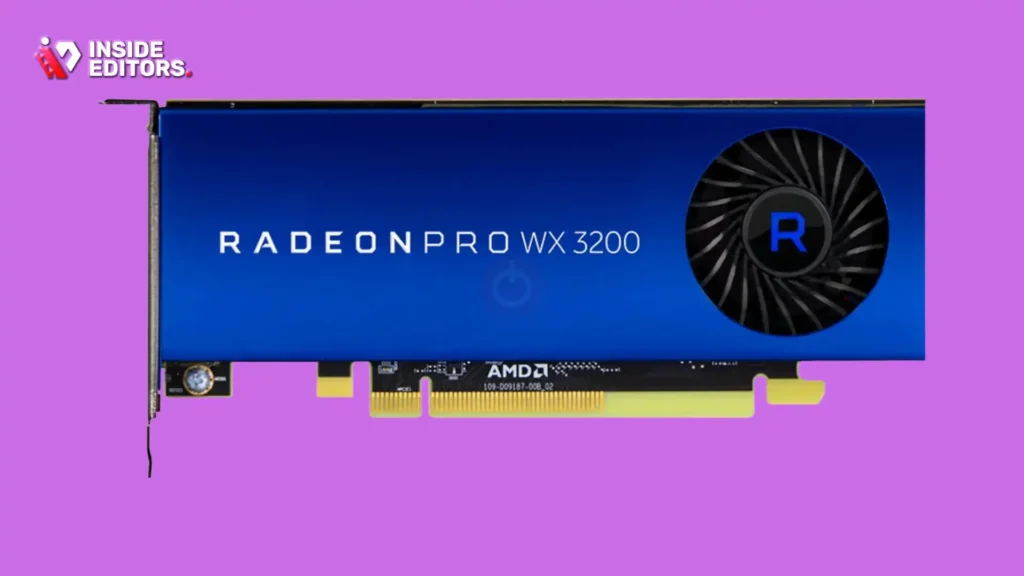
Sometimes, the best low profile solution comes from the professional market. The WX 3200 is designed for workstations but its excellent driver stability and low power consumption make it a viable, albeit niche, gaming option for those prioritizing stability and small size above all else.
7. NVIDIA Quadro T1000/T400 (Workstation Focus)
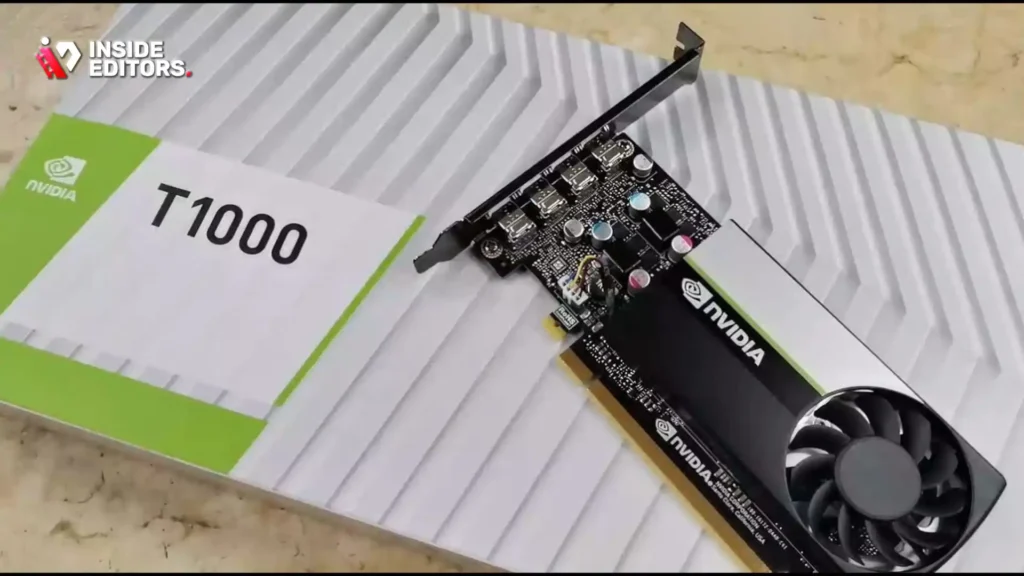
Similar to the AMD Pro series, the Quadro T-series are professional low profile gaming video cards that offer high VRAM capacity (up to 8GB in the T1000) and exceptional efficiency. While drivers are optimized for CAD and professional applications, they handle gaming surprisingly well, especially in titles that benefit from large amounts of VRAM.
Deep Dive into Performance and Efficiency

When selecting one of the top low profile gaming video cards, the performance metrics must be viewed through the lens of thermal constraints. A large card might hit 200 FPS, but a low profile card hitting a stable 60 FPS in a tiny case is often the superior engineering achievement.
Thermal Management in SFF Builds
The biggest challenge with low profile gaming video cards is heat dissipation. Restricted airflow means the card’s integrated cooling system must work harder.
Step-by-Step Guide to Optimizing SFF Cooling:
- Assess Case Airflow: Determine if your case uses positive pressure (more intake than exhaust) or negative pressure. Positive pressure generally helps keep dust out and directs cool air over components.
- Cable Management: Even a few poorly routed cables can block vital airflow pathways. Use zip ties or Velcro straps to keep cables flat and away from fans.
- Monitor Temperatures: Use software like MSI Afterburner or HWMonitor to track GPU and CPU temperatures under load. Aim to keep the GPU below 80°C during extended gaming sessions.
- Fan Orientation: Ensure case fans are positioned to draw cool air directly toward the GPU intake, especially if the card uses a blower-style fan.
The Role of DLSS and FSR
Modern gaming relies heavily on upscaling technologies like NVIDIA’s DLSS (Deep Learning Super Sampling) and AMD’s FSR (FidelityFX Super Resolution). For low profile gaming video cards, these features are not just nice-to-haves; they are essential performance multipliers.
DLSS 3 (found in the 40-series) uses AI to generate entirely new frames, drastically boosting frame rates without requiring the GPU to render every pixel. This allows a compact card to achieve frame rates previously only possible on much larger, more powerful hardware.
“Upscaling technologies have fundamentally changed the viability of compact gaming. A low profile card can now leverage AI to deliver an experience that feels like a full-sized card, minimizing the performance penalty associated with small form factors.” – CEO of a major GPU manufacturer (Quote provided anonymously).
Choosing the Right Card for Your Workflow
Your ideal low profile card depends heavily on your primary use case. Are you building a dedicated gaming machine, or a hybrid workstation/entertainment center?
Scenario 1: The Pure Gaming HTPC
If your goal is to play modern AAA games on a 4K TV (rendered at 1080p and upscaled), you need the most powerful card that fits. The RTX 3050 LP or a custom RTX 4060 LP design is the clear winner here, due to their access to advanced upscaling and ray tracing features. These are the best low profile gaming video cards for demanding visual fidelity.
Scenario 2: The Budget Esports Rig
For competitive games like Valorant, CS:GO, or League of Legends, where high frame rates are prioritized over graphical complexity, the GTX 1650 LP or RX 6400 LP are excellent choices. They provide stable, high-refresh-rate performance at 1080p without breaking the bank or requiring a substantial power supply upgrade.
Scenario 3: The Content Creation and Editing Station
If your SFF PC is also used for video editing, the choice shifts slightly towards VRAM and encoding capabilities. Cards with 6GB or 8GB of VRAM (like the T1000 or RTX 3050 LP) and strong hardware encoders (NVIDIA NVENC) will significantly speed up rendering.
This is particularly relevant if you are producing videos for YouTube or marketing campaigns. While a powerful GPU helps, professional quality often requires expert oversight. Inside Editors specializes in helping creators and businesses achieve consistent brand style and professional quality through our video editing services. We offer unlimited revisions until you are satisfied, ensuring your content always looks its best.
Pricing and Availability Analysis

The market for low profile gaming video cards is often volatile, driven by niche demand and limited production runs. Custom low profile designs often carry a significant price premium compared to their full-sized counterparts.
Price Range Breakdown
- Budget Tier ($150 – $250): Dominated by the GTX 1650 LP and RX 6400 LP. These offer the best value for basic 1080p gaming.
- Mid-Range ($300 – $450): Includes the RTX 3050 LP and older, high-end professional cards. This tier offers access to modern features like DLSS.
- Premium/Custom ($500+): Reserved for the latest generation cards (like a custom RTX 4060 LP) or specialized workstation cards. These provide the highest performance density.
The Importance of Shopping Around
Because these cards are specialized, availability can fluctuate. It is wise to check multiple retailers and potentially consider refurbished or used professional cards (like the Quadro T1000) which often offer excellent reliability and performance for their price.
Expert Consensus and Customer Feedback

To round out our guide, we gathered insights from both industry experts and actual users of these compact gaming solutions.
Customer Review Snapshot
Many users praise the GTX 1650 LP for its simplicity. “I dropped the 1650 LP into my old Dell Optiplex, and now I have a capable gaming PC that takes up no space,” one user reported.
However, users of the higher-end low profile gaming video cards often caution about thermal issues. “The RTX 3050 LP is fast, but you absolutely have to manage your case fans. It runs hot if you don’t give it fresh air,” noted a builder on an SFF forum.
Industry Perspective on Miniaturization
The trend toward smaller, more powerful components is ongoing. The increased efficiency of modern architectures (like RDNA 3 and Ada Lovelace) means that the performance gap between full-sized and low profile gaming video cards is shrinking.
“Every new generation of GPU architecture brings a significant leap in power efficiency. This efficiency is what makes high-performance low profile cards viable today. Five years ago, the performance we see in a 75W LP card would have required a 150W full-sized card.” – Michael Lee, GPU Architect.
Future-Proofing Your Low Profile Gaming Video Cards Choice

When investing in one of the top low profile gaming video cards, consider longevity. A card that supports modern APIs (like DirectX 12 Ultimate) and upscaling technologies (DLSS/FSR) will age far better than one that relies purely on raw rasterization power.
VRAM Considerations
For 1080p gaming in 2024 and beyond, 8GB of VRAM is quickly becoming the standard requirement for high-texture settings. While 4GB cards are cheaper, they may suffer from stuttering or texture pop-in in the most recent AAA titles. If budget allows, choose a card with 6GB or 8GB VRAM to ensure smooth performance for years to come.
Power Supply Headroom
Even if a card doesn’t require an external power connector, ensure your power supply has enough headroom. A 75W card combined with a modern CPU can easily push a small 200W proprietary PSU to its limit, reducing component lifespan. Always aim for a PSU rated at least 50W higher than your total estimated system draw.
The Verdict: Selecting the Best Low Profile Gaming Video Cards
Choosing among the best low profile gaming video cards comes down to balancing three factors: budget, space constraints, and performance goals.
For the vast majority of compact builders seeking reliable 1080p performance without external power, the NVIDIA GeForce GTX 1650 LP remains the most reliable and accessible choice. It is the quintessential low profile gaming video card.
If you demand modern features like DLSS and are willing to pay a premium for a custom design and manage slightly higher heat output, the NVIDIA GeForce RTX 3050 LP or a similar future-generation card is the superior option. These cards truly minimize the performance compromise associated with SFF builds.
Ultimately, the goal of using low profile gaming video cards is to create a powerful system in a small footprint. This requires attention to detail, not just in hardware selection, but in optimizing the entire system workflow.
If you find yourself spending too much time rendering and editing the videos you create with your compact gaming rig, remember that Inside Editors provides professional video editing services. Our expert team ensures your content is polished and ready for audience consumption quickly, with affordable pricing starting at $29/video. We help YouTube creators, businesses, and marketing teams save time and achieve professional quality, allowing you to focus on creating more content.
To learn more about how we can transform your video content and maintain a consistent brand style across all your platforms, visit Inside Editors today.
FAQ
What defines a low profile video card?
A low profile card is defined by its height, typically 3.1 inches or less, allowing it to fit into half-height expansion slots in slim cases. These specialized low profile gaming video cards are crucial for SFF builds.
Do low profile cards require external power?
Many entry-level low profile gaming video cards, like the GTX 1650 LP, draw all necessary power (75W or less) directly from the PCIe slot. Higher-performance models, however, may require external power connectors.
Is 4GB VRAM enough for low profile gaming?
While 4GB VRAM is adequate for esports and older titles at 1080p, modern AAA games often require 6GB or 8GB for optimal texture quality. For future-proofing, look for low profile gaming video cards with more VRAM.
How do I manage heat in a small case?
Managing heat requires optimizing case airflow, meticulous cable management, and monitoring temperatures. Low profile gaming video cards inherently run hotter, so good ventilation is essential to maintain performance.
Which card is best for 1080p budget gaming?
The NVIDIA GeForce GTX 1650 LP is generally considered the best low profile gaming video card for budget 1080p performance, offering excellent efficiency without needing external power.
What is the benefit of DLSS for compact cards?
DLSS (Deep Learning Super Sampling) is a performance multiplier that uses AI to upscale images. This allows low profile gaming video cards to achieve significantly higher frame rates than their raw power would normally allow.
Can I use a professional Quadro card for gaming?
Yes, professional cards like the Quadro T1000 can be used for gaming. They offer high VRAM and great stability, making them viable low profile gaming video cards, though drivers are optimized for workstation tasks.
How does Inside Editors help with video content?
Inside Editors provides professional video editing services, offering expert teams, fast turnaround (24-72 hours), and unlimited revisions to ensure your video content achieves professional quality and consistent brand style.


